In this issue:
- From the chair
- GLIAS committee
- Planning to archive: part 3
- A brief update on Fulham Gasholder No 2
- Identification of 'N.R.' valve cover plates
- The Long Ferry
- The Brunel Shed
- Birchwood Industrial Estate Hatfield
- The changing face of street furniture
- Roman roads map
- News from the south
- Grand Surrey Canal self-guided walk
- Burton — the tailor of taste — part 1: shops in the former LCC part of London
- Ivy House
- More power stations
- Request for information
- 100 years of the red phone box
- Cash boost for Stanley Arts
- 346news.pdf
The GLIAS Walks continued with visits around Paddington and Shoreditch led by Peter Finch and Martin Adams respectively. Our thanks to them for their contribution to our successful series and to Andrew Turner for overseeing the programme.
The Committee is still seeking help with the running of the Society which, these days, is increasingly using computer technology from Word Processing to Zoom via the Cloud. The activities of the Society are currently run by members of the Committee and we would welcome support with organising the events, managing membership and administration. Members who would like to 'shadow' the current activities should get in touch with the Chairman or Secretary.
We will hold a GLIAS Pub/Video Evening on Wednesday, 11 November at The Sekforde, Sekforde Street, London, EC1R 0HA, starting at 6pm. The Sekforde would like advanced notice of numbers, please contact chairman@glias.org.uk with numbers attending. Dan Hayton
The GLIAS Committee are pleased that at our July meeting, long-time member Colin Axon was invited to join the committee and GLIAS Board, which he accepted. He has therefore been co-opted from that date until the next AGM. We would happily welcome more members onto the committee (and those wishing to help in other ways) — for details of what is involved, see page 1 of the June Newsletter or contact me at secretary@glias.org.uk, 07970 863196. I look forward to a flood of replies! Tim Sidaway, GLIAS Secretary

As a reminder, I'm writing this series to encourage members to secure the future of their precious research material, photographs and artifacts while they can. I'm grateful for positive and encouraging feedback from various members and always welcome more as the articles progress. Thanks particularly to Peter Marshall (a selection of his excellent photos were published in the Newsletter in June) and Michael Bussell.
In my previous two articles, I considered the fundamentals of archiving and the general expectations of archivists. I had hoped to get practical advice from archivists for this article, but they are proving a bit elusive, so that will be deferred. Instead, I shall look at 'online archiving', particularly for photos. The important thing is to get your photos somewhere within reach of a Google search.
First, I'll admit that with one exception, the websites I've looked at aren't really archives; they are actually gazetteers or databases, so they would realistically only take a small number of your photos. Maybe that is a good thing, to preserve only the best items. And they do offer unmatched accessibility: anyone in the world can view your photographs instantly, turning your private collection into a shared community asset. The primary risk is digital obsolescence — websites can close, file formats change, and link rot can make images disappear.
On the other hand, the continuity of physical archives are undoubtedly more secure, professionally catalogued and legally protected. But they are constrained by limited storage space and strict acquisition policies which may reject your material. Additionally, to access they generally require a personal visit by a researcher or member of the public. But they should still be the first port of call for the most important and unique of your records.
Examples of 'online archives' are:
Industrialhistoryonline: GLIAS's own database, hosted by the Yorkshire Archaeological and Historical Society and shared with an increasing number of other IA societies.
Pros: It's good to support GLIAS! It's IA-centric and integrated with Ordnance Survey maps. Great fields to provide context and story.
Cons: Capacity constraints limit the preferred number of images per site and individual file sizes are tiny.
Example entry: www.industrialhistoryonline.co.uk/yiho/site.php?site=GTL00004
Geograph Britain and Ireland: This project aims to collect geographically representative photographs of every square kilometre of the UK.
Pros: Highly structured, good for local history and integrated with Ordnance Survey maps. File sizes up to 8Mb.
Cons: The interface feels dated, so searching for IA is difficult; related photos not linked well; limited ability to set context or tell a story.
Example entry: www.geograph.org.uk/photo/2568056
Flickr: A massive, long-standing photo-sharing platform widely used by archival groups.
Pros: Exceptional community engagement, high-resolution storage, and robust tagging systems.
Cons: Requires a paid subscription for large-scale storage, and it is a commercial platform subject to future corporate policy shifts. More focused on the photos than the story behind them. Not welcoming to the casual browser.
The Internet Archive: A non-profit digital library offering a permanent home for cultural artifacts.
Pros: Free, deeply committed to long-term digital preservation, and highly stable. Suitable for books and documents. Unlimited file sizes.
Cons: The upload process has a steep learning curve, and photos can easily become lost in the vast sea of data if not meticulously catalogued. In fact, I don't think it is really appropriate for photos. Ongoing lawsuits about copyright. Primarily US.
Example entry: https://archive.org/details/hydraulicpower0000mcne/mode/2up
Wikimedia Commons: 'A collection of 147 million freely usable media files to which anyone can contribute'. It seems to scrape from other sites (eg Geograph).
Pros: Free. Industrial buildings can be searched by London borough. Probably file size not restricted.
Cons: Limited opportunity to provide accompanying information.
Example entry: https://commons.wikimedia.org/wiki/Category:Industrial_buildings_in_London
Grace's Guide: Claims to be 'the leading source of historical information on industry and manufacturing in Britain'. I'll admit it is impressive.
Pros: Built around IA. 174k pages, 250k images. Informative entries.
Cons: Concentrates on companies, products and people; not so much on buildings and infrastructure. Curated by volunteers so will be selective.
Example entry: www.gracesguide.co.uk/London_Hydraulic_Power_Co
Ian Visits: News and snippets about London.
Pros: About London. Over 1 million visits per annum.
Cons: Historical snippets are a side attraction. Continuity reliant on one man.
Example entry: www.ianvisits.co.uk/articles/category/history/
It would seem a good idea to me that all GLIAS members who posted their photos onto a digital archive used the same one. But which one? I'm interested in members' views, particularly (but not exclusively) those who have experience of the process. The most obvious choice would be industrialhistoryonline, but for the file size and number restrictions. But is that an issue? It isn't a problem for looking at photos online, and that is perhaps how most users would experience them. It might seem a waste to downgrade pictures taken on expensive equipment, in which case using Geograph might be the answer. Or maybe a combination of the two for anyone that dedicated! To me, the important thing is to get our photos and associated history in front of as many industrial archaeologists and general public (to draw others into our enthusiasm) rather than worry about resolution.
The other strong alternative would be Grace's Guide. If this were the preferred option, it would seem sensible for GLIAS and Grace's Guide to agree a joint approach.
BUT WHAT DO YOU THINK?
Finally, when posting photos, it's important to consider copyright implications and metadata requirements. I shall look at both these in the future.
Tim Sidaway. Email: Tim_Sidaway@btinternet.com
A brief update on Fulham Gasholder No 2
The planning permission and listed building consent for Berkeley's refurbishment and reuse proposals for Fulham Gasholder No 2 were formally issued towards the end of July. This is following approval at the Council's planning and development committee in January this year (GLIAS Newsletter April 2026). Securing these approvals is a significant milestone and allows us to progress with the next phase of the scheme.
The CGI below shows what the gasholder will look like when re-erected.
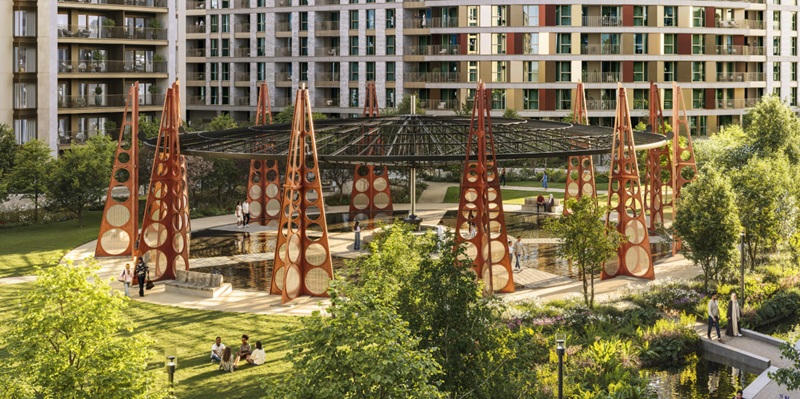
Following receipt of these approvals, refurbishment works have commenced with our specialist metalwork contractor, Alloy Fabweld, and the first set of stanchions / tripods has been transported from site. The gasholder components are currently undergoing restoration and refurbishment at their facility in Gosfield, Essex, where the programme is now under way. This is ahead of re-erection back at site next year.
These developments represent important progress for the project, and we look forward to sharing further updates as additional milestones are achieved.
Sean Gilbreth, Development Manager, Berkeley House
Identification of 'N.R.' valve cover plates
In the report of the opening of the Quentin Blake Centre at the New River Head site (GLIAS Newsletter August 2026), reference was made to a 'stopcock plate' marked N.R., suggesting that the letters designated the New River Company. My understanding is that this is incorrect and that they indicate the location of a Non Return valve. This was the information given me by a Thames Water maintenance engineer a few years ago.
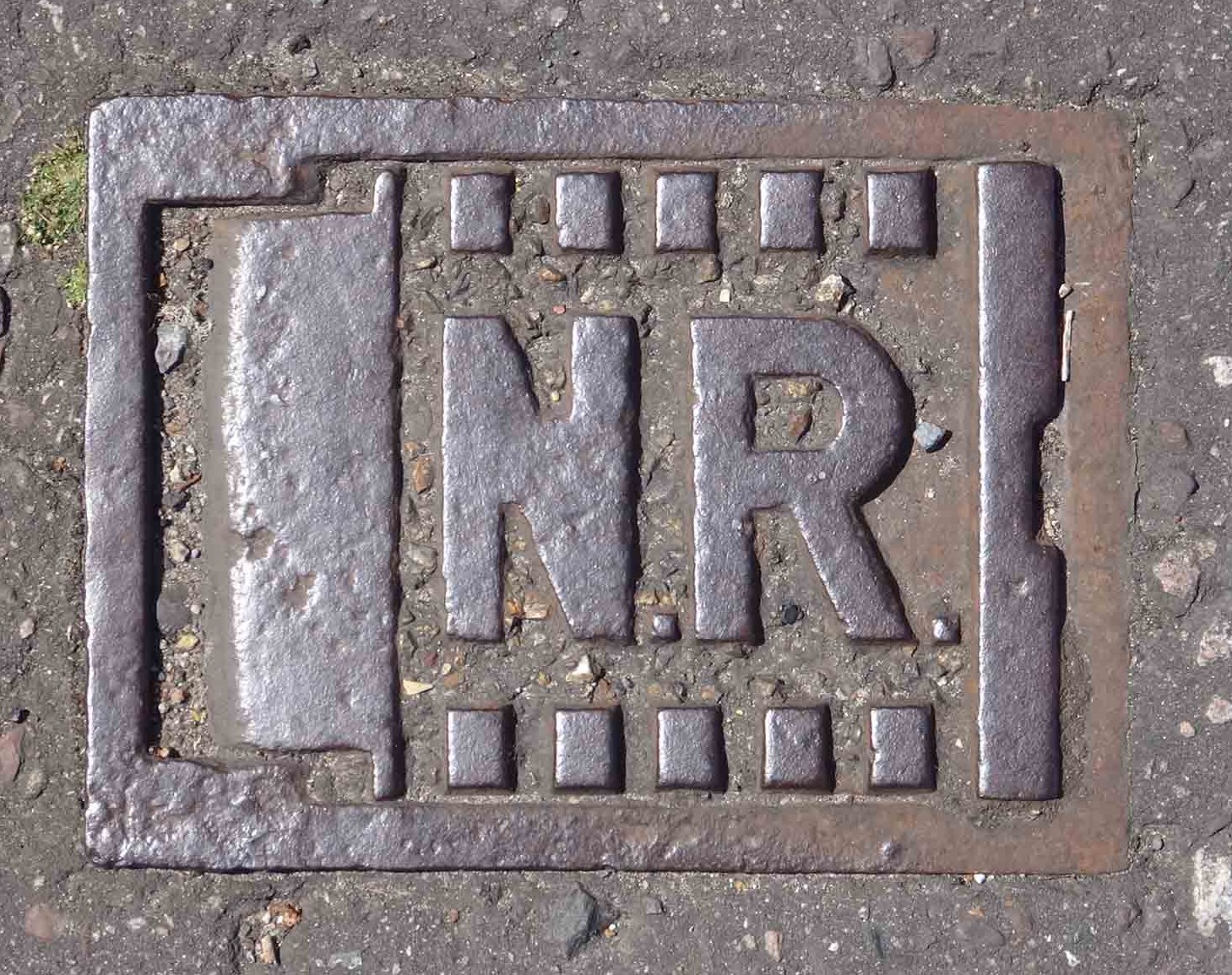
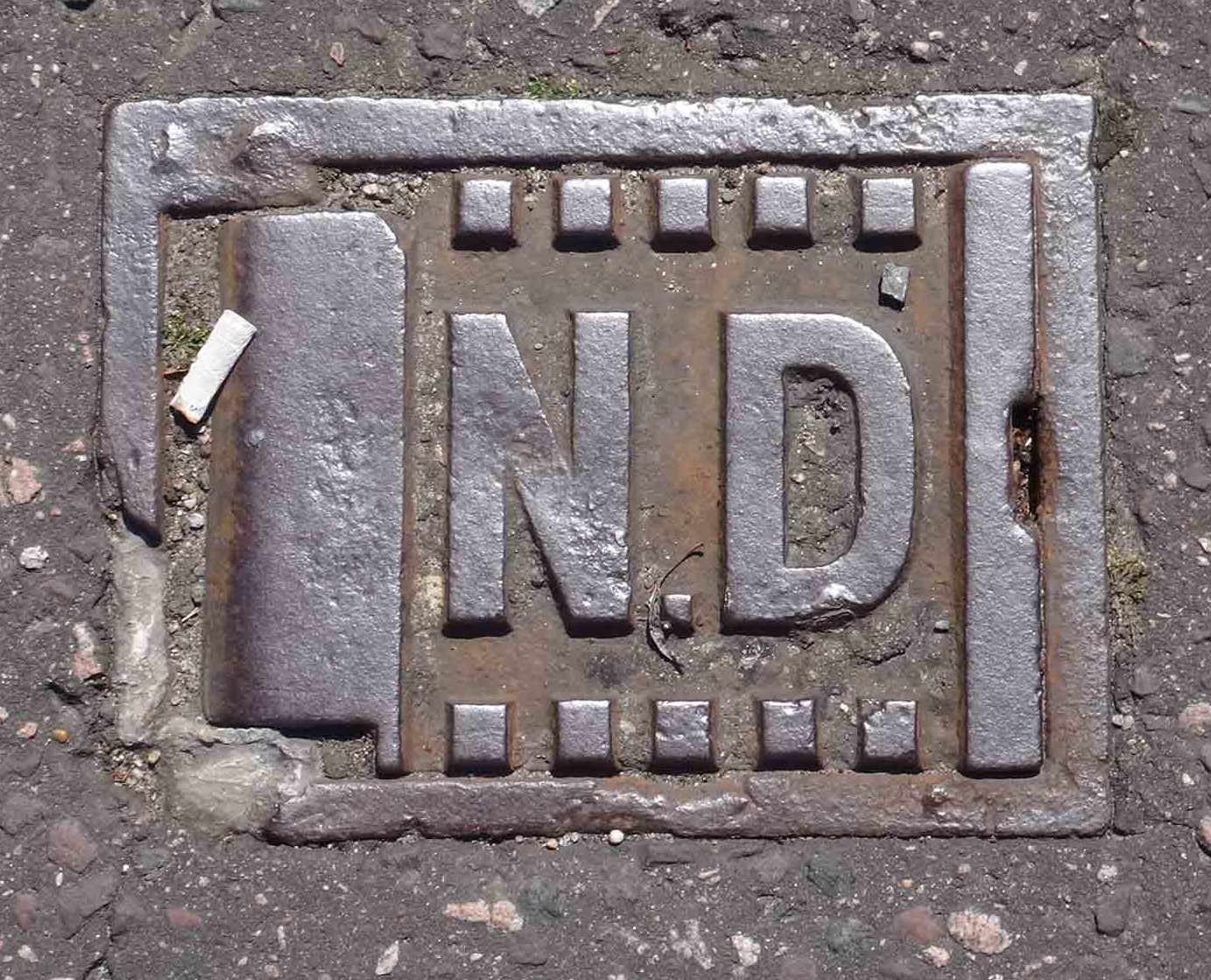
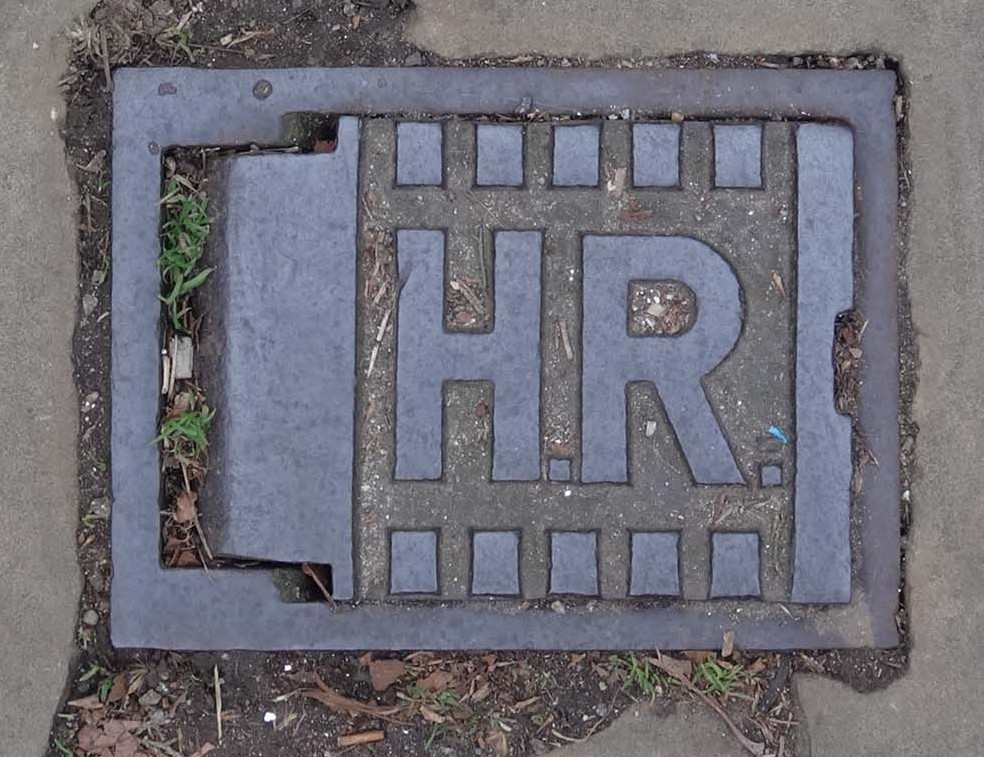
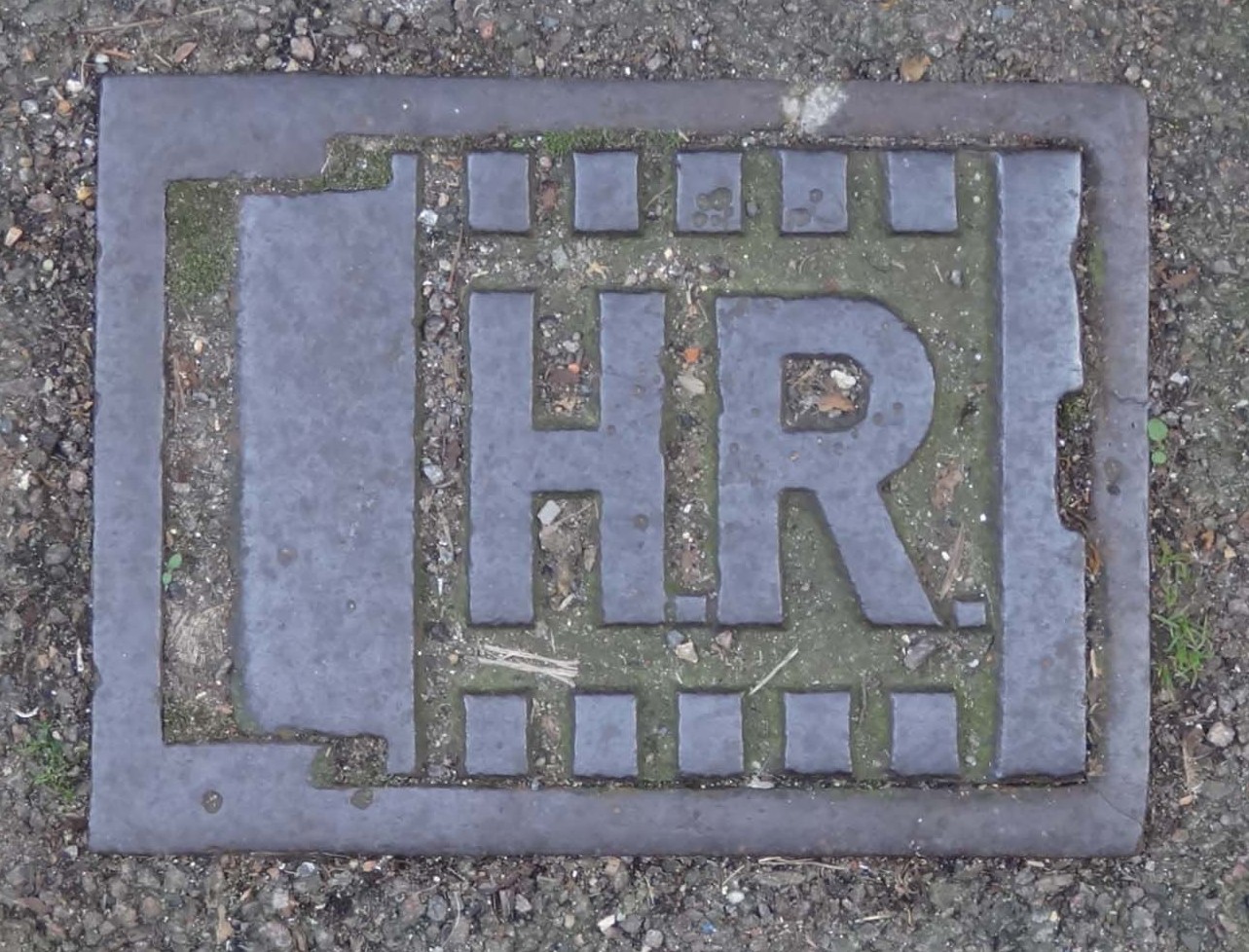
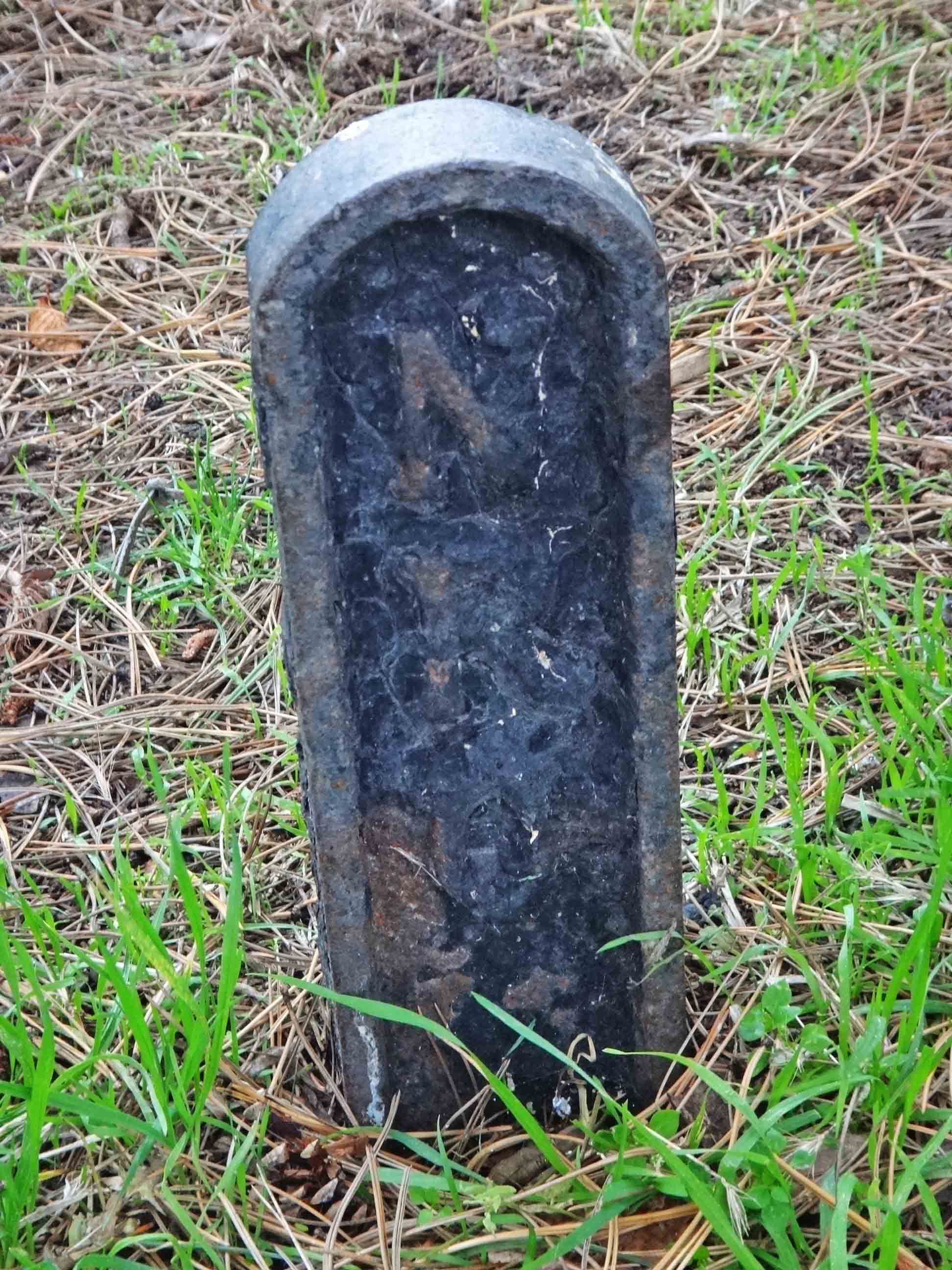
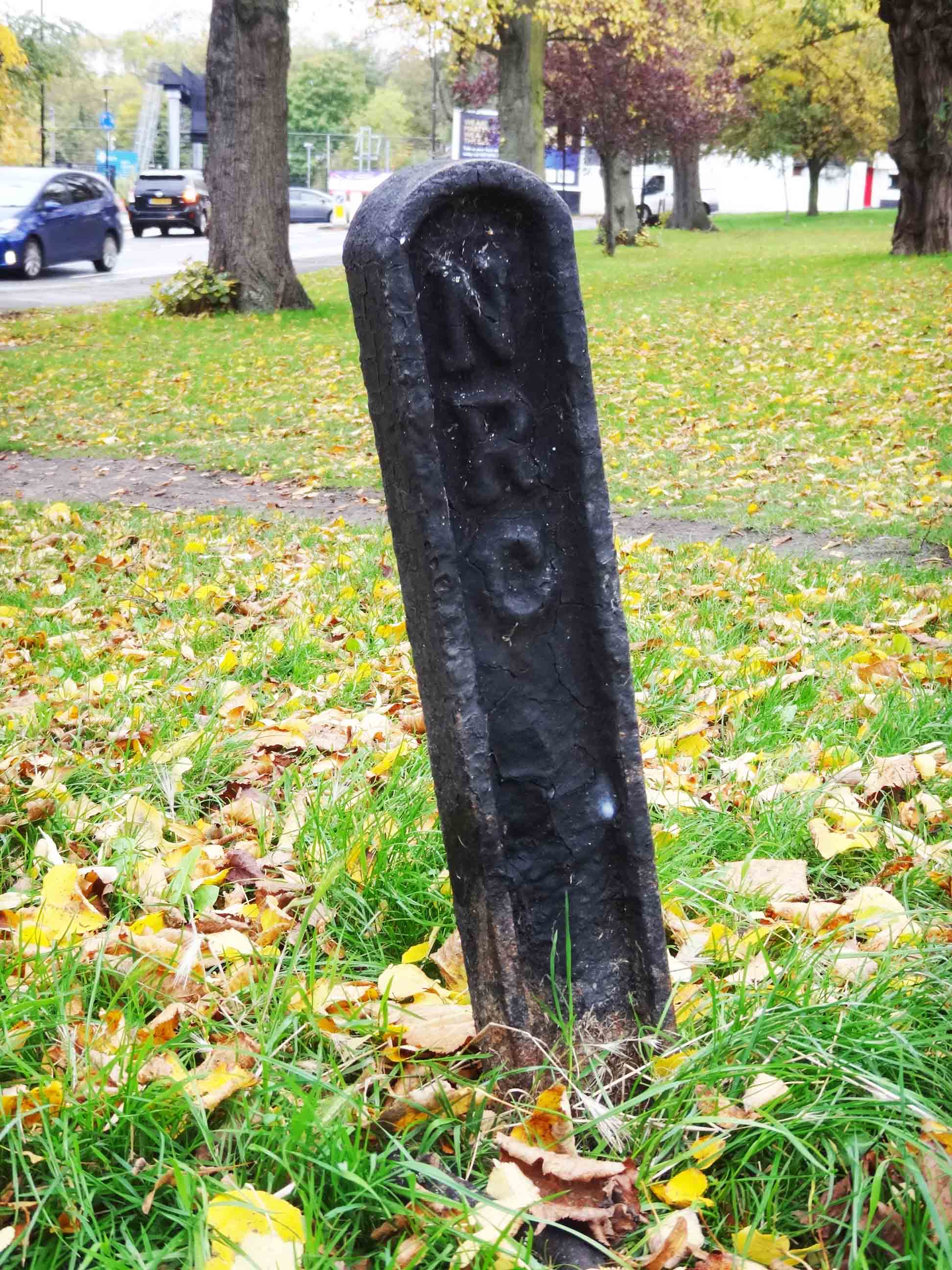
Such plates marked N.R. can be found in many parts of London, not just those formerly served by the New River Company. Plates of the same design but with the letters either N.D. or H.R. also exist, though in lesser numbers. In Elsiedene Road N21 (London Borough of Enfield) at the junction with Ridge Avenue both an N.R. (photo 1) and an N.D. plate (photo 2) can be seen in the roadway a few metres apart. This area was not developed until the 1920s, two decades after the New River Company became (in 1904) part of the Metropolitan Water Board. Also in the LB of Enfield, plates marked H.R. can be found at Gordon Road EN2 (photo 3) and Lancaster Road EN2 (photo 4). I regret I do not know what type of valves these letters designate, but I am sure they are not the initials of defunct water companies.
-
1. N.R. plate, Elsiedene Road N21; 2. N.D. plate, Elsiedene Road N21; 3. H.R. plate, Gordon Road EN2; 4. H.R. plate, Lancaster Road EN2 (footpath to Batley Road)
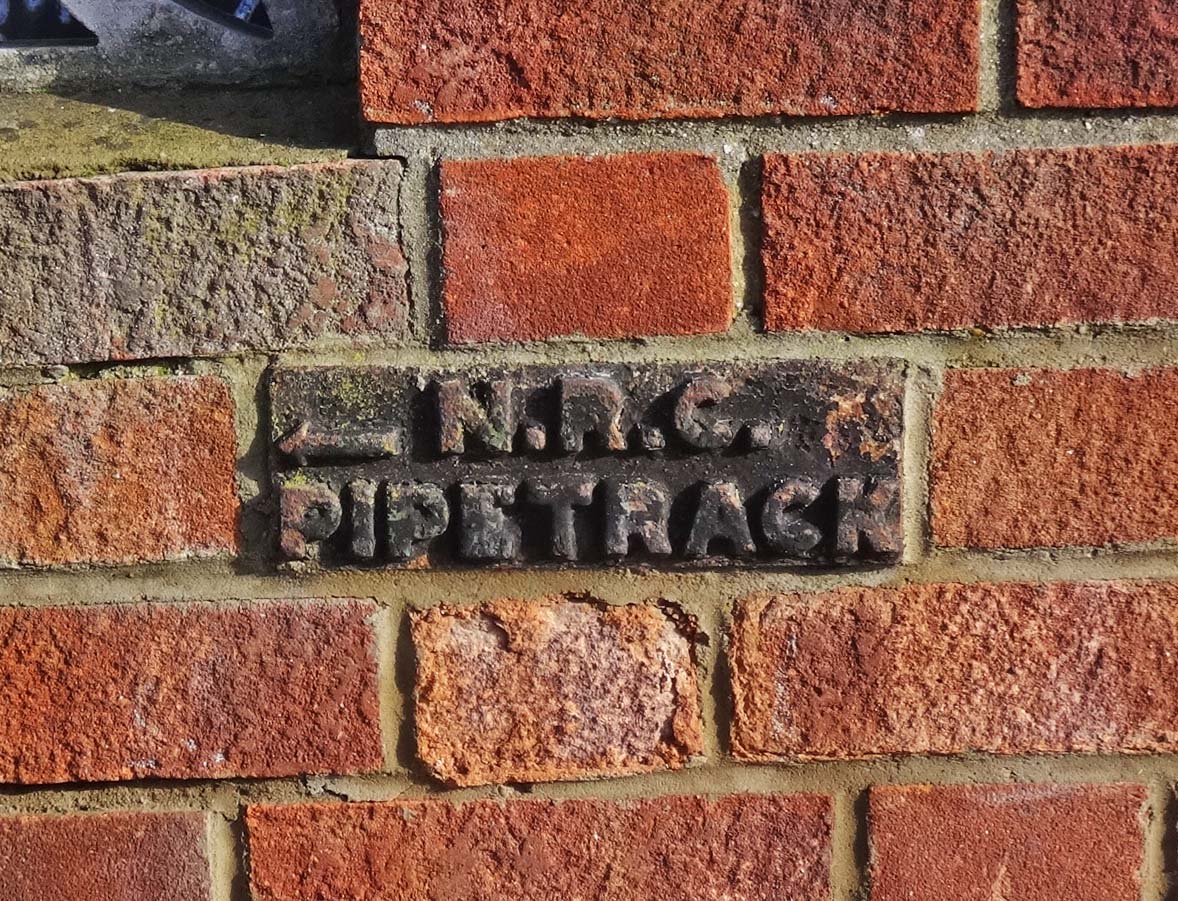
Pipe track markers installed by the New River Company exist, but these are lettered N.R.C. Examples can be found in Wood Green at Finsbury Gardens, Nightingale Road N22 (photo 5) and Avenue Gardens, Park Avenue N22 (photo 6), these marking the alignment of the tunnel built by the New River Company in 1852 which runs between Myddleton Road and Park Avenue. Farther south, a small N.R.C. sign mounted on a garden wall in Finsbury Park Road N4 (photo 7) indicates the location of a trunk main running E-W from Stoke Newington pumping station to the junction of Blackstock Road with Seven Sisters Road. It may be recalled that the main was recently relined with high-density polyethylene, the work being described in articles by Bob Carr and Malcolm Tucker in GLIAS Newsletters 323 (Dec 2022), 324 (Feb 2023), 328 (Oct 2023) and 330 (Feb 2024). John Liffen
-
5. N.R.C. marker, Finsbury Gardens, Nightingale Road N22; 6. N.R.C. marker, Avenue Gardens, Park Avenue N22; 7. N.R.C. marker, Finsbury Park Road N4
Bob Carr (GLIAS Newsletter August 2026) wondered if the Long Ferry between Gravesend and London was always operated by licensed watermen from Gravesend, rather than London?
Richard II gave Gravesend watermen 'in perpetuity' authority to operate the Long Ferry, with the local corporation laying down fares and regulations, a right confirmed by Henry IV and Henry VIII who introduced an Act governing fares and conduct between Windsor and Gravesend, which led to the foundation of the Company of Watermen.
Queens Mary and Elizabeth introduced similar Acts with Gravesend, the City of London and the Watermen's Company having entirely or sharing at different times control of the various vessels that formed the Long Ferry — the barges, wherries and tilt boats and those who crewed them.
The Long Ferry vessels either started at Billingsgate at high tide or Gravesend at low tide and as they seem to have been based in Gravesend it seems likely that the watermen concerned were also local men. However, until someone can provide evidence that London men also licensed by the Watermen's Company were excluded this must remain a supposition. Peter Finch
At High Wycombe things do not seem to have gone exactly to plan regarding the broad gauge 'Brunel Train Shed' and attached structures of 1854. This building, renamed 'The Brunel Engine Shed', is now part of Buckinghamshire New University and the original scheme as described in GLIAS Newsletter February 2022, has not been implemented. Annoyingly there may be confusion between an engine shed and a train shed, one being a locomotive depot, the other part of a railway station. The so-called 'Brunel Engine Shed' used to be a railway station.
The former terminus buildings (train shed, station building / booking office and small engine shed) together with a new extension now form a multiple-use venue centred on the former train shed. This is normally in use as a café and workspace Monday to Friday and is open to the public. The photograph (below left) shows the interior of the Brunel train shed.
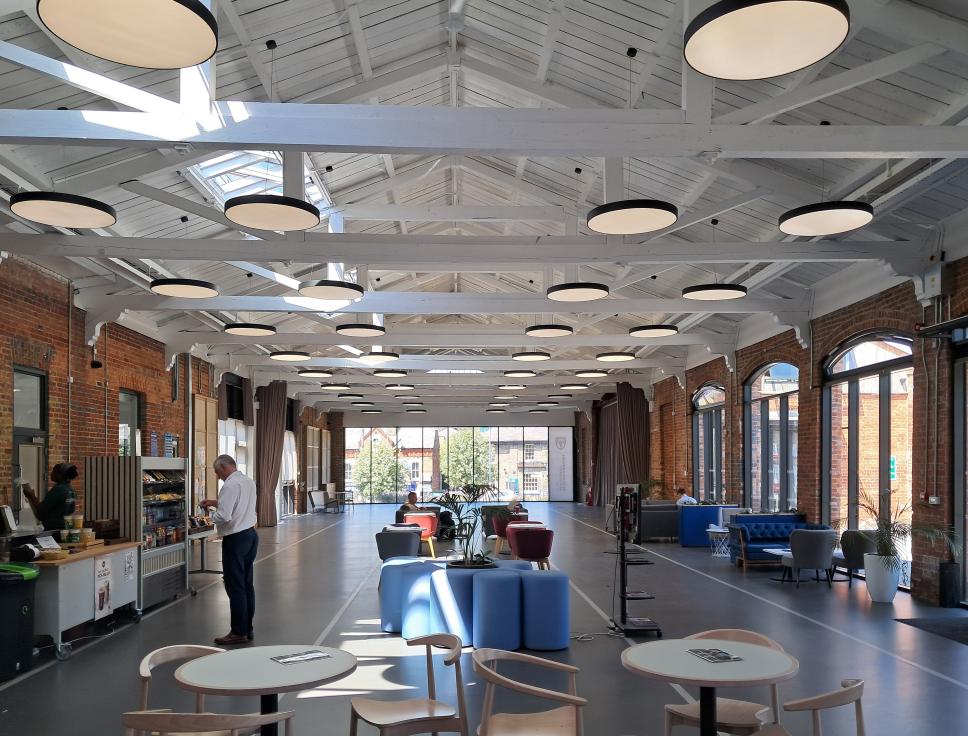
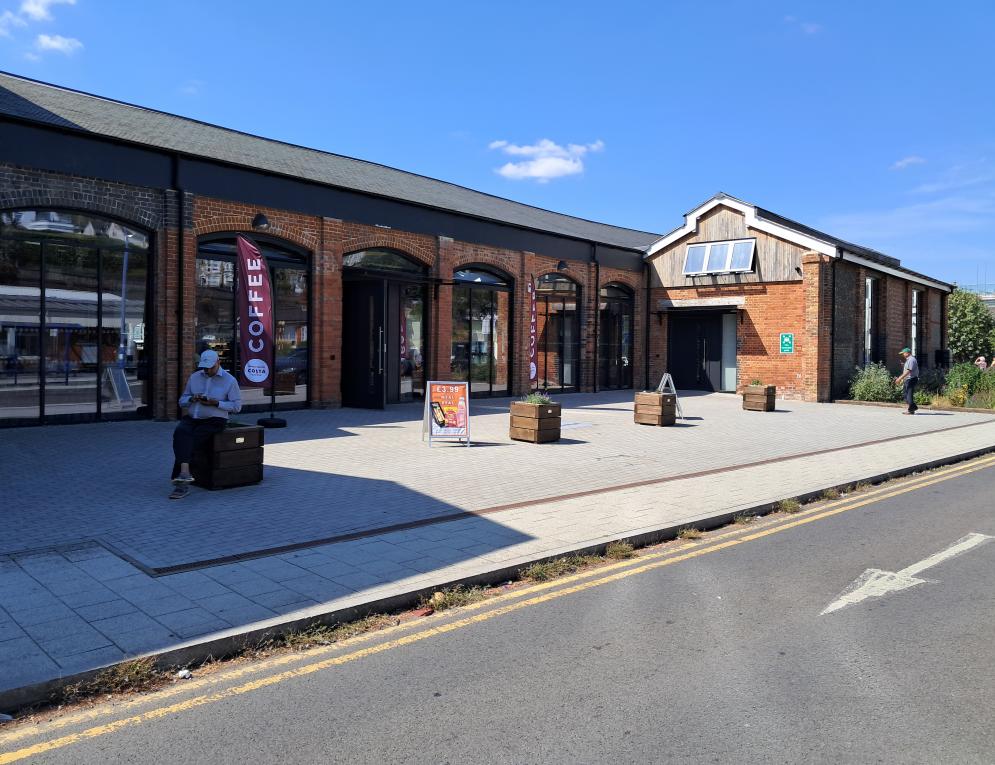
The photograph (above right) shows the north-east side of the train shed with the small locomotive shed to the right. Many thanks to Andrew Turner for these images.
There seems to have been something of a fashion this century 'discovering' early railway buildings, principally locomotive engine sheds, and where possible restoring the buildings and adapting them to new uses. At Northampton an 1873 engine shed for the Midland Railway has become part of the University of Northampton and in Peterborough an 1848 engine shed for the Eastern Counties Railway has been restored. Most of this is now used by the local authority but there is a part open to the public.
The Midland Railway engine shed at Northampton was formally opened by Prof Marilyn Palmer in September 2019. There is also a London and North Western Railway engine shed at Northampton which was built about 1855 and enlarged in 1870. However, this building is still in use by railway engineers.
Then there is Lincoln...
Bob Carr, with contributions from Andrew Turner
See the entry in the GLIAS database at www.industrialhistoryonline.co.uk/yiho/site.php?site=BKM00014
Birchwood Industrial Estate Hatfield
The building of Hatfield New Town started in the early 50s; this industrial estate dates from about 1955.
Close to the Great North Road in the north of Hatfield at TL 231 096, the industrial estate is nowadays principally the home of firms with woodworking skills such as wood veneering and joinery.
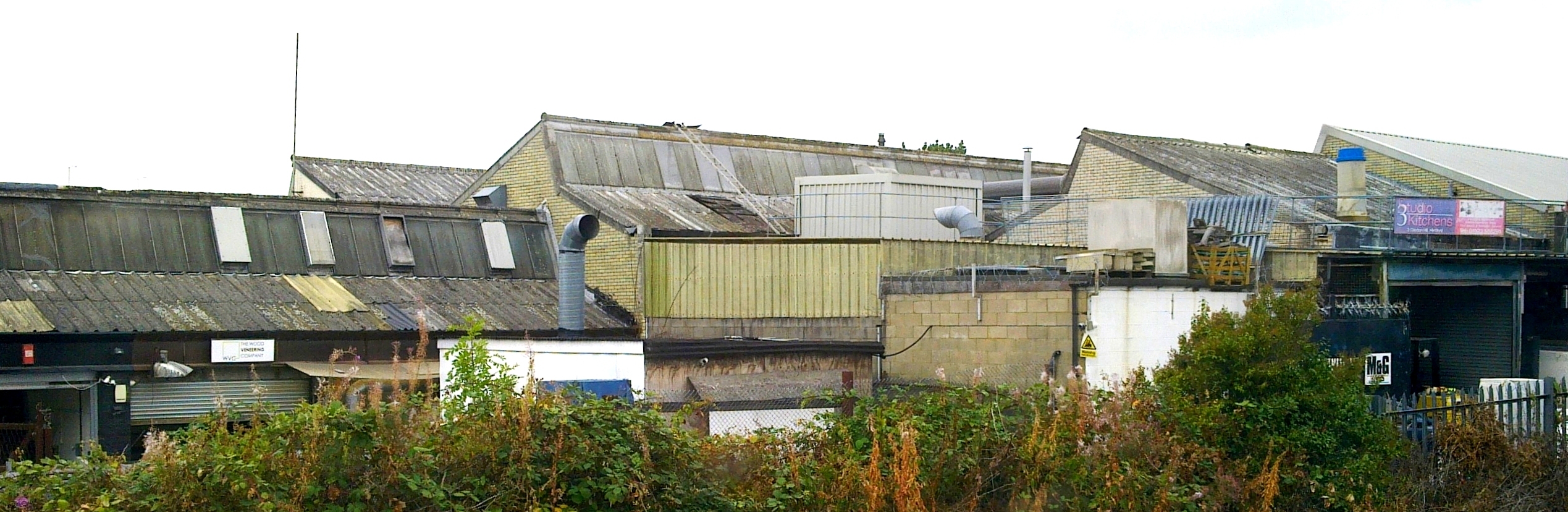
In 1956 a main factory for the toy manufacturer Die Cast Machine Tools (DCMT), makers of Lone Star products, opened here at 188 Great North Road. The factory was large and purpose-built. Lone Star manufactured model products, die-cast toys, and toy guns which fired caps. DCMT went into receivership in 1983.
The photograph taken in August 2026 from the south-east shows, from left to right, The Wood Veneering Company, Studio 3 Kitchens and M & G Marble and Granite. Bob Carr
The changing face of street furniture
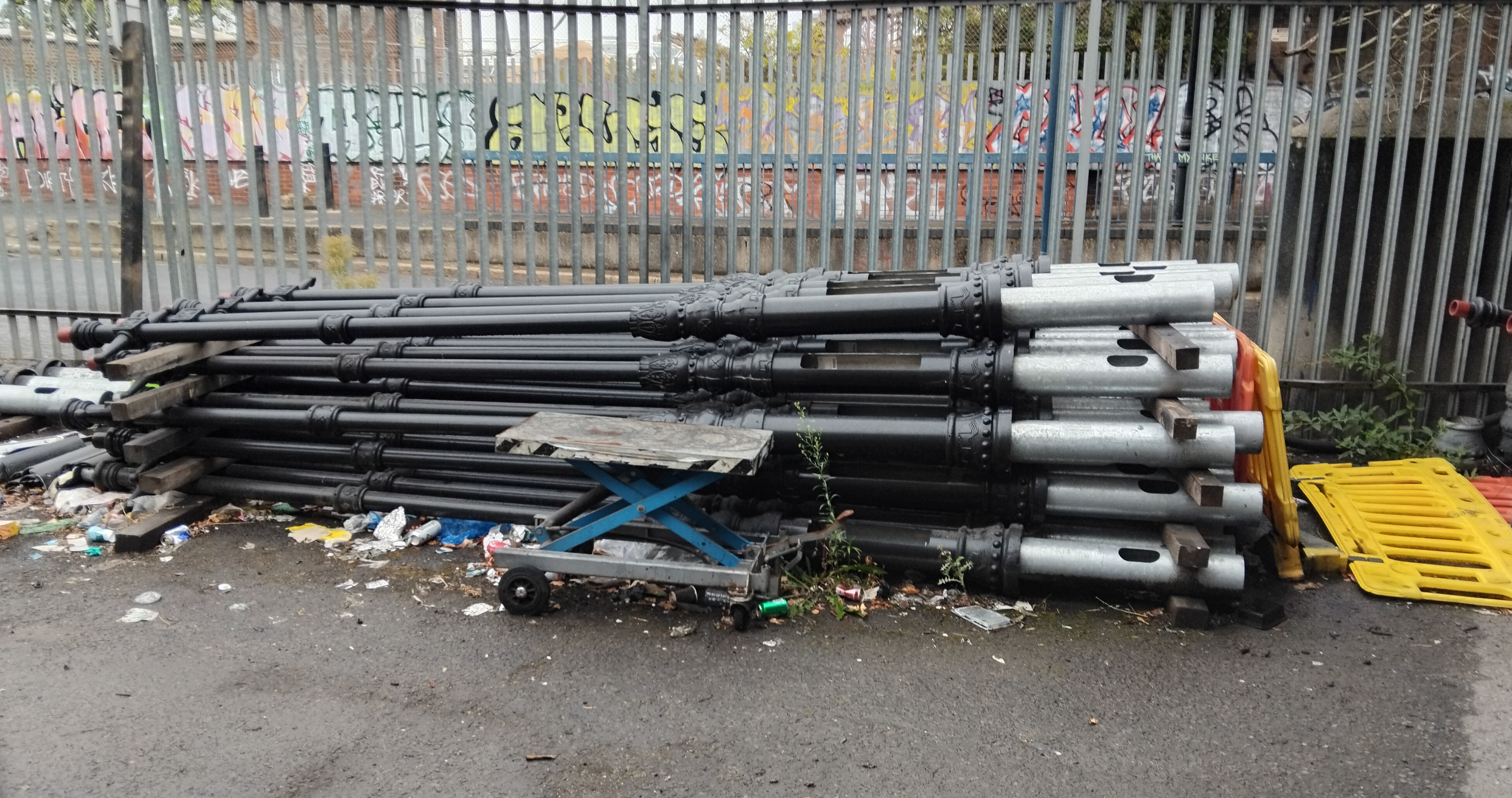
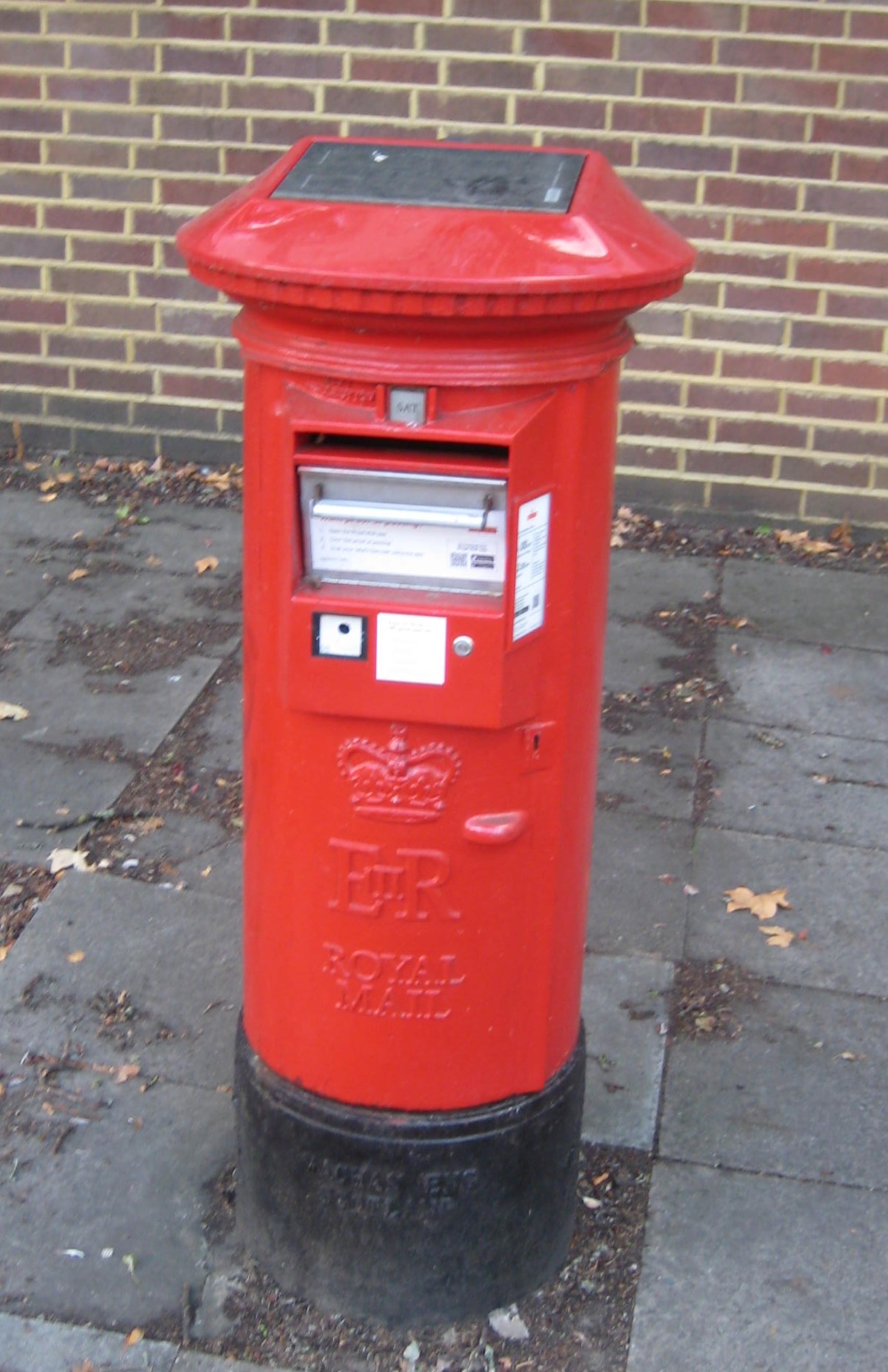
Tower Hamlets council is currently installing 2,000 lamp columns adapted for charging electric vehicles parked on streets in the borough. I recently spotted this pile of posts around the back of the Bryant & May match factory in Bow (below left). Another example of street furniture finding a new use in the 21st century.
Readers are probably already familiar with telephone boxes now housing defibrillators or being used for other new uses.
And the Royal Mail is currently rolling out 3,500 post boxes with solar panels (above right) which power a digitally-activated drawer, allowing customers to deposit small parcels.
Can readers think of any other novel uses for familiar street furniture? Robert Mason
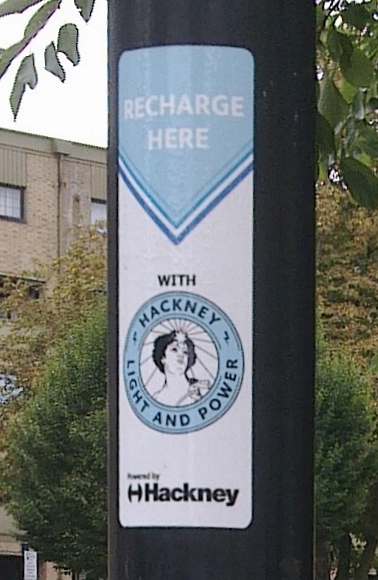
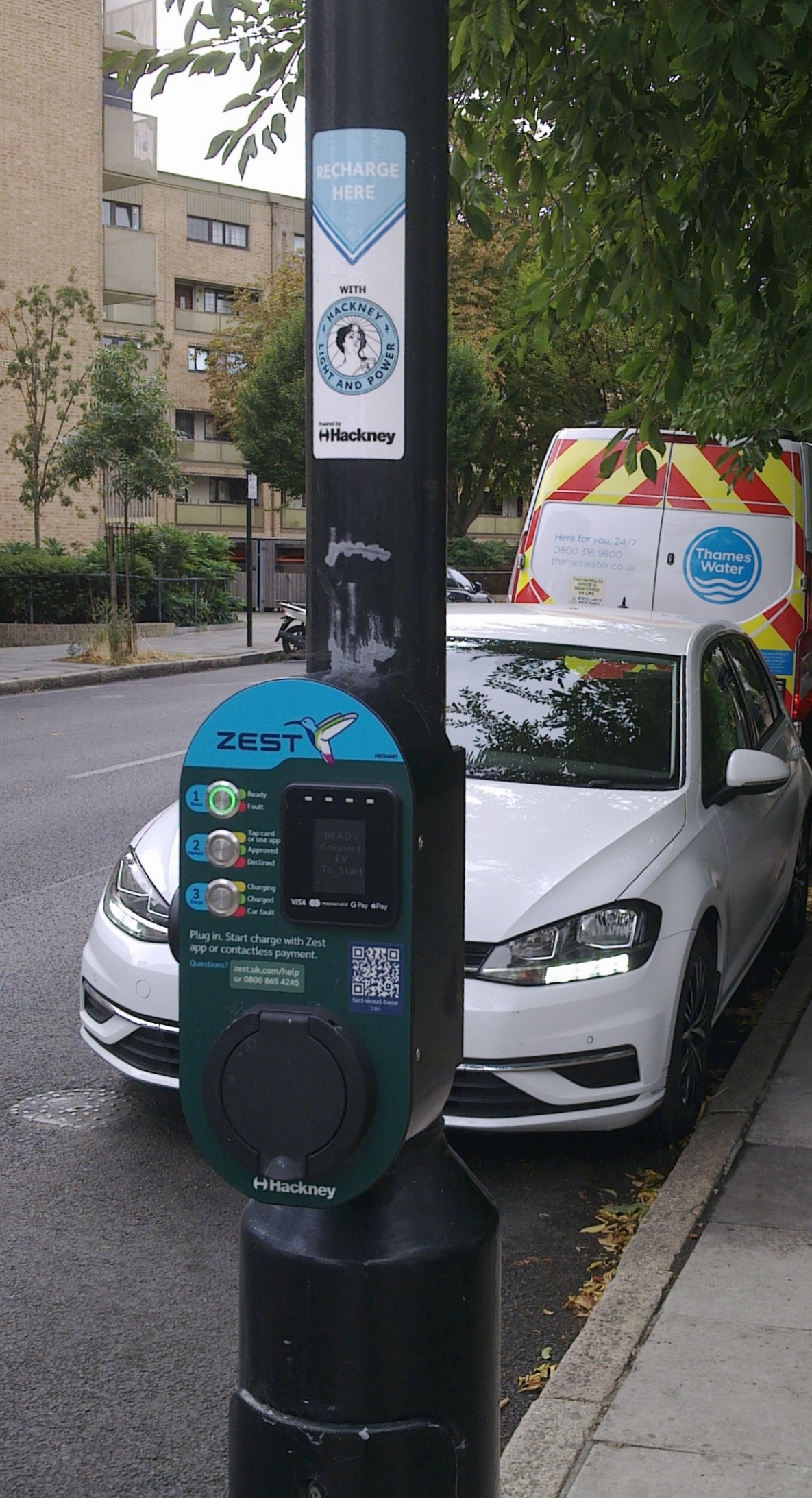
 For six years the London Borough of Hackney has been marketing electricity. This has resulted in Hackney on-street car charging points being established throughout the Borough which display a logo reminiscent of the pioneer Coronet Street rubbish destructor scheme (below left) and the supplement to GLIAS Newsletter 106, October 1986. The photograph (below right) shows a recently installed car charging point in the Brownswood Road. Bob Carr
A digital map of Roman roads in Britain is now freely available (under Copyright) on the Roman Road Research Association website, www.romanroads.org.
The map includes not only the positions of known Roman roads, but also Roman milestones, military sites, temporary camps, and major Romano-British settlements.
See also https://roadsofromanbritain.org/digital-britannia/overview.html
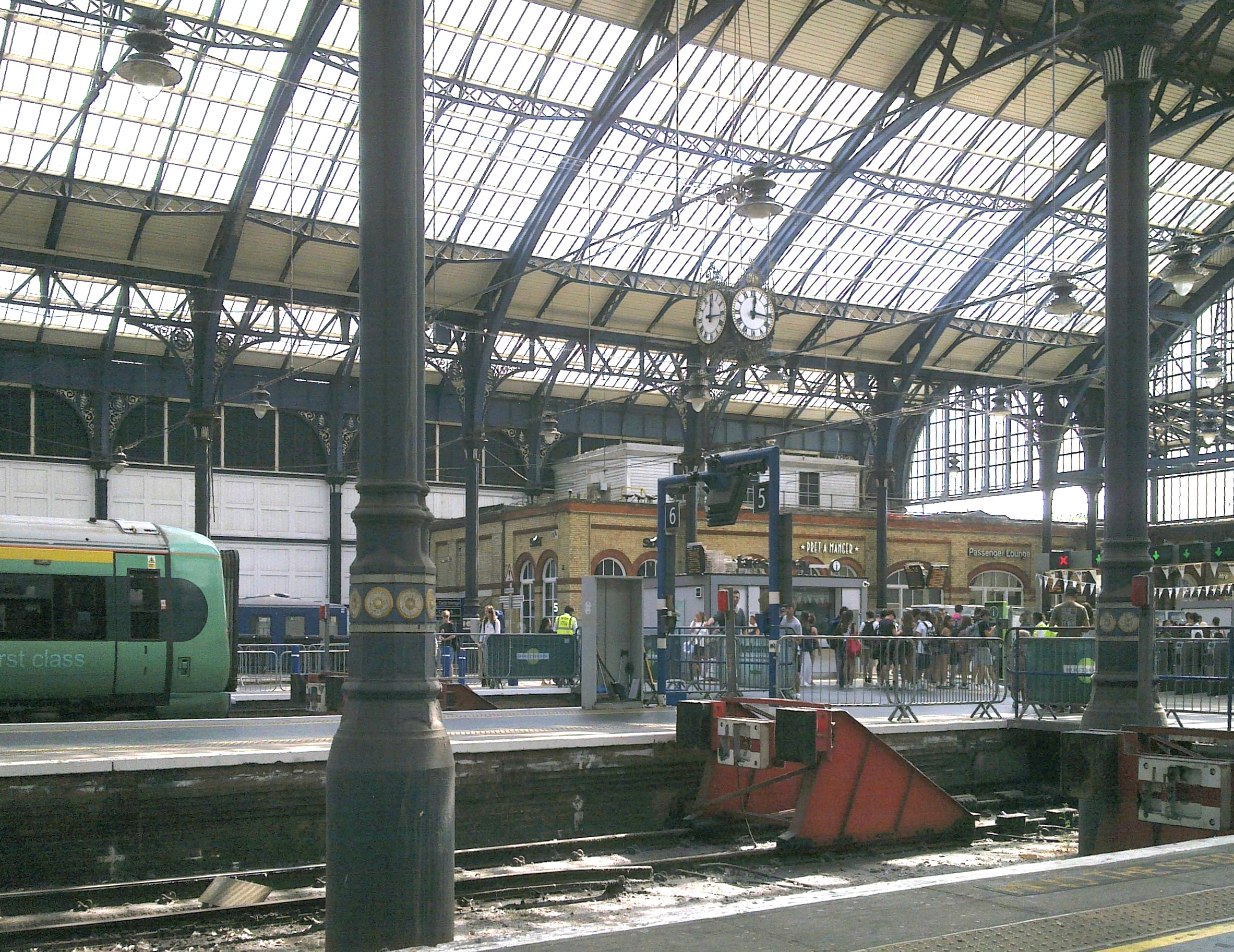
At Brighton railway station, the train shed is now in a very dirty state. In recent years it has been kept in a splendid condition, but not now. Its present appearance is reminiscent of the days when steam locomotives entered the station. The photograph (right) was taken in August 2026.
Despite the owner of Eastbourne Pier being in financial difficulties, Sheikh Abid Gulzar insists that business will carry on as usual. Visiting the pier this year there is a sign announcing 'the Sheikh's Pier'. There is no turnstile or charge at the pier's entrance; anyone can walk straight on. This seems to be good business practice; the pier is well stocked with apparently flourishing small businesses. Hopefully in the recent warm summer there will have been enough income to keep the business alive.
Paddle steamer Waverley's programme of sailing in the Solent and Isle of Wight area and also London and the South-East has been announced. PS Waverley sailed from Tower Pier in London on September 26, 27, 30 and will sail on October 2, 3, and 10. There were two sailings from Eastbourne Pier on September 21 and 22, good news that this facility is being kept alive. See GLIAS Newsletter 340, pp 5-7.
You can book for Waverley online or telephone 0141 243 2224. Bob Carr
Grand Surrey Canal self-guided walk
Friends of Burgess Park have published a history and self-guided walk of the Grand Surrey Canal, in six sections each covering about 1-2 miles, following the course of the canal from Rotherhithe to Burgess Park, then along the Camberwell and Peckham branches.
It is downloadable from: https://bridgetonowhere.friendsofburgesspark.org.uk
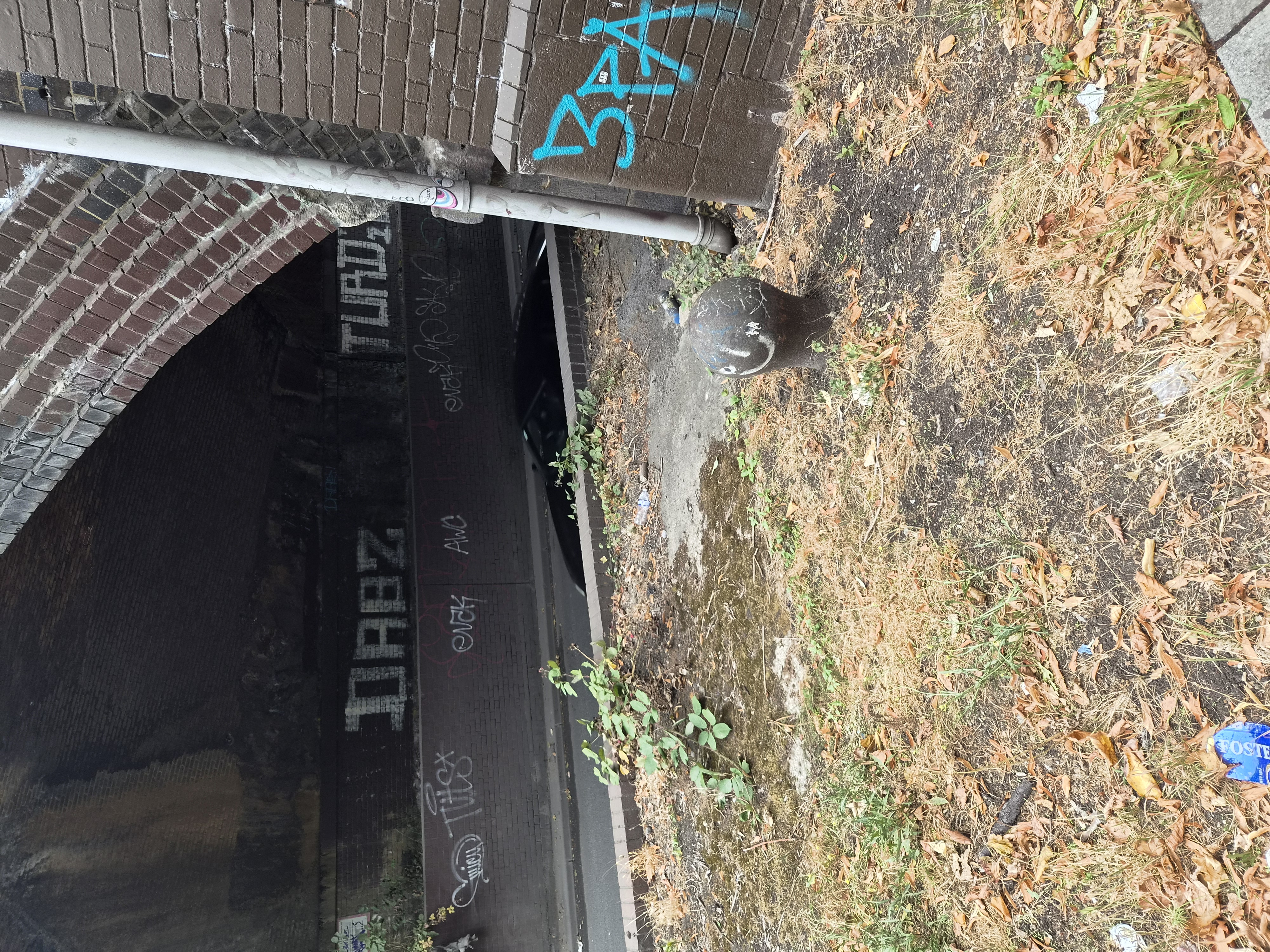
When I followed the guide recently I came across a lone bollard (right) in Surrey Canal Road at the point where the Croydon branch turned off. Peter Finch
Burton — the tailor of taste — part 1: shops in the former LCC part of London
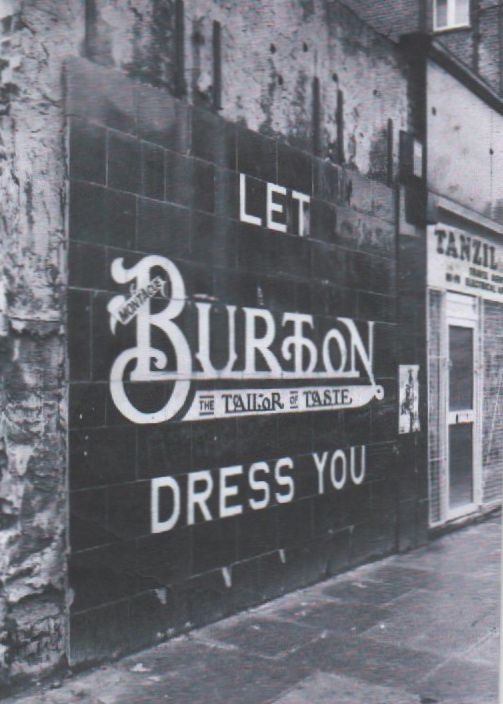
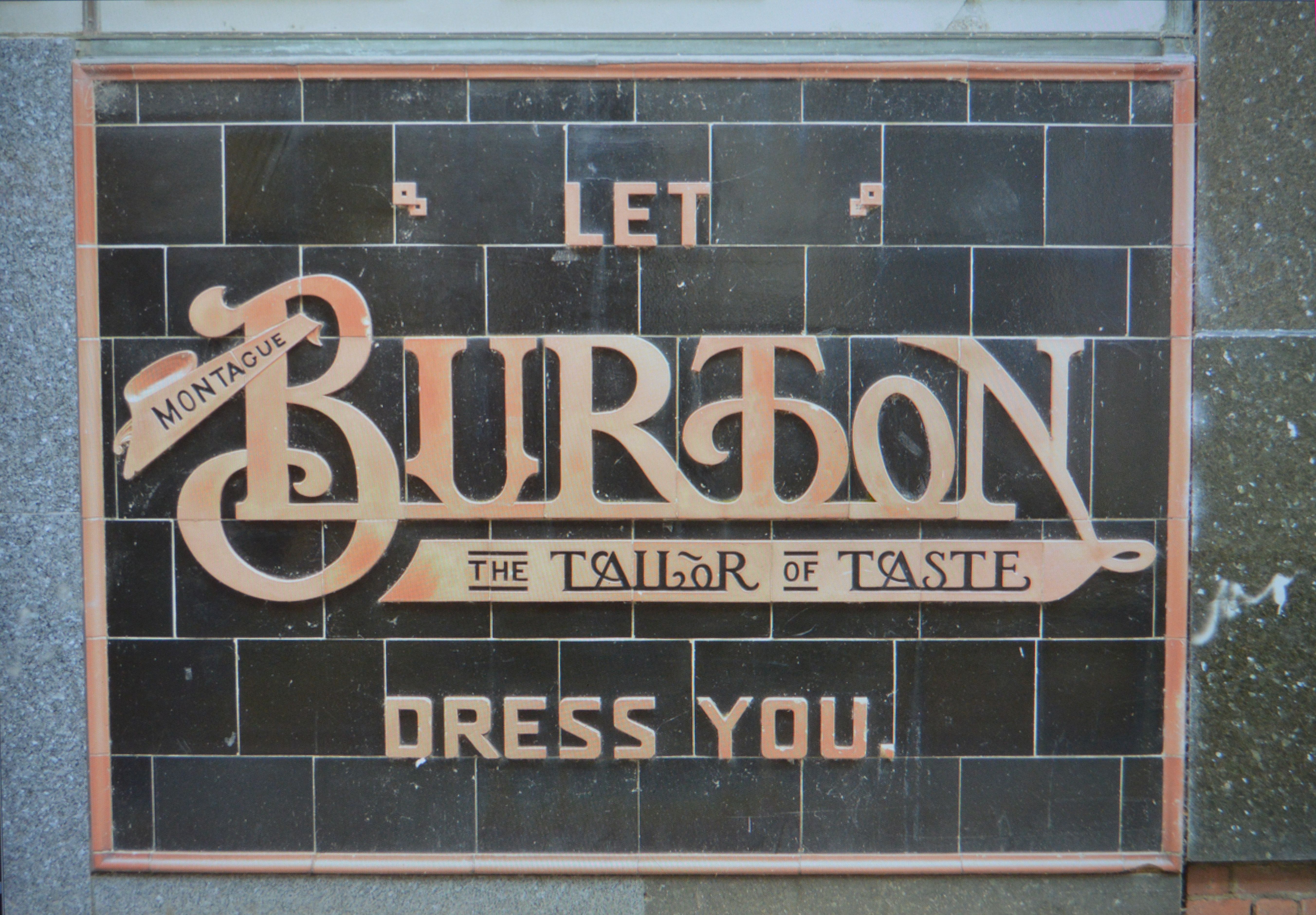
In February 1978 the late Bill Firth led a GLIAS walk in the Cricklewood area. We passed a Burton's shop on the corner of 164-8 Cricklewood Broadway and Cricklewood Lane. Facing the latter their marketing slogan (Photo 1). Reading recent Newsletter articles about 'doing something' with photographic records, that photo came to mind. Alas, the slogan and shop have gone, but a similar one survives at Abergavenny, where the shop is a 'listed' building (Photo 2).
-
1. 1936. 1978 photo, tiled sign, 162-168 Cricklewood Broadway, NW2; 2. 1930s. Abergavenny, tiled sign.
Bob Carr mentioned many years ago (GLIAS Newsletters 138, Feb 1992 and 142, Oct 1992) there were 23 Burton shops in London, with a distinctive architectural style, including use of (often black) Vitrolite. Wikipedia says: 'Originally developed in the early 1900s, Vitrolite is a type of rolled opal plate glass made by casting rather than blowing.'
There is now a website — 'Laid by Monty' (see below) — of a Burtons enthusiast which sets out all their 'Deco style' shop sites he knows of in the UK, including an indication if the store has been demolished, with the majority having an address and an exterior photograph. Many, now with a current retailer's name attached, remain recognisable as a former Burtons. London has good coverage of 45 locations. However, that is not the full story, as not all shops were 'Deco style', a designation which covers a variety of design templates.
A trawl of Montague Burton in the 'Commercial section' of Kellys Directories from 1918 to 1926, then at approximately five-year intervals until 1963 (when those entries were no longer made), shows that the former London County Council (LCC) area had, over time, 98 addresses of Burtons shops, shown in the accompanying table. The largest number in any year was 77 in 1963. And that does not include ones in places (eg, Wimbledon) that were included when the Greater London Council (GLC) was formed in 1965, some of which are shown in the website.
About 50% of shops had one or more different occupiers in part of the building. In 1963, such entries were for Billiard rooms (7), Government bodies (9) and Dance (5). Entries in Kellys was by subscription, and there might have been more, unlisted, in each of those categories.
Robert Mason has been busy adding details of Burton 'Deco style' shops throughout inner and outer London to the GLIAS website, and will welcome any additional information and/or photographs.
Part 2, in a future Newsletter, will have background on the Montague Burton organisation and, thanks largely to Robert, cover Burton London shops outside the former LCC area.
Other websites
Writing this article was sparked (and helped) by seeing the 'Laid by Monty' website, https://laidbymonty.com
It was set up, and is maintained, by an enthusiast, Jeremai Smith. He is also keen to have any news, additional information about, and photographs of, the 'Deco style' Burtons shops.
English Heritage also has photographs (strictly copyright) of many 'Deco style' and later Burton shops. David Thomas
-
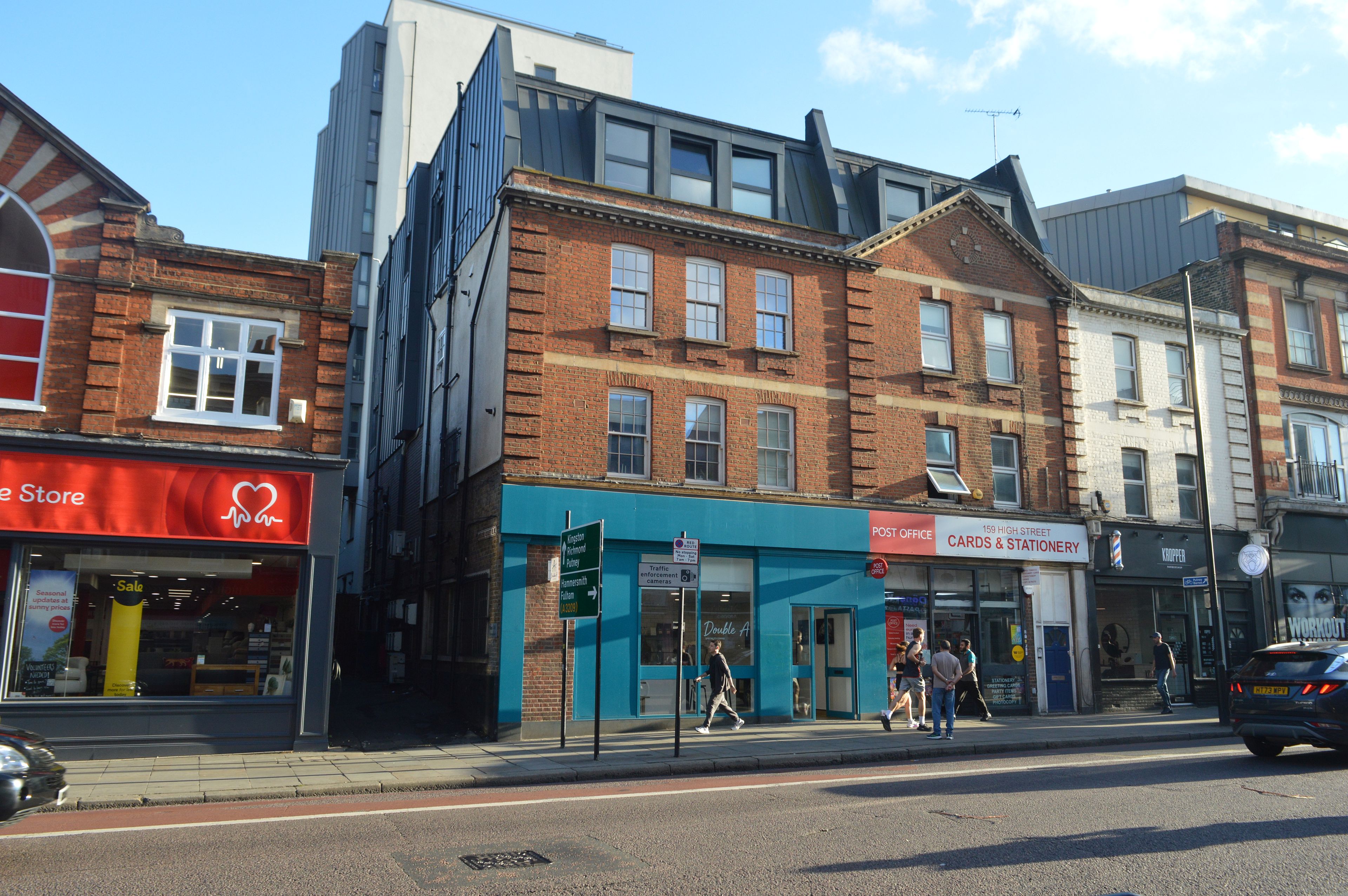
3. 1918. 157 High Street, Wandsworth, SW18. The corner shop which was Burton's first in London. Clearly pre-existing. Any Burton embellishment must have been restricted to the shop front.
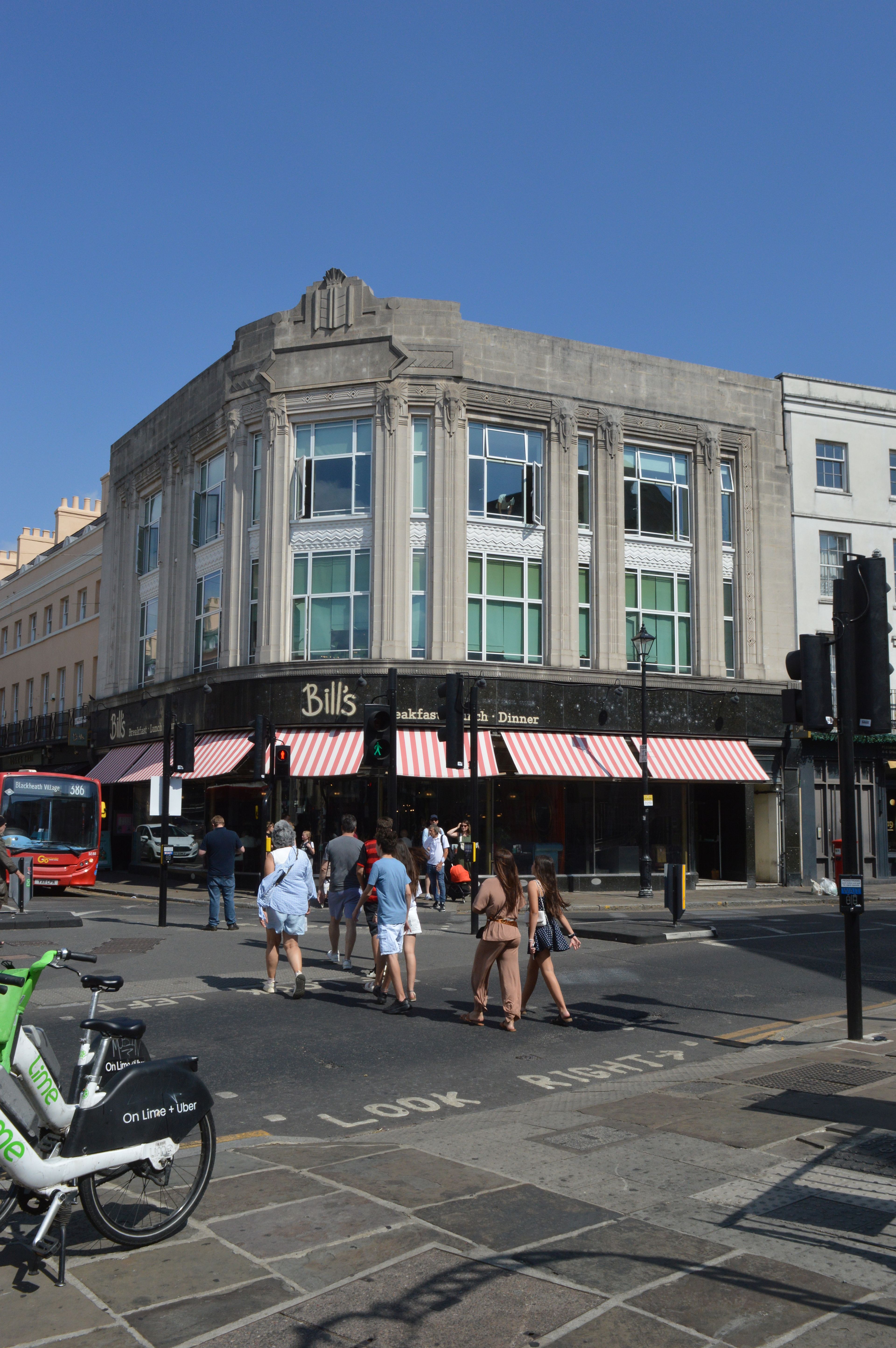
4. 1931. Corner of 8 Church St, and 13&14 Nelson Rd, Greenwich, SE10. One of 11 shops UK-wide embellished with elephant heads.
-
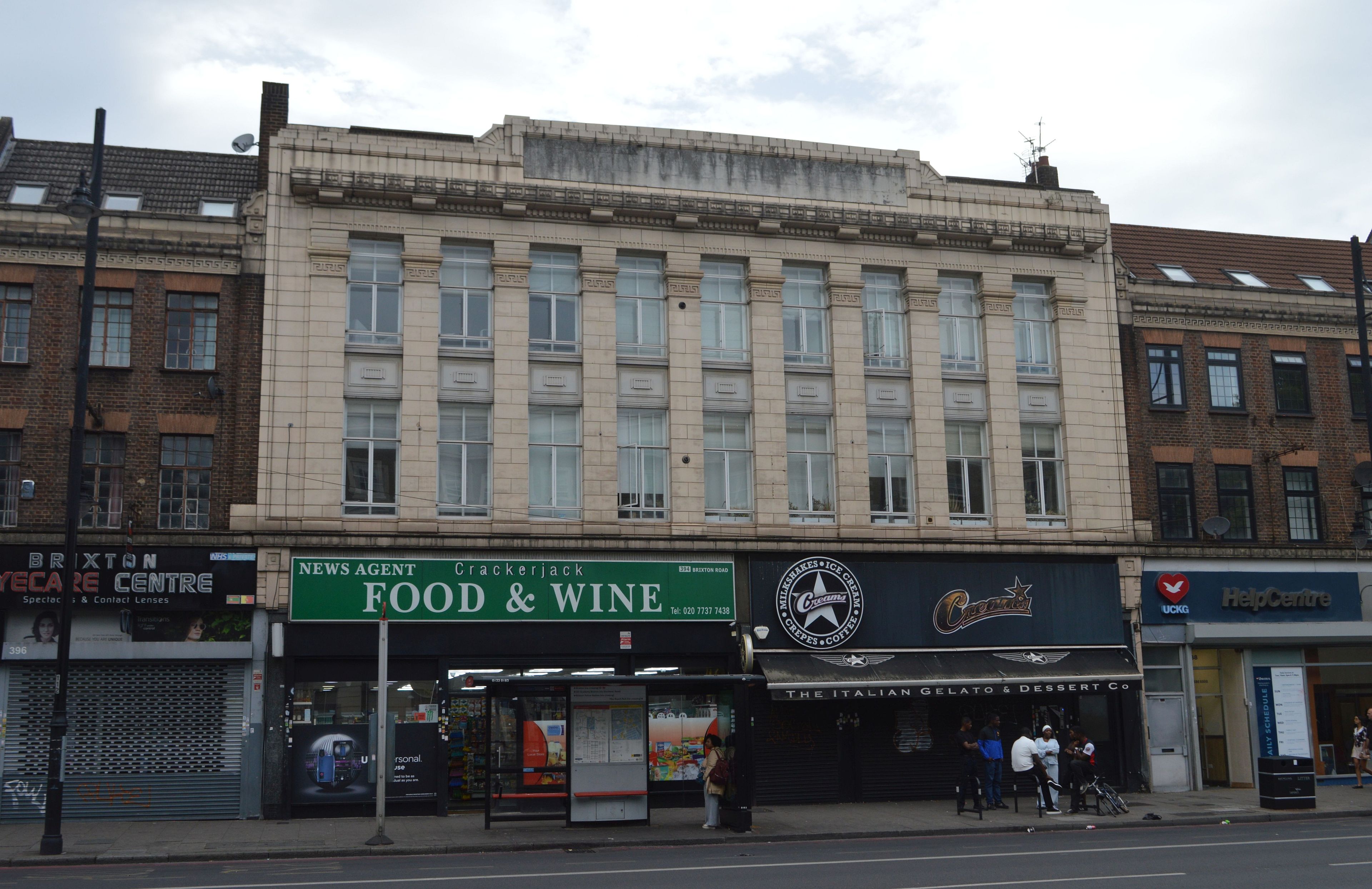
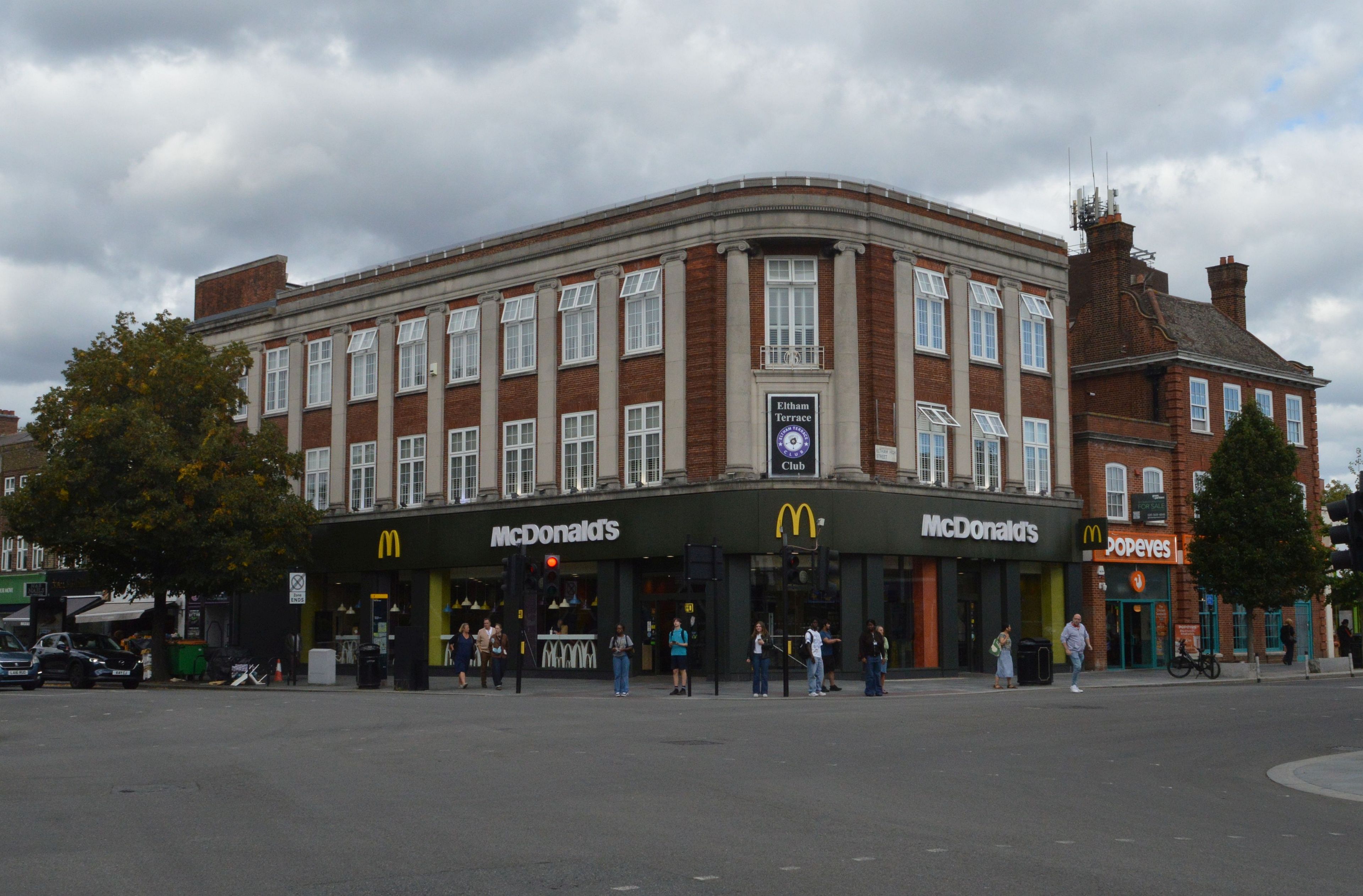
5. 1931. 390/2/4 Brixton Rd, SW9. 6. 1941. 61 Eltham High St /2 Well Hall Lane, SE9.
-
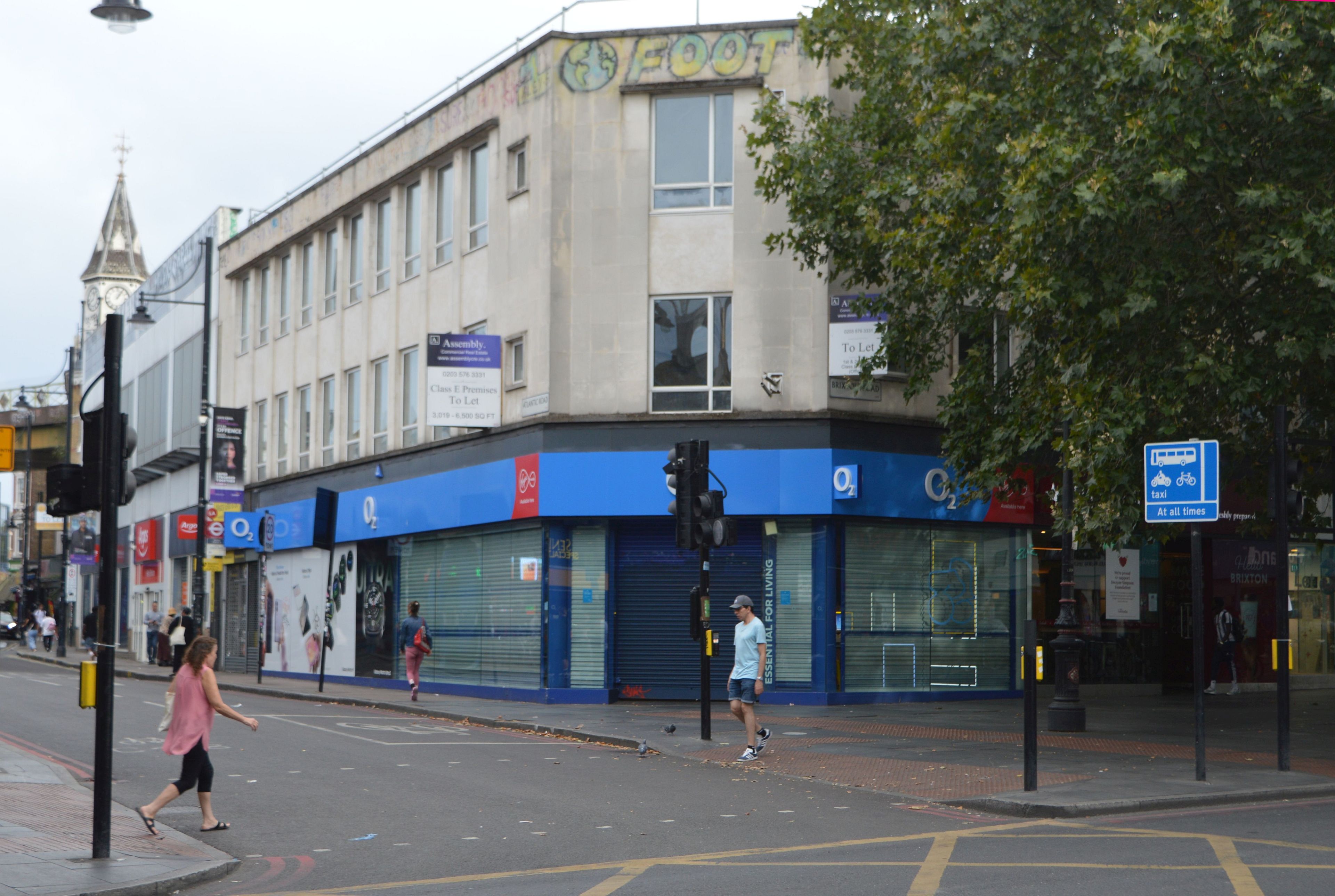
7. 1952. 415-9 Brixton Rd, SW9. 8. 1956. 100 High St North, East Ham, E6.
-
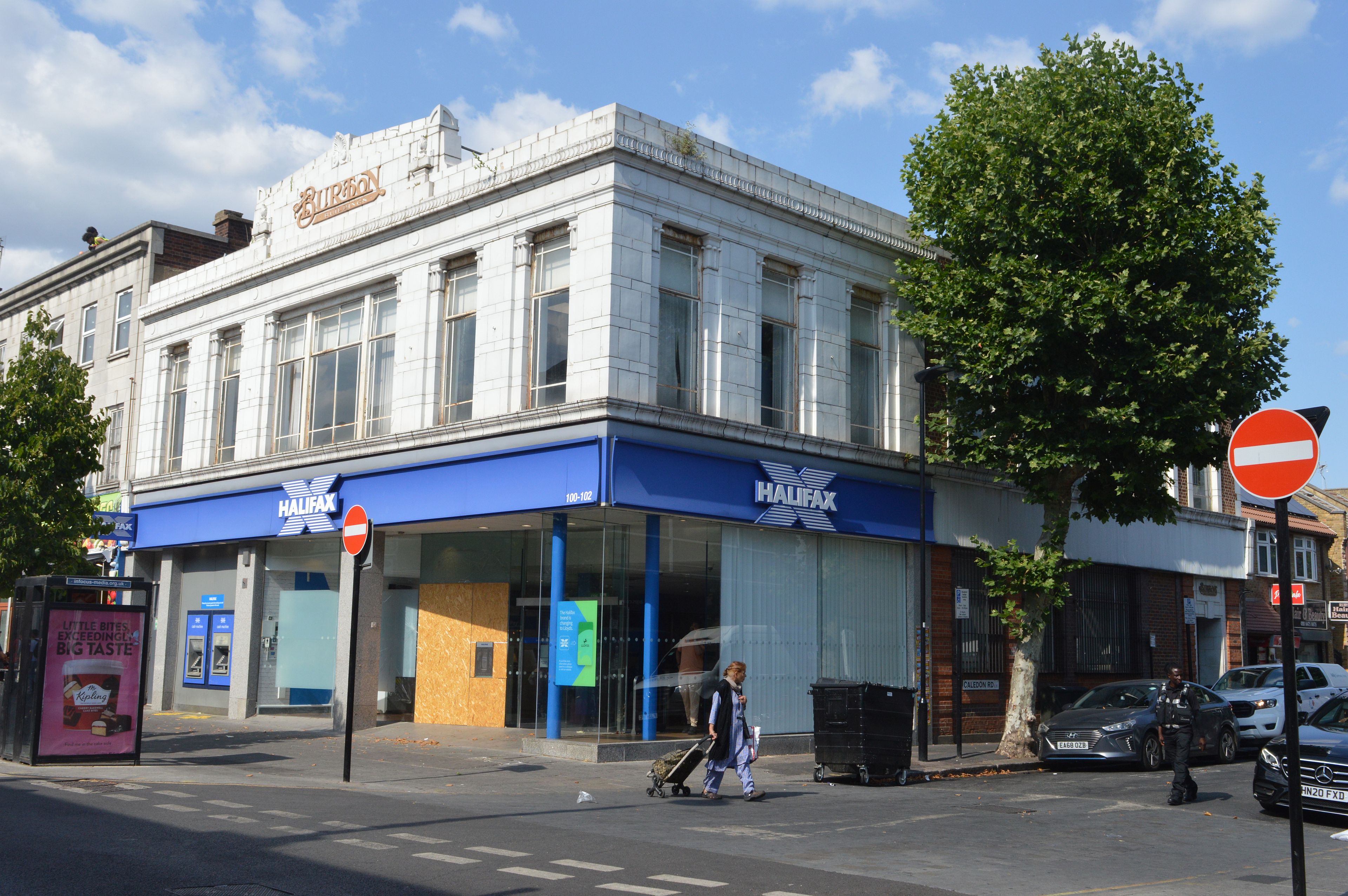
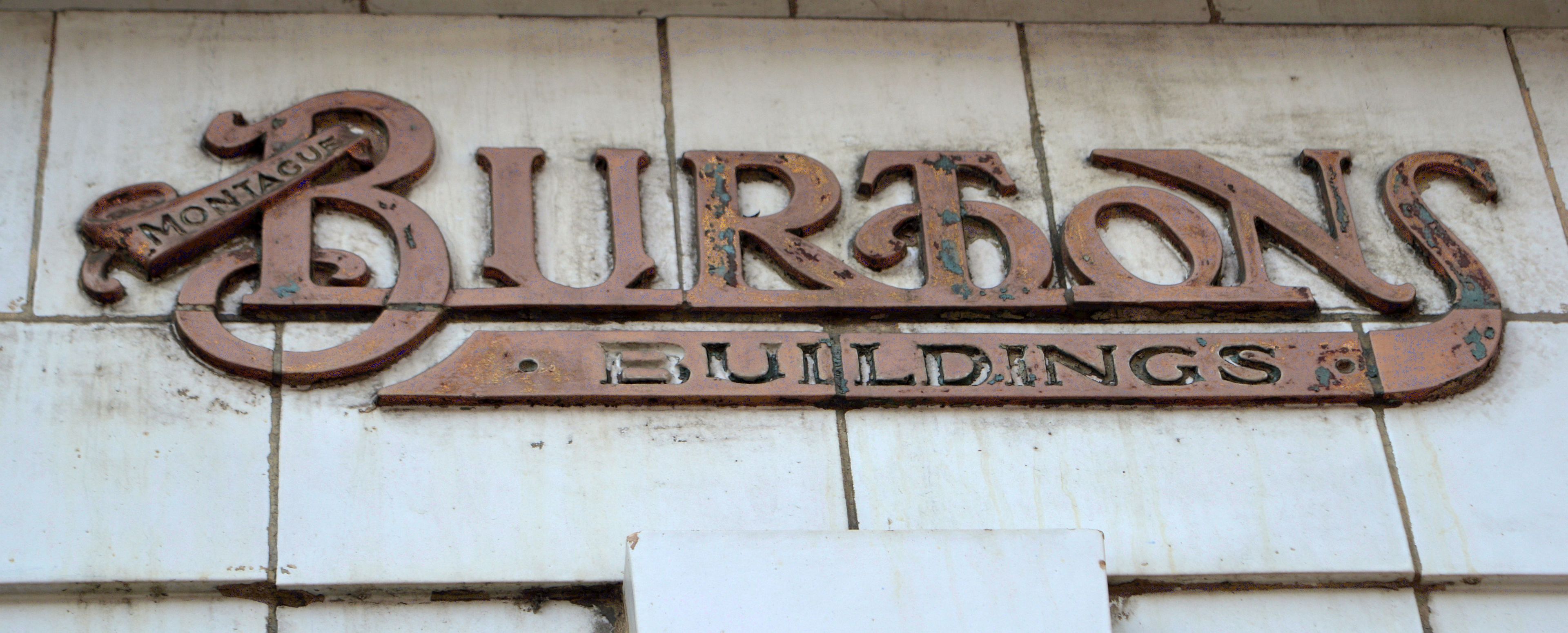
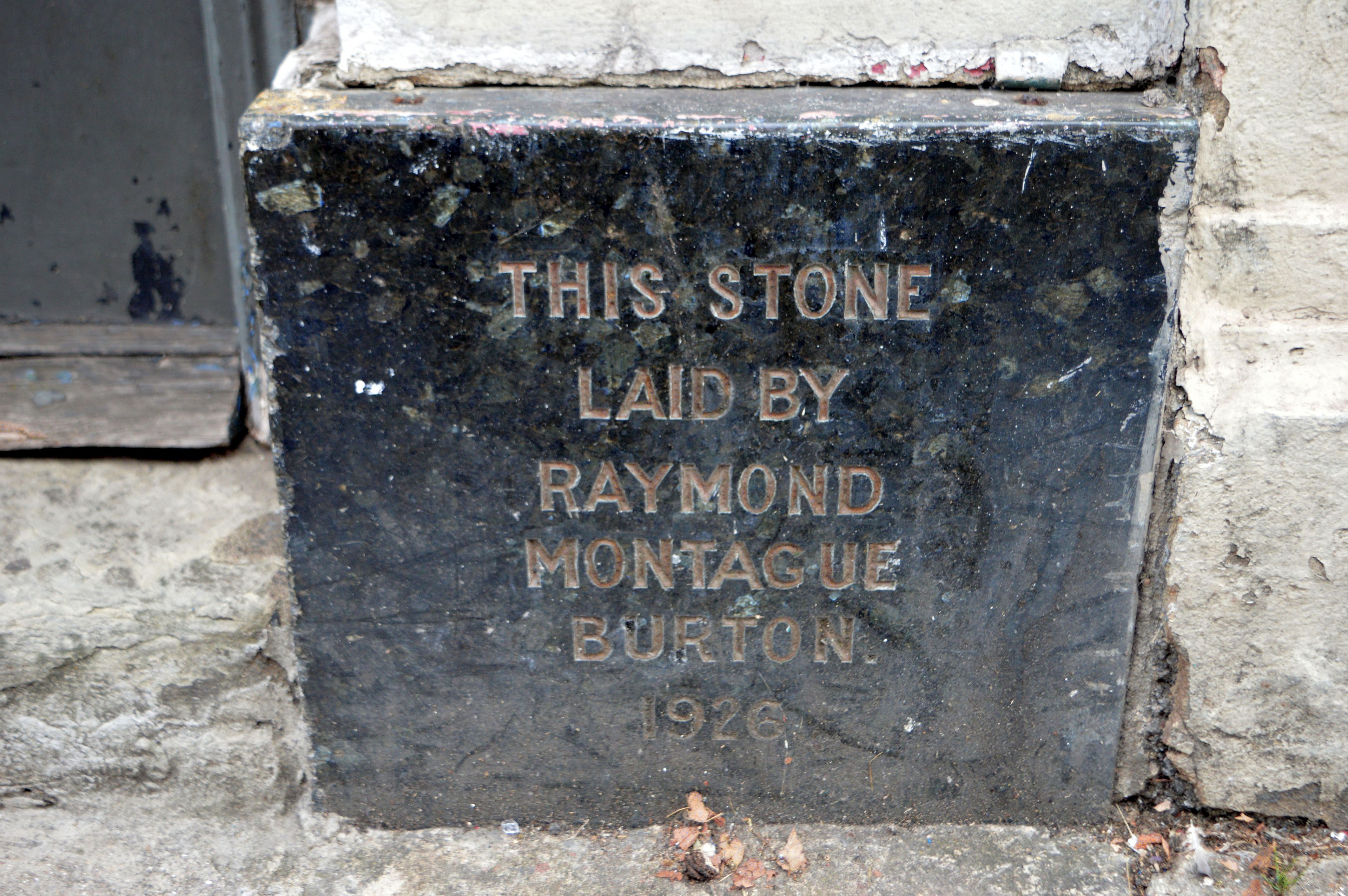
9. Perhaps uniquely, 'Burton Buildings' sign above the side door to 100 High St North. 10. Most, if not all, shops with a Vitrolite façade had a small section at pavement level, acting as a foundation stone, with a date and name of one of the Montague Burton family. Typical one on side of 106/8 High St, Clapham, SW4.
Dates Burton shops shown in Kellys Directory.
Dates were chosen yearly 1917-1926, then approximately five yearly 1926-1963. This table has the first and last of those dates a shop is shown. They are not exact dates of opening and closing. No Last Year date means the shop was still shown in 1963. The press date for each Directory would have been towards the end of the previous year. Total locations listed: 98
| Number | Address | Post Code | First year | Last year (a) | IHO |
| 157 | High St, Wandsworth | SW18 | 1918 | 1956 | GTL05614 |
| 87 | High St, Deptford | SE8 | 1921 | 1941 | |
| 98 | High St, Putney | SW15 | 1922 | D | |
| 29 & 31 | Oxford St | W1 | 1922 | 1922 | |
| 89 | Oxford St | W1 | 1922 | 1941 | |
| 352 | High St, Stratford | E15 | 1922 | 1931 | |
| 9 & 10 | The Broadway, Deptford | SE8 | 1922 | ||
| 60 (b) | Powis St, Woolwich | SE18 | 1923 | 1956 | |
| 118 & 120 | Rye Lane, Peckham | SE15 | 1923 | ||
| 238a & 240a | High Road, Kilburn | NW6 | 1923 | ||
| 293 & 295 | Kentish Town Rd | NW5 | 1923 | ||
| 23 (c) | Woodgrange Rd | E7 | 1924 | ||
| 10a & 12a | Chrisp St | E14 | 1924 | GTL04982 | |
| 112 (d) | Cheapside | EC2 | 1924 | ||
| 268-270 | High Holborn | WC1 | 1926 | 1941 D | |
| 63 & 64 | Strand (later 60-64) | WC2 | 1926 | ||
| 229 & 231 (e) | Edgware Rd | W2 | 1926 | 1961 | |
| 490 | Harrow Rd | W9 | 1926 | 1952 | |
| 155 & 157 | Oxford St | W1 | 1931 | 1931 | |
| 372 & 374 | Mare St | E8 | 1931 | ||
| 284 | Pentonville Rd | N1 | 1931 | 1956 | |
| 168-174 | Charing Cross Rd | WC2 | 1931 | 1956 D | |
| 13 & 15 | Seven Sisters Rd | N7 | 1931 | ||
| 177 | Portobello Rd | W11 | 1931 | ||
| 161 | High St, Camden | NW1 | 1931 | 1941 D | |
| 50 & 52 (f) | Ludgate Hill | EC4 | 1931 | 1941 | |
| 118-132 | New Oxford St | WC1 | 1931 | GTL04934 | |
| 12,14,16 | High St, Islington | N1 | 1931 | D | |
| 156 | Waterloo Rd | SE1 | 1931 | D | |
| 50 & 52 | High Rd, Kilburn | NW6 | 1931 | GTL04980 | |
| 312 & 314 | North End Rd | SW16 | 1931 | ||
| 114 1,3,5 |
Powis St, Woolwich 1,3,5 Hare St Same shop |
SE18 | 1931 | ||
| 51-61 | Hare St, Woolwich | SE18 | 1931 | ||
| 106/8 (h) | High St, Clapham | SW4 | 1931 | 1956 | |
| 390/2/4 | Brixton Rd | SW9 | 1931 | ||
| 39 | St Johns Rd, Battersea | SW11 | 1931 | ||
| 8 & 10 | King St, Hammersmith | W6 | 1931 | GTL04974 | |
| 129 | Balham High Rd | SW12 | 1931 | ||
| 5,7,9 | High St, Deptford | SE8 | 1931 | 1952 | |
| 2-6 | Broadway, Stratford | E15 | 1936 | 1956 D | |
| 100-104 | High St, Lewisham | SE13 | 1936 | ||
| 8 13 & 14 |
Church St, Greenwich Nelson Rd Same shop |
SE10 | 1936 | GTL04667 | |
| 103 & 105 | Streatham High Rd | SW16 | 1936 | ||
| 156 | High St, Acton | W3 | 1936 | ||
| 338 & 340 | Chiswick High Rd | W4 | 1936 | ||
| 806 | Holloway Rd | N19 | 1936 | ||
| 2-10 67 & 68 | St George's Rd London Rd Same shop |
SE1 | 1936 | D | |
| 50 | High St, Tooting | SW17 | 1936 | ||
| 166 & 168 | Cricklewood Broadway | NW2 | 1936 | GTL04986 | |
| 480 & 482 | Harrow Rd | W9 | 1936 | ||
| 108-110 | High Holborn | WC1 | 1941 | D | |
| 121 & 123 | Camden High Rd | NW1 | 1941 | D | |
| 72 & 74 | Notting Hill Gate | W11 | 1941 | ||
| 448-454 | High Rd, Tottenham | N17 | 1941 | ||
| 289,291/3 | Neasden Lane | NW10 | 1941 | 1956 D | |
| 61 2 |
Eltham High Rd Well Hall Lane Same shop |
SE9 | 1941 | ||
| 90 & 92 | Rushy Green | SE6 | 1941 | ||
| 22-26 (c) | Woodgrange Rd | E7 | 1941 | 1956 | |
| 202 | Kensington High St | W8 | 1941 | ||
| 25 & 27 | Hammersmith Broadway | W6 | 1941 | 1956 | |
| 175 | Victoria St | SW1 | 1941 | ||
| 284 & 286 | Seven Sisters Rd | N4 | 1946 | ||
| 79 | Gracechurch St | EC3 | 1952 | ||
| 114-120 | Regent St | W1 | 1952 | ||
| 105-109 | Oxford St | W1 | 1952 | ||
| 73-77 | Oxford St | W1 | 1952 | ||
| 370/2 | Mare St | E8 | 1952 | ||
| 415-419 | Brixton Rd | SW9 | 1952 | GTL05613 | |
| 51-61 | Hare St | SE18 | 1952 | ||
| 25-31 | Kingsland High St | E8 | 1952 | ||
| 419/421 | Oxford St | W1 | 1956 | ||
| 5/6 | Grand Bldgs, Trafalgar Sq | WC2 | 1956 | ||
| 67/75 | New Rd | E1 | 1956 | ||
| 48/54 | Denmark Hill | SE5 | 1956 | ||
| 142/8 | Edgware Rd | W2 | 1956 | ||
| 33/33a | Sloane Sq | SW1 | 1956 | ||
| 2/8a 1/3 |
High St Walthamstow St James' St Same shop |
E17 | 1956 | ||
| 169/171 | Fore St | E18 | 1956 | ||
| 100 | High St North | E6 | 1956 | ||
| 11-13 | Golders Green Rd | NW11 | 1961 | ||
| 1/3 | High Rd, Wood Green | N22 | 1961 | ||
| 760 | High Rd, Finchley | N12 | 1961 | ||
| 571/573 | Kingsbury Rd | NW9 | 1961 | GTL04981 | |
| 2 (g) | Queens Parade, Muswell Hill | N10 | 1961 | ||
| 17/18 | Broadway, Ealing | W5 | 1961 | ||
| 79/81 | The Broadway, W. Ealing | W13 | 1961 | ||
| 20/24 | Chase Side Southgate | N14 | 1961 | ||
| 262 | Green Lanes | N13 | 1961 | GTL04973 | |
| 4/6 | Old Church Rd, Chingford | E4 | 1961 | ||
| 71/3 | The Broadway, Wimbledon | SW9 | 1961 | ||
| 130/2 | High St, Penge | SE2 | 1961 | ||
| 284a & 286 | Seven Sisters Rd | N4 | 1961 | ||
| 150/2 (h) | High St, Clapham | SW4 | 1961 | ||
| 760 | High Rd, North Finchley | N12 | 1961 | GTL04972 | |
| 215-217 (e) | Edgware Rd | W2 | 1963 | ||
| 670/2 | High Rd, Leyton | E11 | 1963 | ||
| 56/58 (b) | Powis St, Woolwich | SE1 | 1963 |
Notes
'Same shop' means that two addresses shown are for a corner shop. Total 4.
a) No date if shown in 1963 Kellys Commercial Section. Burton shops were not listed after 1963. D means known to be demolished.
b) Burtons moved from 60 Powis St (1923-1956) to 56/8 Powis St, Woolwich, SE18 (shown 1963). Not shown at either in 1961.
c) 23 Woodgrange Rd not shown in 1946 or 1952. Nos 22-26, opposite was shown 1941-1956.
d) 112 Cheapside not shown in 1956 Commercial section, but that year the Kellys Streets Section showed Montague Burton, but with no street number or the word Tailor. In 1961 it is shown as 111, 112, 113, Tailor.
e) Burtons moved from 229/231 Edgware Rd (shown 1946 to 1961) to 215-7 Edgware Rd (as shown 1963). The previous site was demolished for a new road layout.
f) 50 & 52 Ludgate Hill not shown 1946. Shown 1952 as Burton House, but not as a Tailor.
g) Queens Parade, Muswell Hill renamed 203 Muswell Hill Broadway in 1963.
h) Not shown 1956 and later. Burtons moved from 106/8 Clapham High Rd (shown in 1956) to 150-2 (shown in 1961).
Interesting to read about Ivy House on Seven Sisters Road (GLIAS Newsletter August 2026). I worked there for a short time in 1973 as a young London Transport civil engineering trainee. The soil mechanics department was based in the building and the various ground investigation materials — borehole cores, samples etc — were stored in a large high room with a clerestory roof.
At the time, the Bakerloo Line extension proposals were being dusted off again and boreholes were sunk along the route between Elephant and Castle and Peckham Rye via Camberwell Green.
I think the building was also a signing-on/changeover point for bus crews. Bob Mitchell
Looking at the list of power stations (GLIAS Newsletter August 2026), it looks like at least two I know of have been omitted — London North and North West — both gas-fired and both operated by Uniper (formerly Eon, www.uniper.energy/united-kingdom/power-plants-united-kingdom):
1. Enfield in Brimsdown (https://en.wikipedia.org/wiki/Enfield_Power_Station)
On part of the site of the earlier Brimsdown power station which supplied the trams.
Not to be confused with the incinerator of the North London Waste Authority (NWLA) — seven boroughs, not five — a source of much discontent for environmental reasons, and its ongoing replacement (by 2030, allegedly) as part of the so-called 'EcoPark' which is causing even more discontent! The old incinerator supplies the Grid, as will the new one — if the plug doesn't get pulled on the project.
https://walthamforestecho.co.uk/2026/07/02/anti-edmonton-incinerator-campaigners-hail-green-takeover-of-nlwa-board/
2. Taylors Lane in Willesden (https://en.wikipedia.org/wiki/Taylors_Lane_Power_Station)
Its generators are based on Rolls-Royce Olympus turbines from Vulcan bombers!
As I understand it, from a local lecture by a Uniper representative some years back, both sites make lots of money being on standby for the National Grid with virtually instant startup to cover sudden peaks, and an astronomical amount in gas costs when actually in use — for as little time as the Grid can get away with. John Usher
I've come across a rather unusual old torpedo/Hamilton bottle, which appears to carry markings associated with two different London mineral-water manufacturers.
One side reads WEBB'S SODA WATER.
On the other side there appears to be the INVICTA trademark with the rearing horse, associated with Wm. Culverhouse & Co., London, Established 1808.
There is also a clearly embossed 88 on the pointed end of the bottle.
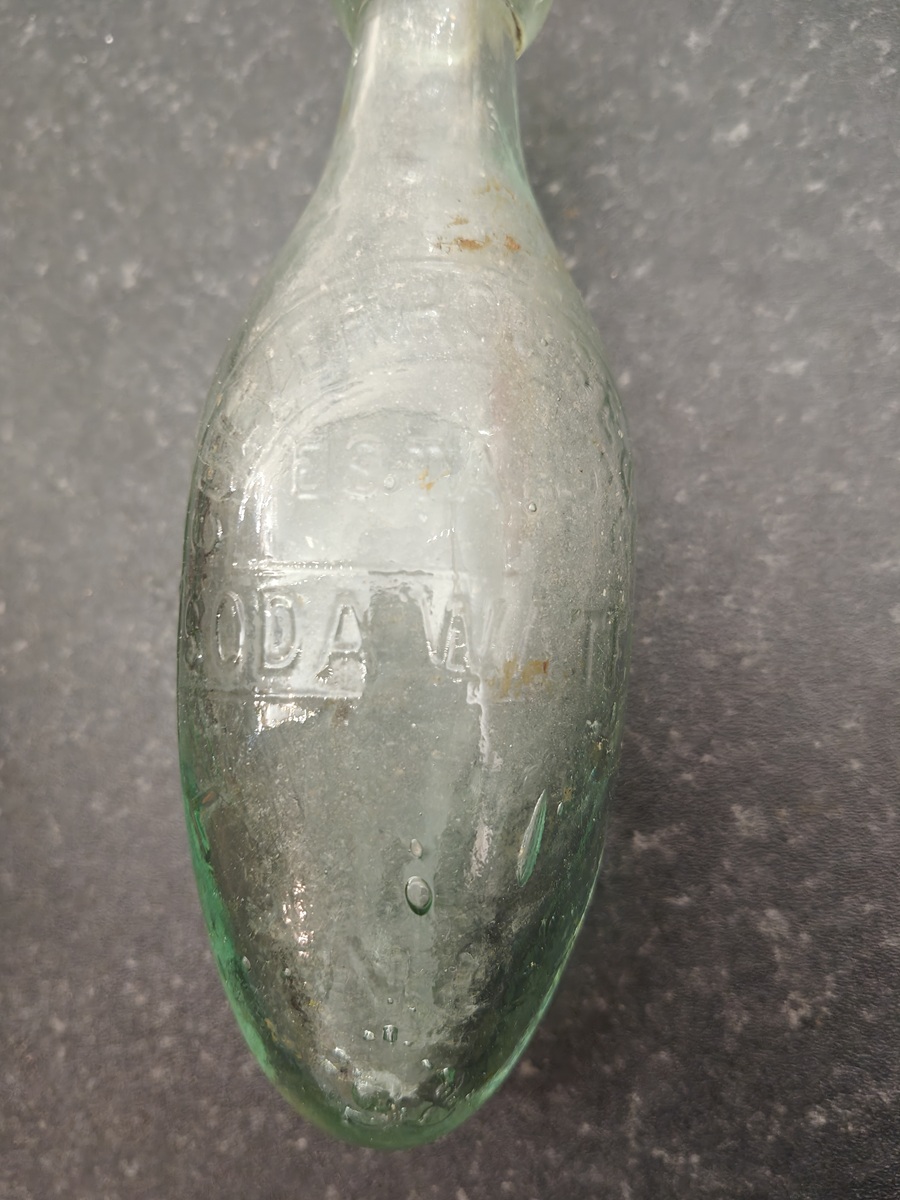
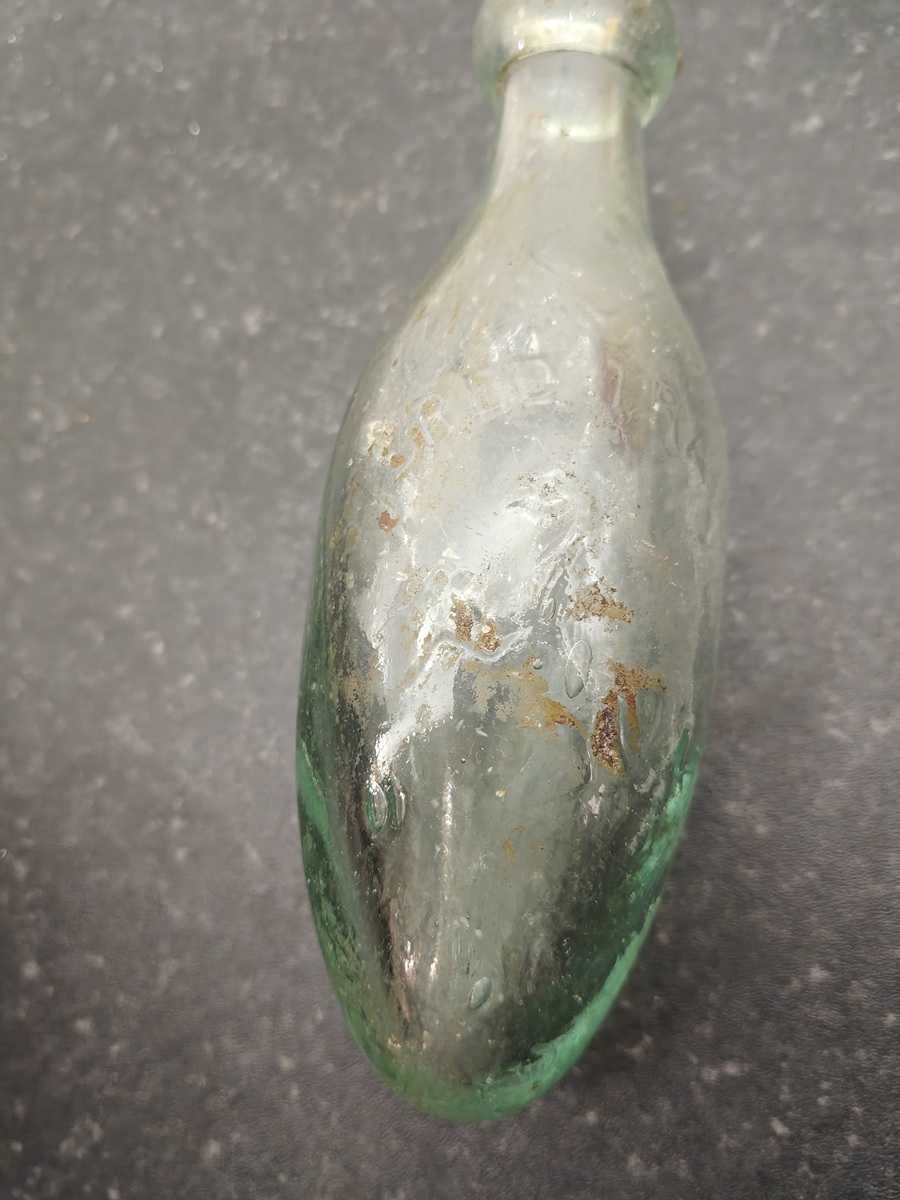
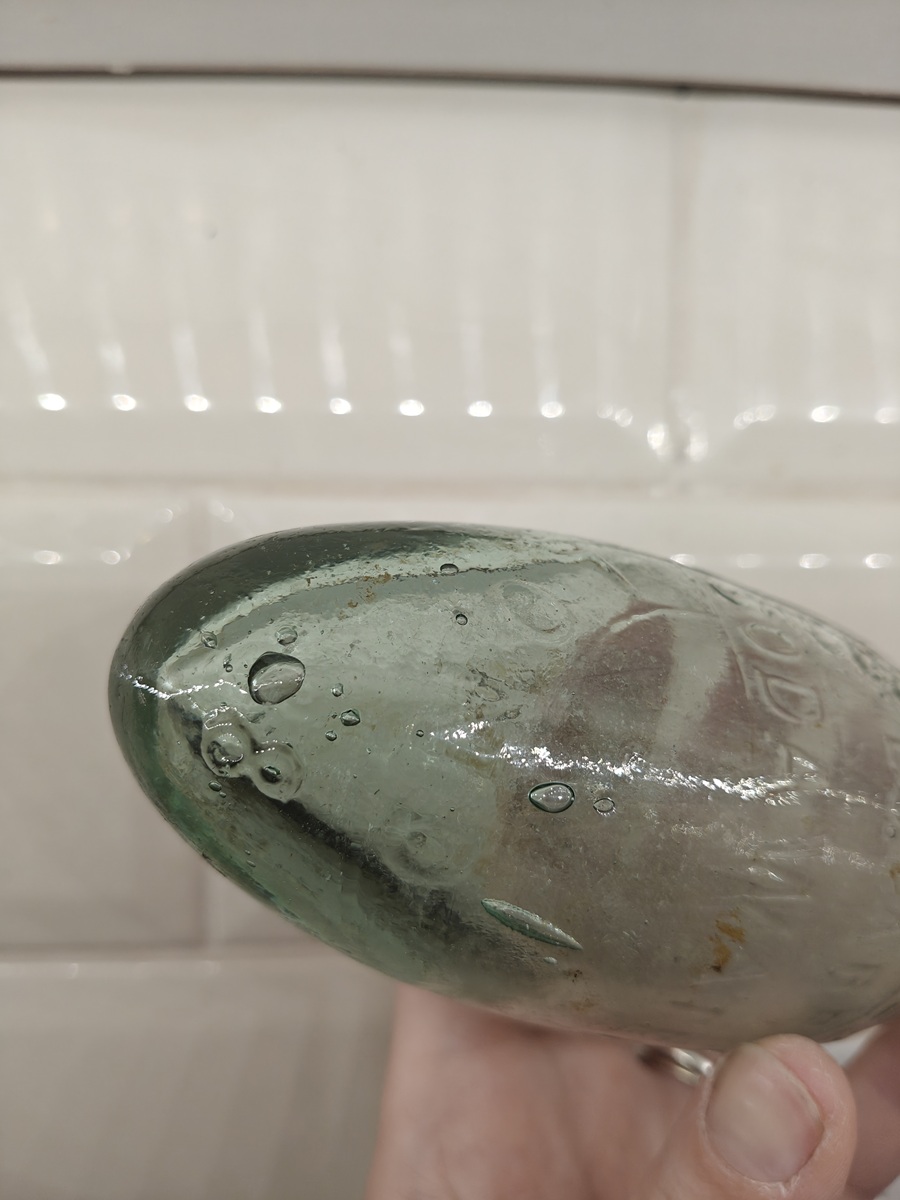
I've been trying to understand how those markings could have ended up together. As the lettering and trademark are moulded into the glass, I don't think this can simply be a case of a bottle having been relabelled or reused by another company.
I wondered whether GLIAS members might have come across something similar, or perhaps know more about how these bottles were commissioned and manufactured. In particular, I'd be very grateful if anyone could help me understand whether:
- Webb's and Culverhouse ever had any connection, commercially or otherwise;
- they are known to have used the same glassworks or bottle mould maker;
- dual-marked or incorrectly made customer bottles are known;
- the 88 might identify a mould, glassworks, batch or pattern;
- or, perhaps most excitingly, whether another bottle with this particular combination of markings has ever been recorded.
I'm not looking for a valuation — I'm much more interested in understanding the history of the bottle and how it came to be made this way.<>r Please contact Judit Marie. Email: mariedavid137@gmail.com
100 years of the red phone box
This year marks the 100th anniversary of the iconic red telephone box.
The first telephone box, made of pre-cast reinforced concrete with wooden doors and called type K1, was not universally popular and so the Royal Fine Arts Commission held a competition to find a replacement.
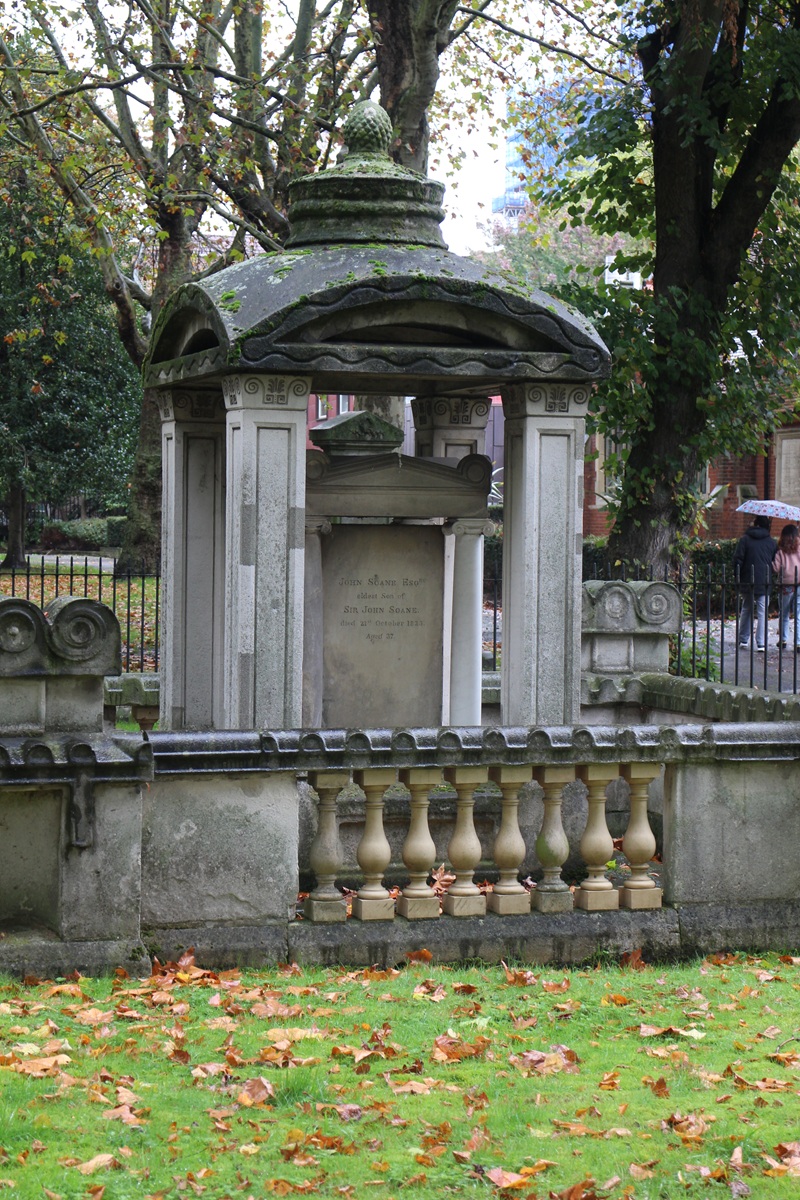
The architect Giles Gilbert Scott, later known for London landmarks Battersea Power Station, Waterloo Bridge and Bankside Power Station (Tate Modern), reputedly found inspiration for his winning design — the K2 — from the mausoleum of Sir John Soane in St Pancras Old Church yard [GTL03707] which Soane had designed for himself.
The mausoleum (below left) is still there, topped with a dome looking like a squat phone box.
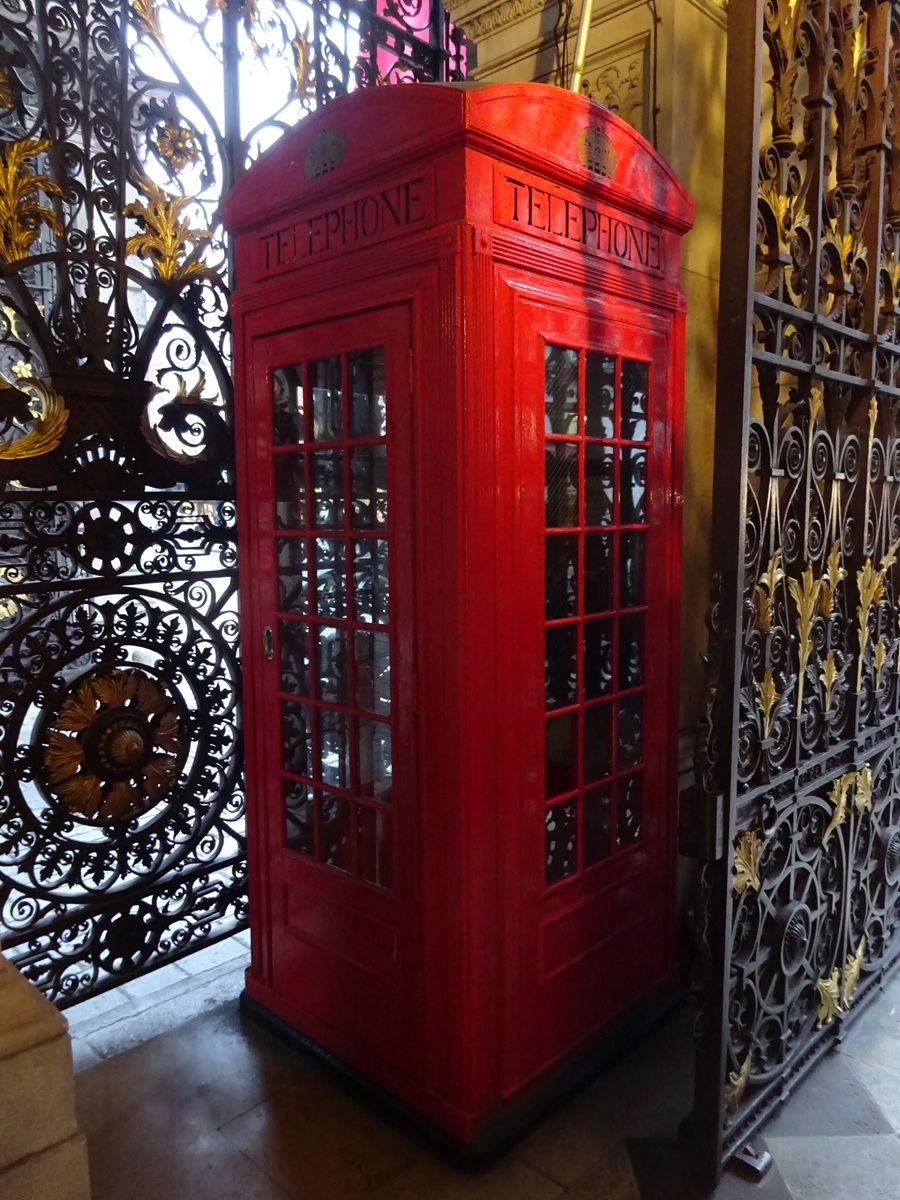
Scott's prototype K2 [GTL03812], made of wood, stands protected from the elements in the entrance portal of Burlington House, Piccadilly (above centre) and remains in the location where it was placed after judging.
Scott originally proposed that the kiosk be made of steel, and painted silver with a blue-green interior, but the General Post Office chose to produce the box in cast-iron, painted red.
The first examples were erected in 1926 in Holborn and Kensington, and during the following decade approximately 1,700 were erected, mainly in London.
In 1935 a smaller version of the red telephone box was introduced, the K6, and this is the type most commonly seen today.
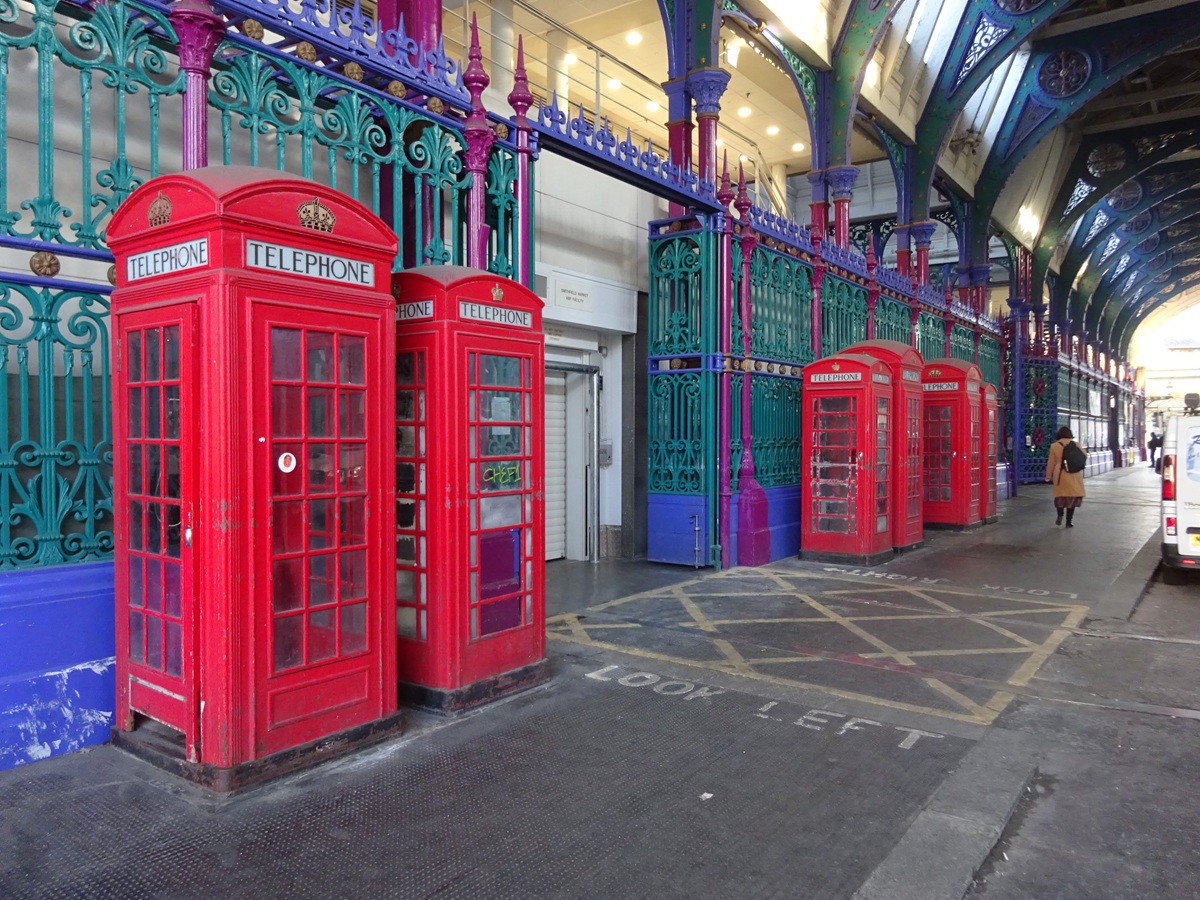
The 'Jubilee Kiosk' was 8ft 3in tall, a foot smaller than the K2 and it was considerably lighter at around ¾ ton as opposed to 1¼ tons. It had more windows too with 24 panes per side rather than 18, with the central pane being much wider. Above right shows a mixture of listed K2 and K6 boxes at Smithfield market [GTL04008].
By the end of the 1930s over 20,000 K6s had been installed all over the country and they remained in production until the 1960s.
The final evolution of the red box was the K8, introduced in 1968. Although 11,000 were made, very few remain in London. You might see some on Tube station platforms, painted blue.
Mobile-phone technology has largely made these kiosks redundant but many have found alternative uses as housing for defibrillators, book exchanges, information points and, in one case in Devon, a very small nightclub! Many have been listed, ensuring their continued survival.
Many in London are retained for their picturesque contribution to the streetscape and you will often see tourists posing for photographs in front of them.
If a phone box is not listed, then according to Ofcom regulations it needs to have had 52 or more calls made from it over the past 12 months (averaging at least one per week) to be deemed useful. (Other criteria include poor mobile coverage in the area or a high risk location with potential need for emergency calls).
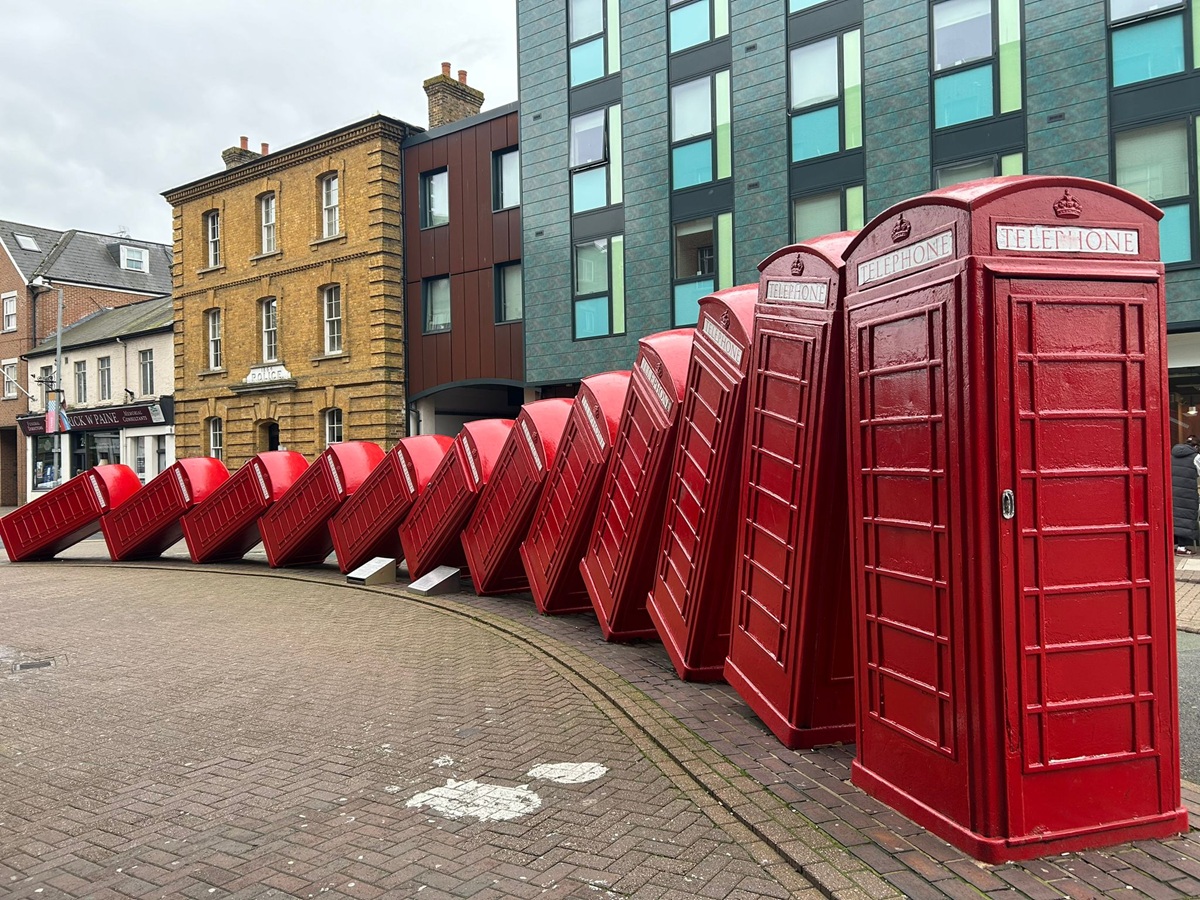
As a result many have disappeared in recent years. Some, amusingly, have become David Mach's 1989 public art installation in Kingston upon Thames appropriately called Out of Order [GTL04559].
The K6 project
According to Paul Bottomley, who is attempting to visit and photograph all boxes with his K6 Project, there are about 800 still left in London, of which about 450 are listed.
He says: 'I have so far visited 6,600 boxes and think I am about two-thirds of the way through the challenge. The number of boxes changes daily as new ones are found, and older ones removed but, overall, it hovers around 10,000 in total. I estimate another three years to finish everything off to a suitable level to say done!'
Visit the K6 Project: www.thek6project.co.uk or search the Industrial History Online database [IHO site references are in square brackets]: www.industrialhistoryonline.co.uk
Stanley Arts in South Norwood has secured significant funding for conservation works, environmental upgrades and improvements to building accessibility from the National Lottery Heritage Fund, The Architectural Heritage Fund and The Pilgrim Trust.
The venue, which hosted SERIAC earlier this year (GLIAS Newsletter June 2026), will now develop plans and fundraise for a multi-million pound project ahead of the celebration of founder William Stanley's 200th birthday in 2029.
The Stanley Public Hall first opened in 1903 following the success of Stanley Works which manufactured instruments for civil and military clients in a factory near Norwood Junction railway station since the mid-1870s.