In this issue:
- From the chair
- Proposals for the East London Waterworks Park
- Railway 200: London's oldest railway station
- Database Spotlight 8
- Aberfeldy Street
- Silvertown Road Tunnel
- New Thames crossing confirmed
- Virol
- Restoration of Bazalgette Mausoleum
- A London gasholder now gone
- Republishing out-of-print books
- More on Lister's Laundry
- Launderettes
- London museums merge
- Faux ghost signs
- Shires Estate Enfield
- New River Pipe Track
- Bell Green Livesey Memorial Hall
- West Ham Pumping Station — brief introduction
- Spurious news
- Volunteers wanted
- Books
- 337news.pdf
What have we been up to?
The lecture series has continued with a successful meeting, in person and online, on 'The Wealden Iron Industry', by Jeremy Hodgkinson on 19 February.
David Perrett, our President, and I paid a visit to the Gunmakers' Company Proof House in Commercial Road and learnt the history and current work of the company and its members. David Williams showed the locations of the gun-making companies in the Whitechapel area and we discussed the other industries which were in the area. Thanks to Prof. Williams for his time and hospitality.
The Society is still looking for help with the aspects of organising events and producing 'product' for the membership, and through our Aims and Objectives, the public at large.
Among the areas we're looking for help are:
 SERIAC 2026 — organising venue and speakers from SERIAC societies; 'back office' using booking software
London's Industrial Archaeology — soliciting articles and editing our Journal
GLIAS Social Media — initiating and managing our presence online including existing Facebook and LinkedIn pages
Do get in touch with myself or any of the Committee with offers and ideas. Dan Hayton
Proposals for the East London Waterworks Park
In Lea Valley News (GLIAS Newsletter February 2025) Bob Carr asked about a possible conflict between the proposals for the East London Waterworks Park (ELWP — including wild swimming ponds) and an industrial museum at the same site.
I don't know details of the proposed industrial museum but I have some knowledge of the proposal for the ELWP. The 'Buildings Proposal V1, July 2024' for the ELWP is clear that the plan is to adapt, re-purpose and re-use the existing heritage buildings: Gatehouse Building, Prince and Princess Boiler Shed, Triples Boiler Shed and Engineer's House. In their proposal they say that the plans take inspiration from projects such as Les Machines de l'île (France) and SESC Pompéia Factory (São Paulo), and aim to preserve and maintain existing structures. More details can be found at the project's website (www.elwp.org.uk).
This scheme has recently won the 'People's Choice Award' at the 'New London Architecture Re-imagine London' competition.
Currently Waltham Forest Council support an alternative scheme for the development of approximately two thirds of the site. The DfE intention is to develop the site as a secure unit for children and they claim this location to be the best of those surveyed for this purpose — although no-one seems willing to publish this survey. The planning proposal for this alternative use hasn't yet been published but the scheme doesn't seem to include the area holding the heritage buildings. While this is an admirable goal there surely must be an alternative site which is almost as good and would allow the Waterworks Park campaign to preserve the industrial heritage of the site. John Jordan
Railway 200: London's oldest railway station
The oldest railway station in London which is still in use is Deptford, which was opened in 1836. As this year is the 200th anniversary of the Stockton and Darlington Railway, celebrations will be held at the station.
There will also be celebrations of Railway 200 at other places round London (GLIAS Newsletter December 2024).
An interesting book by Les Turnbull which debunks the notion that the Stockton and Darlington was the first real railway is due to be published very soon. Les Turnbull graduated in history from Durham University and is a member of Council of the North of England Institute of Mining and Mechanical Engineers, a learned society with a Royal Charter. Bob Carr
The Railway 200 celebrations will also feature an exhibition train which will tour the country.
It is due to open to the public on 27 June at the Severn Valley Railway in Worcestershire, and is set to visit London Euston on 12-15 July and Waterloo on 18-19 July.
The touring train, named Inspiration, is expected to visit 60 locations across Britain over 12 months up to summer 2026. Curated in partnership with the National Railway Museum, it will promote the past, present and future of railways, helping to attract the next generation of pioneering talent.
Inspiration will comprise four reconfigured Mark 3 coaches, procured by Network Rail. Rail's innovation and pioneering pedigree will be explored in a 'Railway Firsts' coach, highlighting landmark moments in the development of the railway. Alongside will be a 'Wonderlab on Wheels', inviting visitors to test their engineering skills with a range of interactive exhibits. This will adjoin a carriage called 'Your Railway Future', showcasing some of the more hidden roles in rail and encouraging people to join the railway to shape the next 200 years. There will also be a 'Partner Zone', offering free, flexible exhibition space. https://railway200.co.uk/inspiration/
The iconic statue of Robert Stephenson, which was previously found at London Euston station, will be unveiled at the Locomotion museum in Shildon, County Durham, this spring.
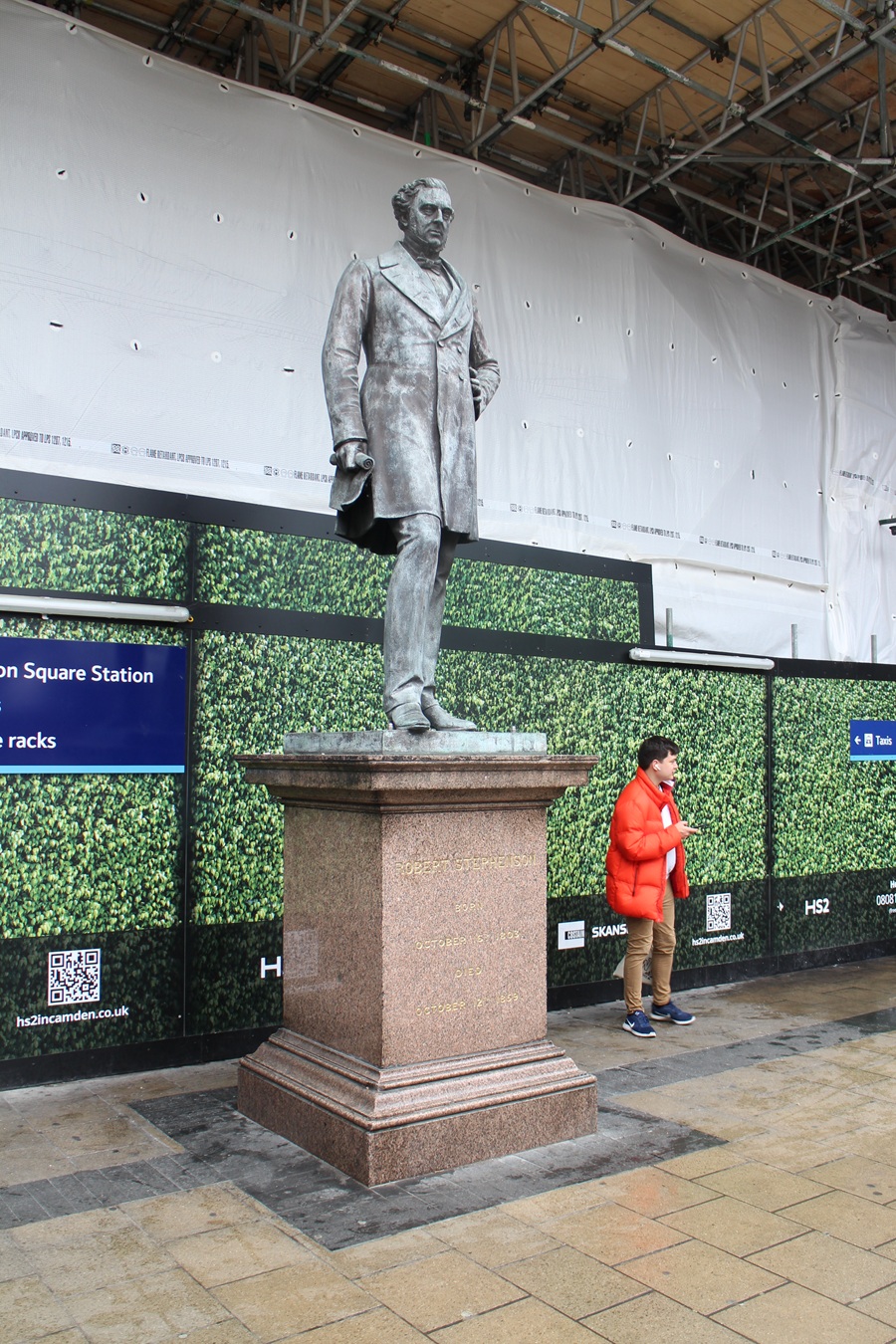
The Railway 200 celebrations (see above), which mark the 200th anniversary of the birth of the modern railway (the Stockton & Darlington Railway in 1825), is a nationwide event. Although the first railways in the capital did not appear for about 10 more years after the S&DR, London is rich in early railway history.
Here are just a few sites in the Database you can visit:
GTL00473. Station Court, Mitcham. A spurious claim to be London's oldest railway station as part of the Surrey Iron Railway.
GTL00197. Deptford station. The oldest railway station in London still in use, opened in 1836 as part of the London and Greenwich Railway.
GTL03629. The Thames Tunnel, which runs from Rotherhithe to Wapping, was the world's first substantial underwater tunnel. Originally opened for foot traffic in 1843, it was reopened in 1869 for rail traffic.
GTL00432. The Metropolitan Railway, which opened to the public on 10 January 1863, was the world's first passenger-carrying designated underground railway.
GTL00007. Tower Subway. Briefly contained a 2ft 6in gauge railway, but more notable for its construction (1869) using the new cylindrical tunnelling shield of the contractor, James Greathead.
GTL02569. City and South London Railway. The world's first electric tube railway — public services commenced 18 December 1890.
GTL02564. London Post Office Railway. A 2ft driverless underground railway used for moving mail around London which closed in 2003. The Postal Museum at Mount Pleasant offers visitors the chance to ride a section of the track.
These Database sites need work to bring them up to a better and more comprehensive standard. Perhaps you can help?
To get involved, or to get logon details, please contact us at database@glias.org.uk
The area around Aberfeldy Street (GLIAS Newsletter February 2025) is now highly built up, at high density, and closely spaced blocks including some 10-12 storeys high are to provide more than 1,100 homes. This redevelopment has taken place rapidly. However, there are no really tall towers. To the northeast of Leven Road where there were gasholders, the density is if anything even greater.
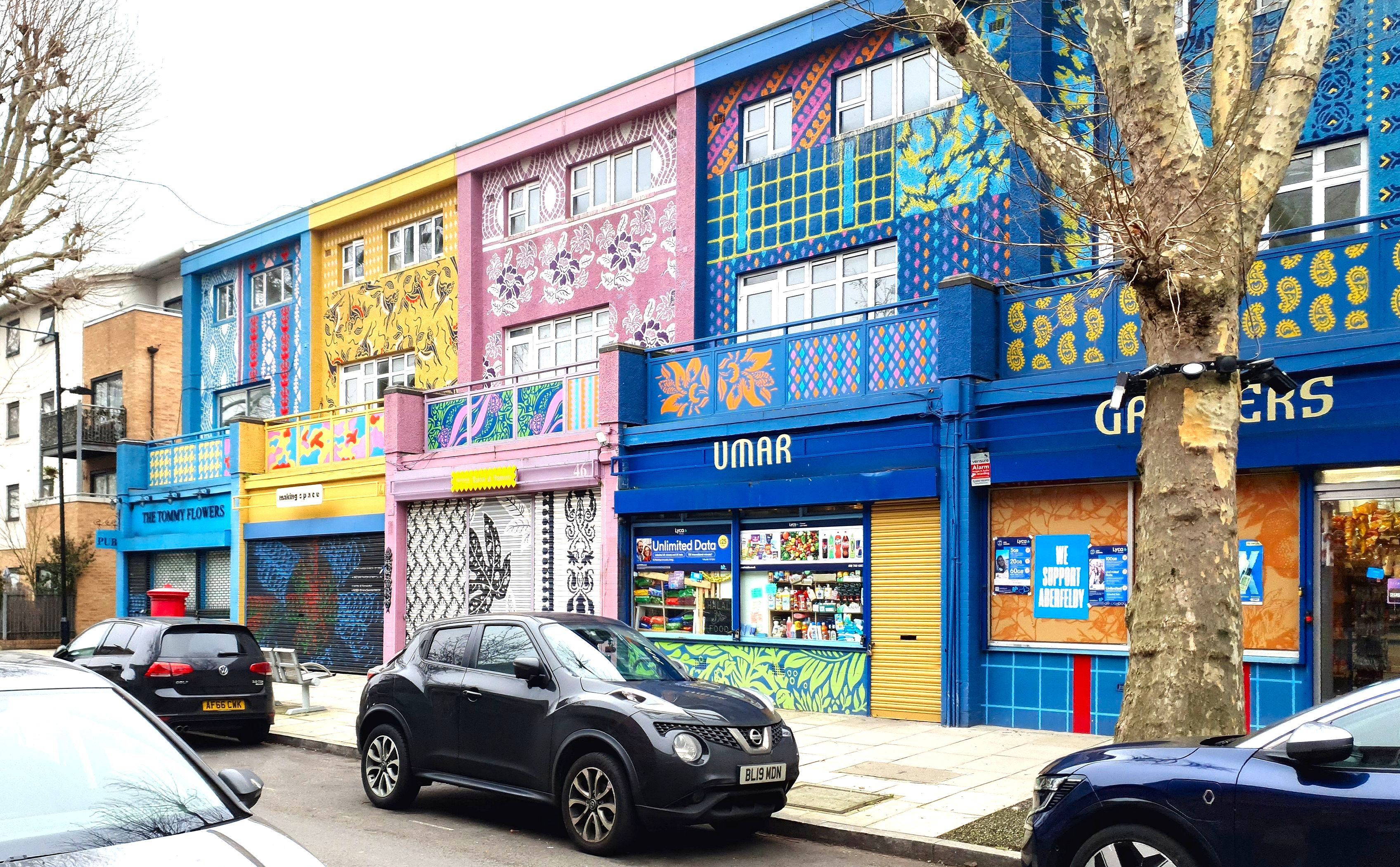
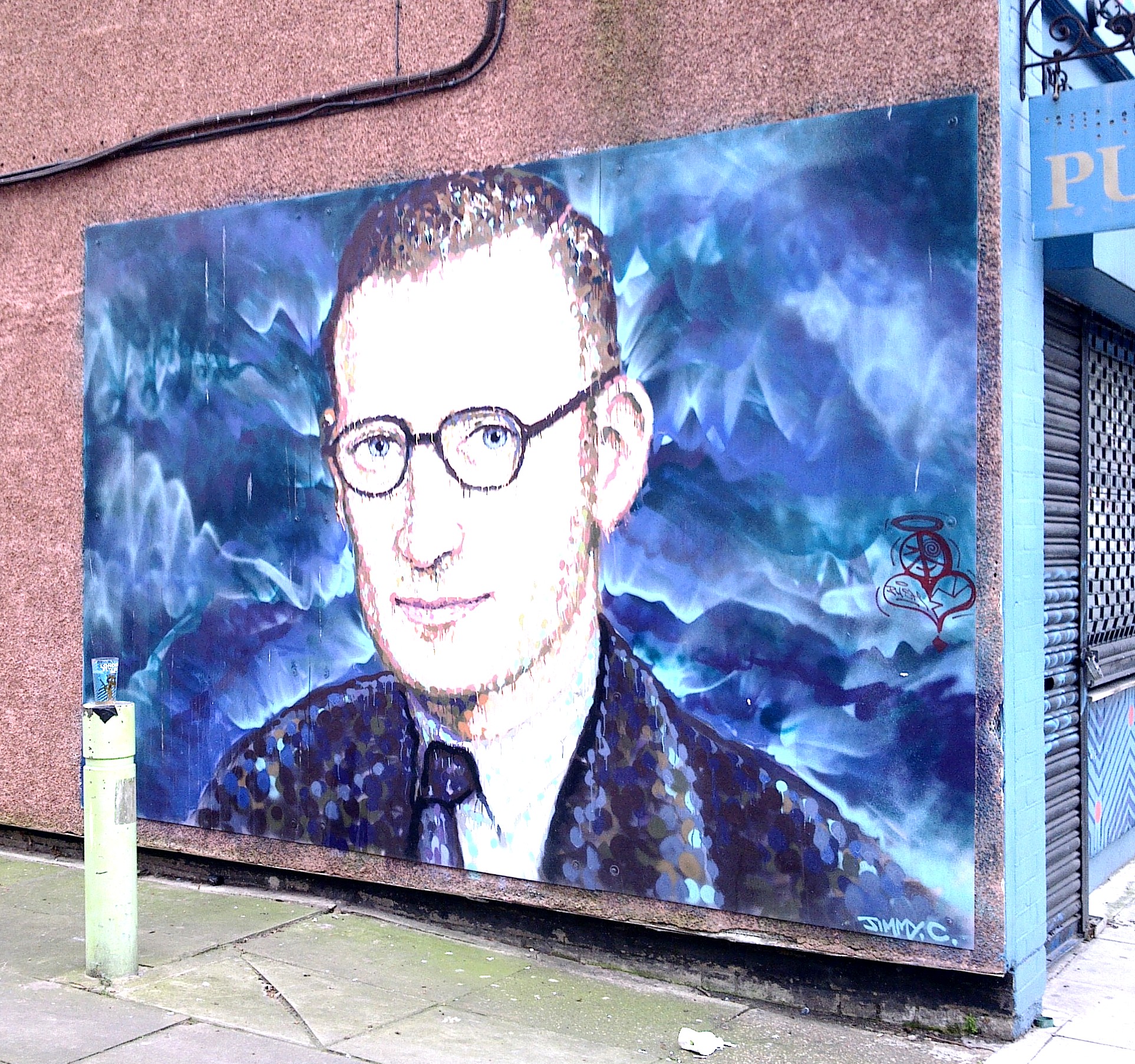
During lockdown Aberfeldy Street underwent a colourful transformation, see photograph below left, but the street itself is now essentially isolated and is soon to disappear. The Tommy Flowers (who built the first computer) public house now only serves beer on some days; there is an excellent mural on the side of the building, see photograph below right. Flowers was born close by at 160 Abbott Road. Immediately to the north, the rather attractive mid-20th-century church with hints of Wren looks worth listing; by John Seely (1889-1963) and Paul Edward Paget (1901-1985) it was built 1953-55, and includes flats for clergy.
The 60-year-old Balfron Tower is probably best seen from the east, see photograph below, taken from Dee Street. Twenty-six storeys high the building was designed by Ernö Goldfinger (1902-1987) and is now listed grade II*. Balfron is a village in Scotland 18 miles west of Stirling.
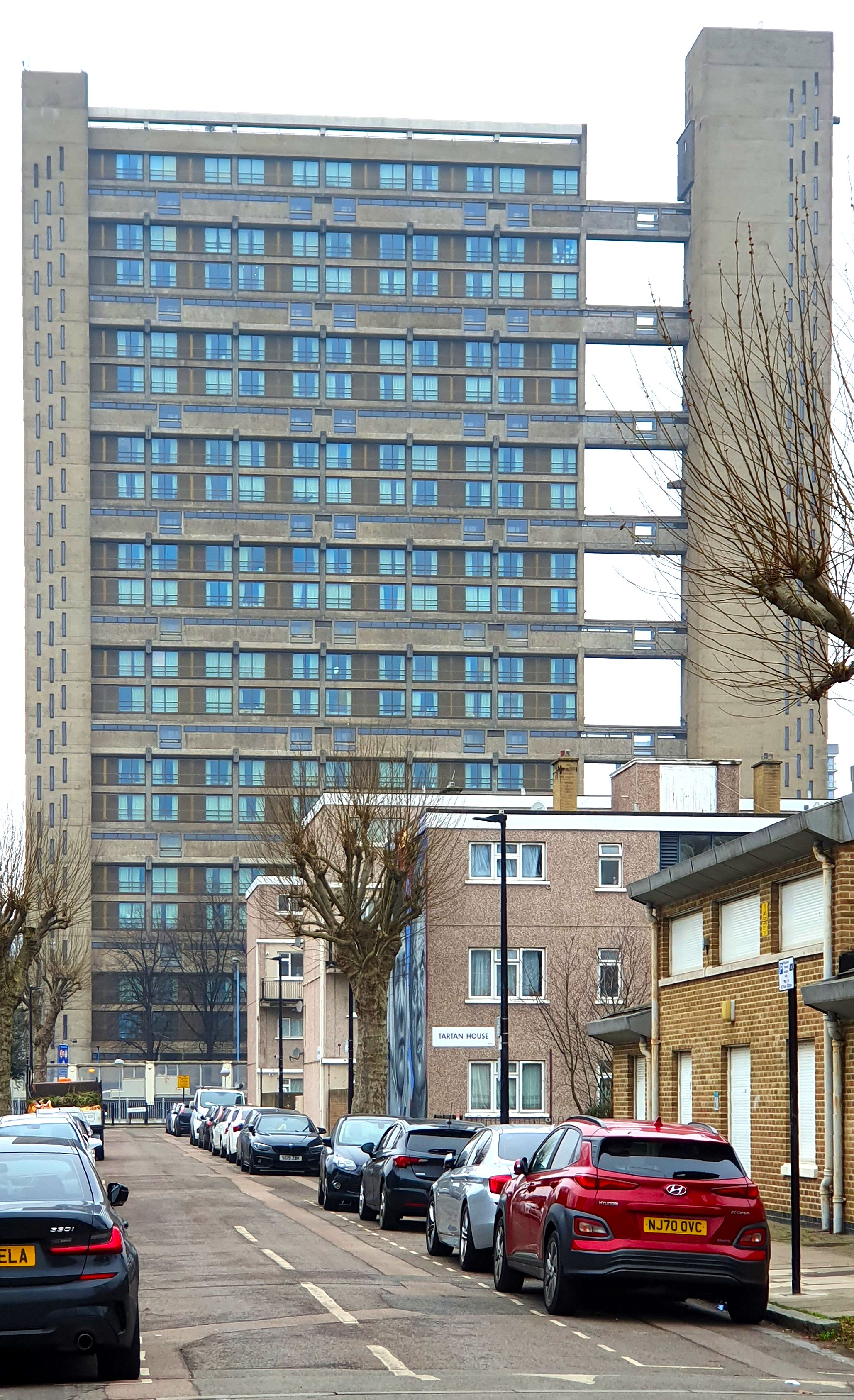
The Aberfeldy Estate was quite low-rise and abounded in Scottish names — Balmoral Close, Findhorn Street, Kirkmichael Road, Oban Street, Blair Street ... there was even a Culloden primary school; did that indicate the kind of children the school was expected to educate?
For the new development the names Valencia Close, Accra Close, Deauville Close are appropriate for the architecture now emerging. Some of the blocks have internal courts reminiscent of Paris.
The photographs illustrating this article were taken on a misty day in January 2025. Bob Carr
The new Silvertown road tunnel beneath the River Thames is due to open on 7 April 2025. The Silvertown tunnel does not go to Silvertown. From near the southern entrance to the Blackwall Tunnel it runs north-eastwards to surface to the west of the Royal Victoria Dock at TQ 398 805.
At first sight since there is then no major route to the north, corresponding to that at the north end of the Blackwall Tunnel; the situation resembles that of a major river, which, coming to the sea ends in a delta. Traffic heading towards London will probably turn left along the Lower Lea Crossing, traffic for the east can go north up the Silvertown Way and turn right along the A13, Newham Way, and traffic can also travel eastwards through the Royal Docks. How this is going to work remains to be seen.
Motor vehicles using the new tunnel will have to pay tolls and this will also apply to the Blackwall Tunnel, which has been free of tolls throughout its existence. The new tolls will be enforced seven days a week from 6am to 10pm, the only exception being Christmas Day. Higher charges will apply during peak periods from Monday to Friday, northbound 6am to 10am and southbound 4pm to 7pm. For motor cars and small vans the off-peak charge will be ₤1.50 if paid via Auto Pay, at peak periods the corresponding charge will be ₤4.00.
There were no river crossings down river of the Tower of London except for ferries until 1894. To use the up-river bridges in London you had to pay tolls, except for those owned by the City of London. From 1877 the Metropolitan Toll Bridges Act allowed the Metropolitan Board of Works to buy bridges and make them toll-free.
This was seen as unfair, people in central and west London could cross the river free of charge but people in East London could not. Following local agitation a free ferry at Woolwich was opened in 1889. The Metropolitan Board of Works was able to build a tunnel at Blackwall which opened in 1897 and at Rotherhithe another road tunnel under the Thames opened in 1908.
There will be buses through the new Silvertown tunnel. The 108 from Stratford to Lewisham will follow a route more or less the same as it is now, via the Blackwall. A new Superloop service SL 4 will run from Westferry Circus past Canary Wharf and then via the new tunnel to Grove Park. Route 129 will run from Great Eastern Quay to Lewisham, also via the Silvertown tunnel. Cyclists will be catered for; shuttle buses will convey cyclists with their bicycles through the new tunnel, from Greenwich to a stop near the Royal Victoria Dock station on the Docklands Light Railway, and also in the reverse direction.
This is a provisional note and corrections may need to be made. If you know more please send a note to the Editor of this Newsletter. Transport for London booklets introducing the Silvertown Tunnel have been delivered to households across quite a wide area of London. Did you get one? Bob Carr
The Government has approved plans for the Lower Thames Crossing which will be the longest road tunnel in the UK.
The ₤9bn project will link Tilbury in Essex with Gravesend in Kent and will ease pressure on the Dartford Crossing.
The 14½-mile (23km) road, including a 2½ mile (4.2km) dual tunnel, is scheduled to be open by 2032.
Vehicular crossings of Thames east of Tower Bridge (opened 1894):
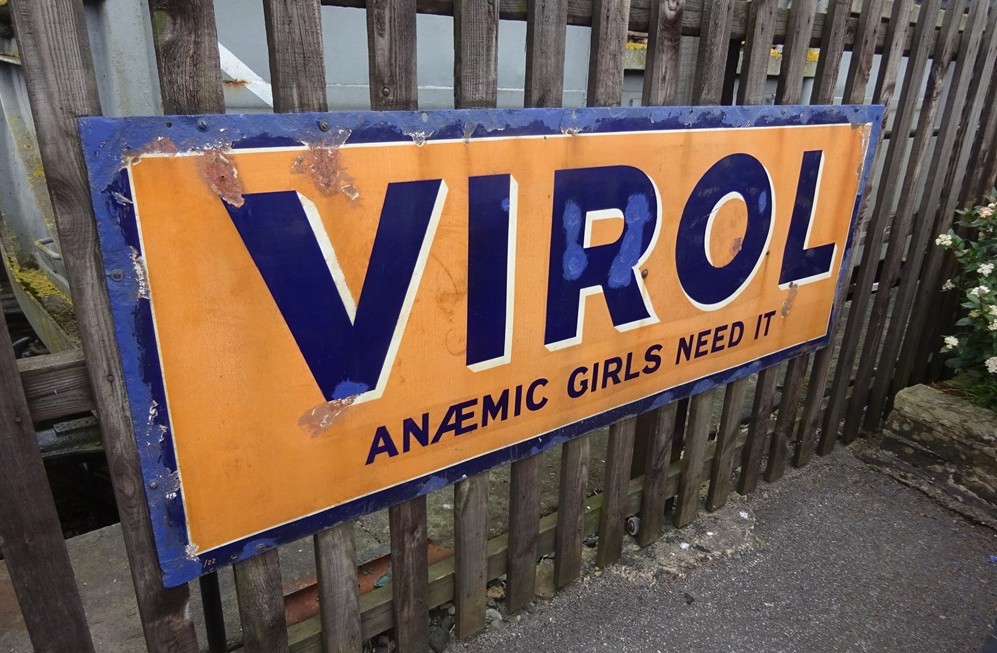
Another spin-off from the 1871 novel The Coming Race by Edward Bulwer Lytton was Virol (GLIAS Newsletter October 2024). Some readers may remember being given Virol as children. Railway stations could have a whole row of enamel signs advertising Virol, and they might go all along the platform. You can probably still see some of these signs at preserved railway stations.
Virol was a malt extract preparation that included bone marrow. It was intended as a nutritional supplement for children and invalids. Bovril began the introduction of Virol in 1899 at their factory in Old Street and in the 1920s large-scale production moved to a more modern factory at Perivale.
In 1971 Virol was acquired by Cavenham Foods. Ownership passed to Janks Brothers in 1977 and in 1979 Virol was acquired by Optrex. Virol ceased to be available in the 1980s. Bob Carr
Restoration of Bazalgette Mausoleum
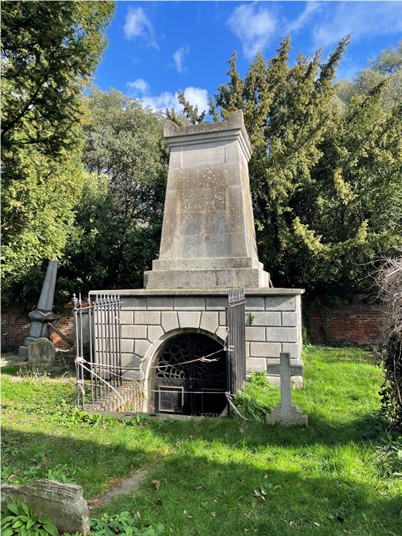
Habitats & Heritage have been awarded ₤249,000 by the National Lottery Heritage Fund to restore the Bazalgette Mausoleum, the resting place of the famous engineer behind the London sewer system.
The Grade II listed structure, in the grounds of St Mary's Church, Wimbledon since the late 19th century, has suffered partial collapse to its internal vaulting.
The project will also embark on a two-year long education and outreach project about the importance of water conservation and micro-plastic pollution.
Habitats & Heritage is a charity that cares for the natural and historic environment in south and west London.
This photograph taken towards nightfall in March 1993 shows the railway from London to Reading where it passes through Southall. Just left of centre you can see the unmistakable image of a MAN gasholder. This holder, number 5, was demolished early in 2019 (GLIAS Newsletter December 2016). This part of West London has lost a famous landmark which latterly assisted airline pilots in finding Heathrow. Bob Carr

Republishing out-of-print books
It appears that that there is a business opportunity in reprinting books which are now out of copyright, see
https://kindlepreneur.com/how-to-publish-public-domain-books-and-why-you-should/
Or Google 'business opportunity reprinting books out of copyright'. And one finds that:
-
'Reprinting books that are out of copyright and in the public domain presents a business opportunity to republish classic literature and other works without needing permission or paying royalties. You can find these works through platforms like Project Gutenberg and then republish them with new covers or added context'.
It is possible to obtain digital copies of out of copyright books online and you might ask why if a book can be obtained in machine-readable digital format do you also want a hard copy. Some readers find it more pleasant to work with a real book which is well printed, as some of these reprinted books indeed are. Even though if the original had pull-out maps or diagrams these may be unsatisfactory.
It should be added that these reprinted books can be quite modestly priced. If we consider a serious engineering book one might want to work from for a considerable time, for some of us there is an advantage in having a well printed copy and also a machine-readable digital version for locating passages in the text. You have a printed copy which can be annotated, and in this way get the best of both worlds.
Most of us already spend far too long looking at a computer screen. Bob Carr
The article on Lister's Laundry (GLIAS Newsletter February 2025) took me back to the 1950s. I was an apprentice marine engineer at The London Graving Dock Co in Poplar at the time.
I lived at Plumsted and often commuted to work on my old racing Norton International motorcycle. My route took me over Plumsted Common, down Nightingale Vale, then along the Ha Ha Road, then down to Tunnel Avenue and through the Blackwall Tunnel.
While navigating Nightingale Vale I noticed Lister's Laundry, so I thought I would drop my very dirty boiler suit in to them on my way home to see if I could get it cleaned any cheaper than where I regularly had it done. This was at a stall situated along Glengall Terrace, just off Manchester Road adjacent to the entrance to the West India Docks. Here, when you handed over your boiler suit, you were given a ticket with a number on it. The following week you handed in your ticket and received your boiler suit back in spotless condition. How they kept track of it has always remained a mystery to me.
Getting back to Lister's, I dropped off my boiler suit and was given a receipt. When I went to collect it I was told in no uncertain terms that they didn't handle such filthy garments and not to come again! Dave Carpenter
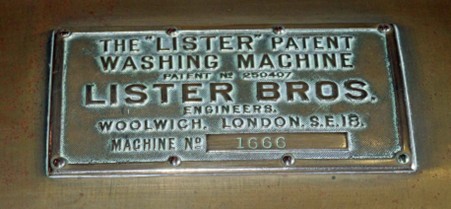
In the discussion following Nick Higham's GLIAS lecture on London's Laundries on January I said that laundry machinery was made by Lister Bros in Woolwich. This firm of Engineers and Iron & Brass Founders was situated in Nightingale Vale, Woolwich, SE18. The firm had started as a laundry probably in the 1880s. Their buildings, the engineering works and laundry were demolished sometime in the 1960s. A picture of workers in the laundry can be found in Getty Images. In the discussion I said that I did not know of any of their machinery surviving in the UK but there is some in Ireland. The company supplied equipment to the notorious Magdalene Laundries in Ireland. These institutions mainly run by Roman Catholic order. The last worked until 1996. They were run ostensibly to house 'fallen women', an estimated 30,000 of whom were confined in these institutions in Ireland. They feature in a number of recent films. The laundry in Sean McDermott Street (formerly Gloucester St), Dublin, closed in Ireland in 1996.
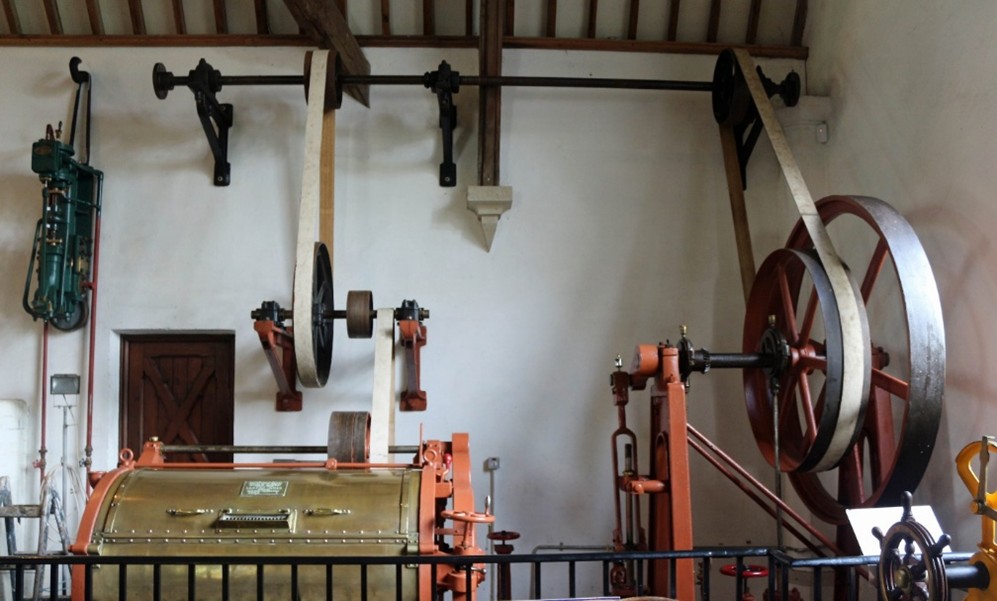
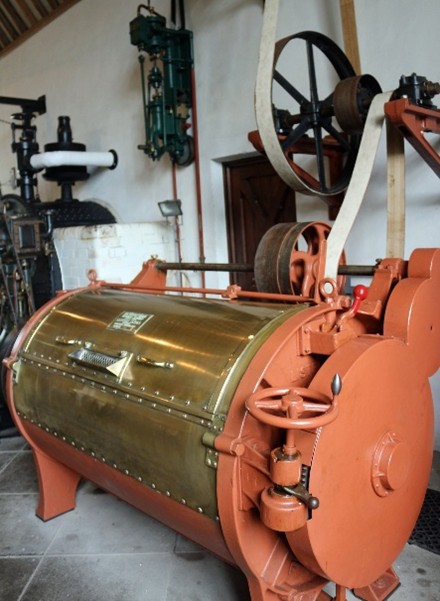
In 1997 Robert Guinness rescued some of the laundry equipment for his private steam museum at Straffan in County Kildare. This consisted of a Cornish boiler and small single-cylinder steam engine that drove the equipment including a washing machine and overhead line shafting, etc.
The pictures below were taken in 2016 by myself. David Perrett
Are launderettes dying out? Traditionally they have been places for local people to meet and chat as well as performing the essential function of washing and drying clothes and bedding. They now seem to be getting thin on the ground. Could they even disappear altogether? In a substantial article a local newspaper, the Islington Tribune for 28 February 2025 p8, remarks that the launderette might now be a 'post-pandemic dying business'. Bob Carr
Two London industrial heritage museums, Walthamstow Pumphouse Museum and Markfield Beam Engine and Museum, have merged under a new umbrella organisation called the Heritage and Communities Trust.
The trust will oversee both museums, which are approximately 45 minutes apart on foot along the River Lea, as well as two attractions at the Walthamstow Pumphouse Museum: The Tool House, a community maker space, and Supperclub.tube, a pop-up dining experience in a decommissioned Victoria Line carriage.
'By joining forces, we're creating a stronger, more resilient organisation that can better preserve and celebrate our shared industrial heritage,' said Abdullah Seba, chief executive of the Heritage and Communities Trust. 'Our visitors will benefit from enhanced programming, improved facilities, and a more comprehensive understanding of London's industrial past.'
Fake ghost signs seem to springing up around the capital, particularly in areas being redeveloped by property developers.
Presumably designed to make neighbourhoods more enticing to potential buyers, they are often convincingly 'aged' but run the risk of confusing the amateur historian.
A selection, near Trinity Buoy Wharf, recalls a number of industries associated with ships and shipbuilding — 'Samuda Bros Ltd shipbuilding engineering 1852'; 'Ditchburn and Mare ship builders'; 'Mathers whale oil extraction'; 'Thames Iron Works Ship Building Engineers'.
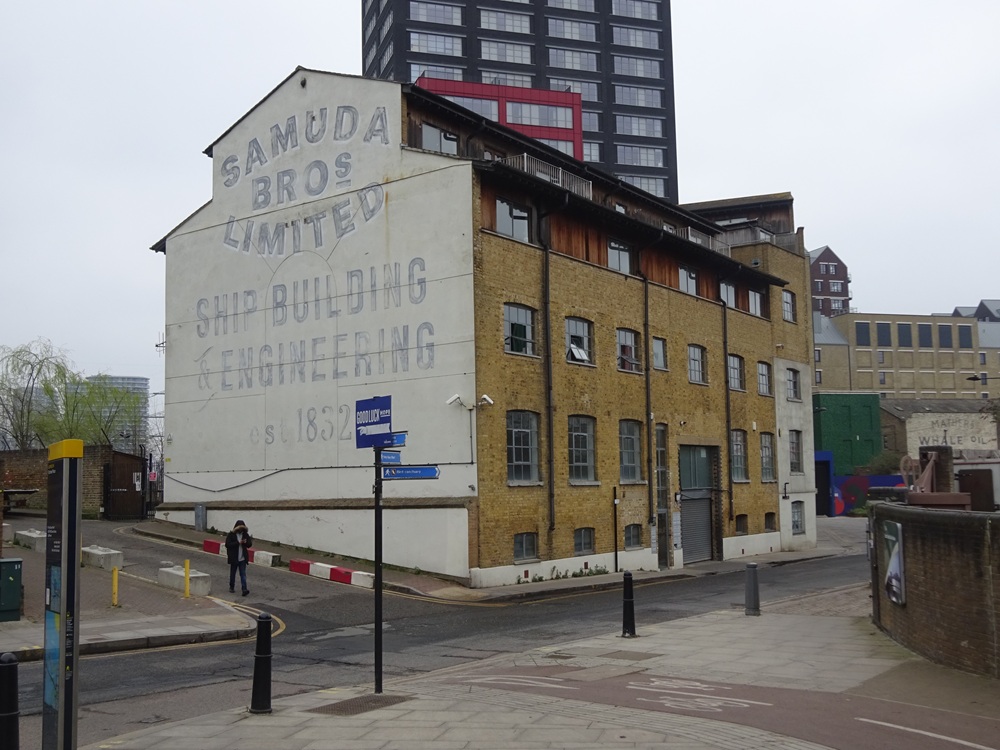
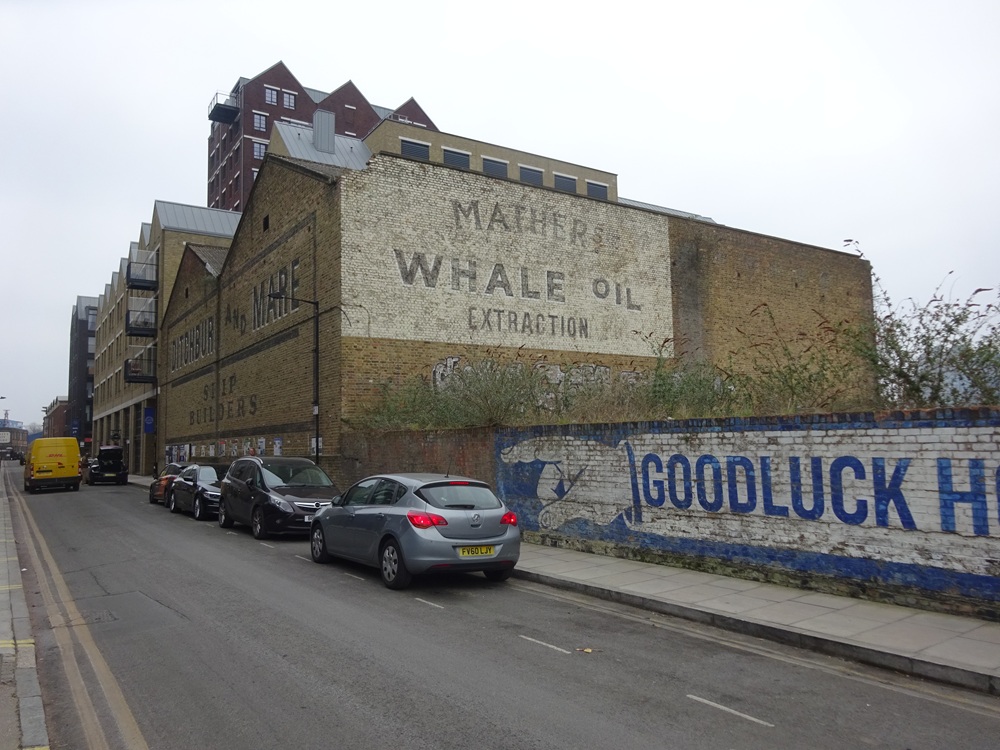
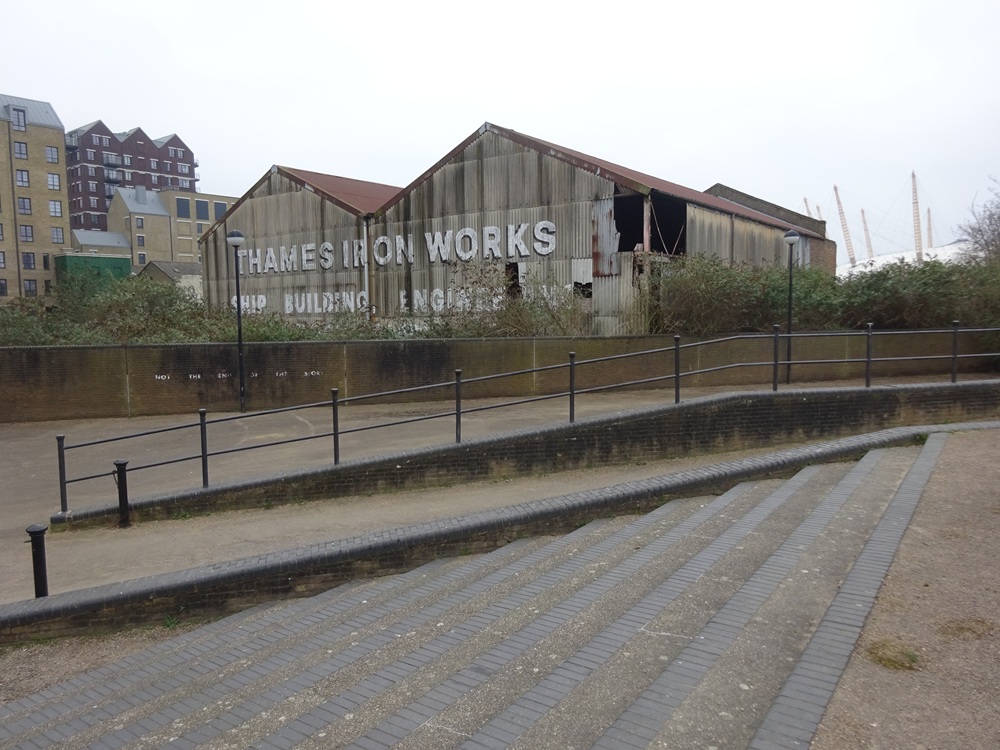
I presume these are all modern imitations — unless anyone knows otherwise? Robert Mason
Cheshire House and Shropshire House in Enfield (see GLIAS Newsletter 326, p9) are both still standing despite their intended demolition. Some residents remain who have leaseholds or have bought a flat outright. Bob Carr
Work has been completed at the north end of Finsbury Park Road (GLIAS Newsletter February 2025). Early in February 2025 a fresh excavation was taking place at the east end of Myddleton Avenue. Bob Carr
Bell Green Livesey Memorial Hall
GLIAS Newsletter 298 (October 2018) recommended a visit to Bell Green (part of London Borough of Lewisham) to see the two gasholders before they were demolished, and mentioned in passing the nearby Livesey Memorial Hall at 225 Perry Hill.
Now, nothing remains of the holders, except for a pressure valve which remains in use. In 2018 signage on the hall indicated a thriving social club, as well as rooms for meetings and so on. Being outside the operational gasworks site, there was no reason for concern that this 'listed' building would be affected by redevelopment of that site. As the name implies, implies, it was erected, in 1911, after Livesey's death in 1908.
Roll forward to autumn 2024 and two articles in the weekly South London Press indicated that proposed redevelopments of the gasholders' site might include demolition of the hall.
That of 13 September 2024 has a photo of three campaigners, under the heading 'I'll hold the building up if I have to', quoting one, Julia Webb, of the Bell Green Neighbourhood Forum (BGNF), who expressed concerns that the hall, recognised as a Community Asset, might be either marginalised or demolished.
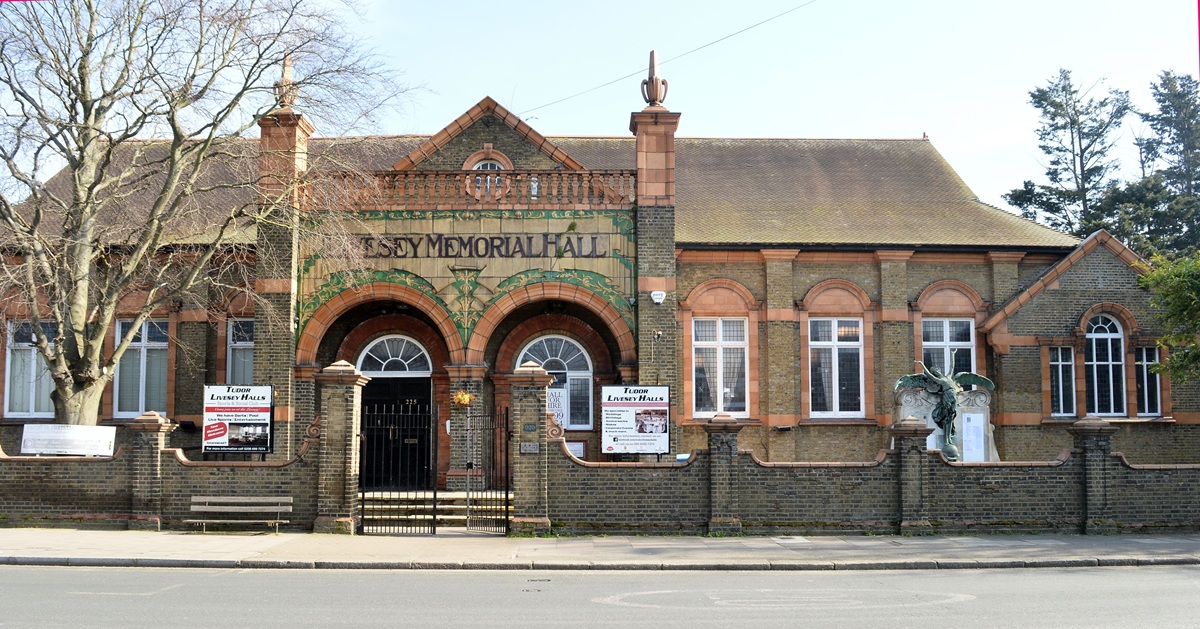
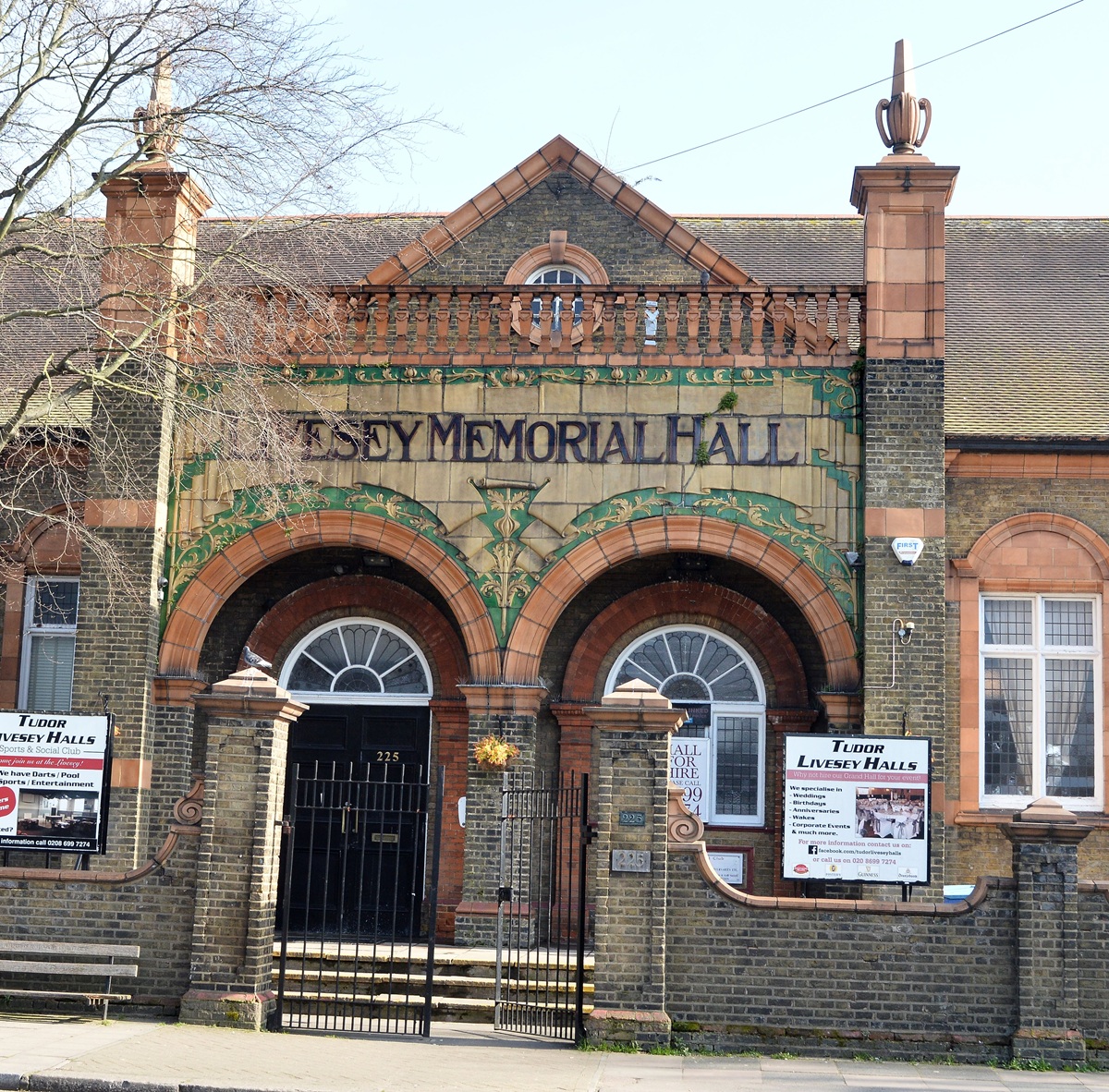
At the beginning of March 2025 I went to look again at the hall (photo, above). Signage of four breweries, which supplied a club within, affixed alongside the hall's door in 2018, had gone and it appeared to be disused. This was soon confirmed by looking at the hall's 'events' web page — which said 'no events'. By chance I met Julia Webb, who pointed out the excellent terracotta mouldings around the entrance (photo, below left). She added that as well as the main hall, a works canteen was added at the rear in the 1920s and there had been associated, now-derelict, staff tennis courts (pavilion demolished) and a bowling green, with its pavilion now in alternative use (all these not visible from the road). In short, the hall represented far more than just an indoor club.
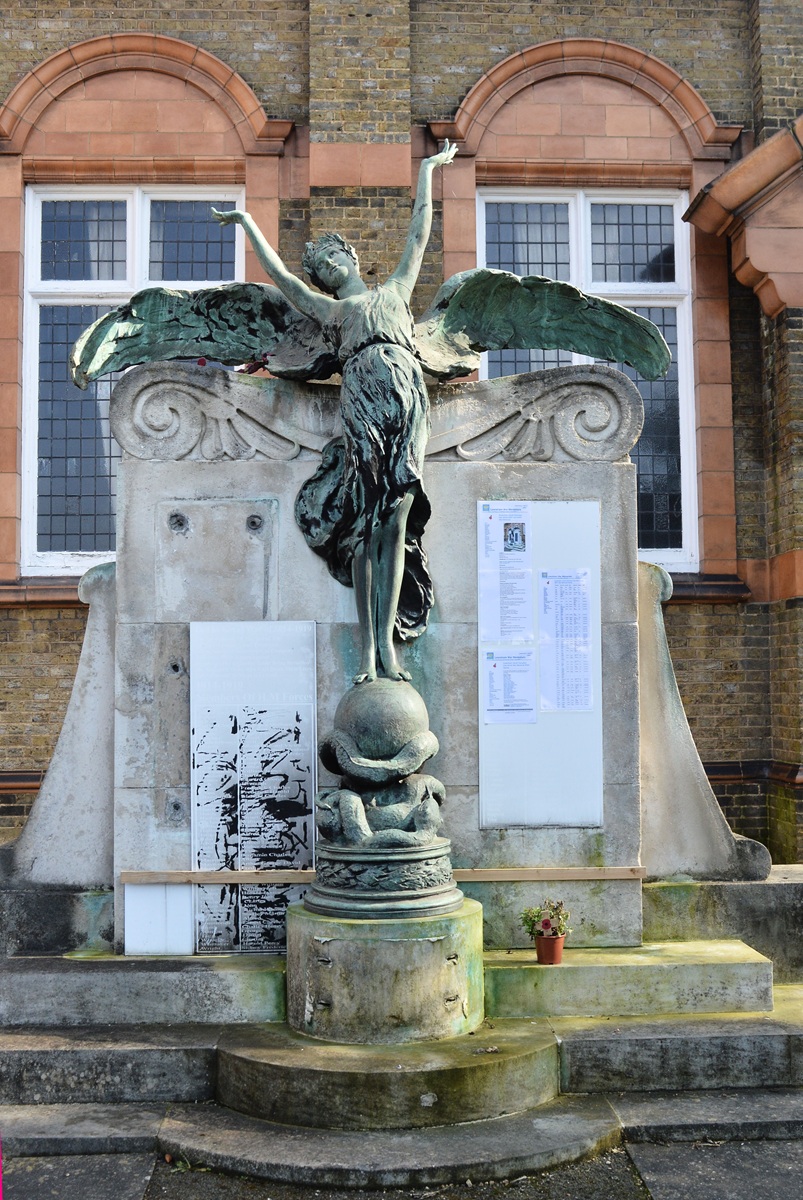
A bit of delving on the BGNF website led to a set of photographs taken within Bell Green gasworks site while it was still in operation — Steve Grindlay's Historic Archive — plus a short 1914 newspaper article about the hall, including a photograph of a looming gasholder's 'flying' bell, lifted above its frame, directly behind it. A second short article, with photograph, 1948, is about adding of a WW2 plaque on the 1920 WW1 memorial (listed) which stands outside the hall. The plaques were stolen in 2011 and at present there is a temporary board where the right-hand WW1 plaque had been (photo, above right).
Mary Mills' recent book, 'George Livesey, a Biography', while focusing on the man, touches on the history of the Bell Green works, and on page 156 briefly describes the hall as 'the most visible memorial to Livesey'. David Thomas
West Ham Pumping Station — brief introduction

When on 10 January 1972 the No 2 beam engine in this pumping station next to the Northern Outfall Sewer and within sight of Abbey Mills pumping station stopped, the engine house was effectively closed down and locked up.
The two beam engines had been constructed by the Lilleshall Company of Shropshire and 1895 is cast on the beams. The beam engines rated 240hp and 30" cylinders and 22' flywheels are still in situ although the boilers were removed some years ago. The engines are similar in size to those at Crossness. Their purpose was to lift sewage and rainwater from the low lying land to the north and discharge it into the Northern Outfall.
Our late chairman Dr Denis Smith along with colleagues from the then West Ham College made an 18-minute long colour film of the engines at work in 1967. The original stock was digitised by GLIAS a few years ago and has been shown at a number of our film evenings. Denis also prepared a measured drawing of the engine in 1968; this drawing is reproduced in the 1975 GLIAS booklet The sixteen remaining beam engines in Greater London. The site was acquired by ALPHA, an engineering and educational establishment, in 2002-2009 to train apprentices. They converted some of the buildings to classrooms and part is sublet to a church but the engines continued to be locked away.
In late 2023 a scheme to develop the engine house and restore the engines was proposed with ALPHA's full support and a small team was gathered to develop a plan. I am pleased to report that we were awarded charitable status in January 2025 and our official title is Heritage Engineering Learning Trust. Planning by our small group of Trustees can now move forward. I took the picture in July last year and the remarkable state of preservation is obvious. David Perrett, Trustee
On Friday 21 February 2025 the Metro newspaper reported on page 2 as part of Today in History that on 21 February 1988 archaeologists located the grave of Queen Boadicea beneath platform eight at King's Cross railway station. The grave of Queen Boadicea has not been discovered. Bob Carr
-
Ref Archaeology Magazine July — August 2013.
The Museum of Croydon will be launching a new exhibition this spring entitled 'Forge: Industries of Croydon' which will celebrate the important industrial history and heritage of Croydon and the surrounding borough, featuring a combination of museum objects, archive photographs and a selection of new work by local photographer Lee Williams.
As part of this exhibition, the museum is currently looking for enthusiastic volunteers to help provide excellent customer service and warm welcome to the museum galleries and to help bring the exhibition to life. No previous experience working or volunteering is necessary, just an interest in the unique story of Croydon!
Contact Elanor Straw, Volunteer Coordinator and Visitor Experience Officer, Museum of Croydon. Tel: 020 8604 7501 ext. 28328 or ext. 23602. Email: museum@croydon.gov.ukx