In this issue:
- From the chair
- Situations vacant
- Ebbsfleet — Northfleet
- St Ann's redevelopment
- Nineteen thirties Paternalism
- Pit head baths
- The New Greater London Historic Environment Record website
- Lister's of Woolwich
- Aberfeldy Street
- New River pipe track
- The bridge to nowhere
- Northfleet Harbour
- Signs and society — nourishment and entertainment
- Lea Valley news
- Members on the web
- Missing publication
- Thames lighters exhibition
- Database spotlight 7
- Beckton Gasworks
- Books
- 336news.pdf
The Society branched out into holding a film evening based on the John Huntley Archive, introduced by Amanda Huntley, at the Cinema Museum (www.cinemamuseum.org.uk). The evening was a great success with a capacity audience and has prompted us to look at holding another evening this year. Details will be in the Newsletter. We must thank our Secretary, Tim Sidaway, for organising the event. One outcome was a number of new members who picked up our leaflet at the event.
We also held our first lecture of the 2025 series when Nick Higham told us about the 'History of Laundry'. There was an in-person audience of 30 plus and a further audience of 30 online. We were entertained to a run through history from the time of Elizabeth of England to the Launderette. Unfortunately there were a few technical hitches (including a software update the day before). Do put our February lecture 'The Wealden Iron Industry' by Jeremy Hodgkinson on 19th in your diaries, details above.
The Newsletter relies on contributions from members and other interested parties (who should be persuaded to join). Please note the deadline at the end of each issue and send articles to newsletter@glias.org.uk.
The Journal, London's Industrial Archaeology, also relies on articles arriving via journal@glias.org.uk and any copy would be gratefully received.
The Committee is in need of help in running the Society. Following the successful revival of SERIAC at Chichester we are in line to run the next meeting in Spring 2026.
Our Journal Editor, Martin, is working on his 12th issue and will step down after it is published.
Any member wishing to get more involved in running the Society, do get in touch with chairman@glias.org.uk
Just beyond the GLC boundary in North Kent is an area rich in interest. Several sites are described in this short article.
The Channel Tunnel rail link (CTRL or HS1) linking Folkestone to London St Pancras was completed in 2007. It crosses the Thames by a tunnel at Ebbsfleet in North Kent and then continues westward before plunging under London to emerge immediately north of King's Cross railway station.
In 2004 during routine investigative archaeological surveys prior to the building of the CTRL, there was a most remarkable archaeological discovery at Ebbsfleet. A huge prehistoric elephant 4 metres tall and 400,000 years old was unearthed there which had been butchered by hominins. These hominins would have had a brain size about 75% of our own, walked erect as we do and amazingly were able to overwhelm and kill this large creature with just primitive flint tools. Homo Sapiens did not exist until at least 100,000 years later. A graphic description of what was learnt at Ebbsfleet appeared in Current Archaeology in 2013*.
To the north of the area where the elephant was discovered is Botany Marsh, a site of special scientific interest (SSSI) which was confirmed in 2021. Such marshes were relatively common in North Kent 150 years ago but have now almost completely disappeared. Botany Marsh is open to the public, with paths enabling the public to explore the Marsh which protects characteristic animal and plant species under threat.
To the east of Botany Marsh the area retains its industrial character. Photograph 1 (below left) shows that although there may no longer be brick kilns in North Kent, the brick and building trade is flourishing and in the distance you can see an industrial chimney. Photograph 2 (below middle) shows this substantial chimney, about 300 feet high, which is part of Britannia Refined Metals Ltd (BRM). This is an old firm originally established in the 1930s as the London Lead Company. BRM reclaim valuable metals including lead, zinc and even some silver. The firm has recently begun to reclaim lithium, presumably from lithium batteries.


There is a bus depot at TQ 611 751, London Bus & Truck Ltd packed with original Routemaster buses (photograph 3, above right). The photographs were taken in November 2024.
This short article has been written despite a great shortage of information which the area seems to lack. It is bound to be inaccurate; if anyone can make corrections and provide further information — thank you. Bob Carr
-
* See the issue for 10 October 2013. This article, available on the Internet, is quite mind expanding and can be recommended
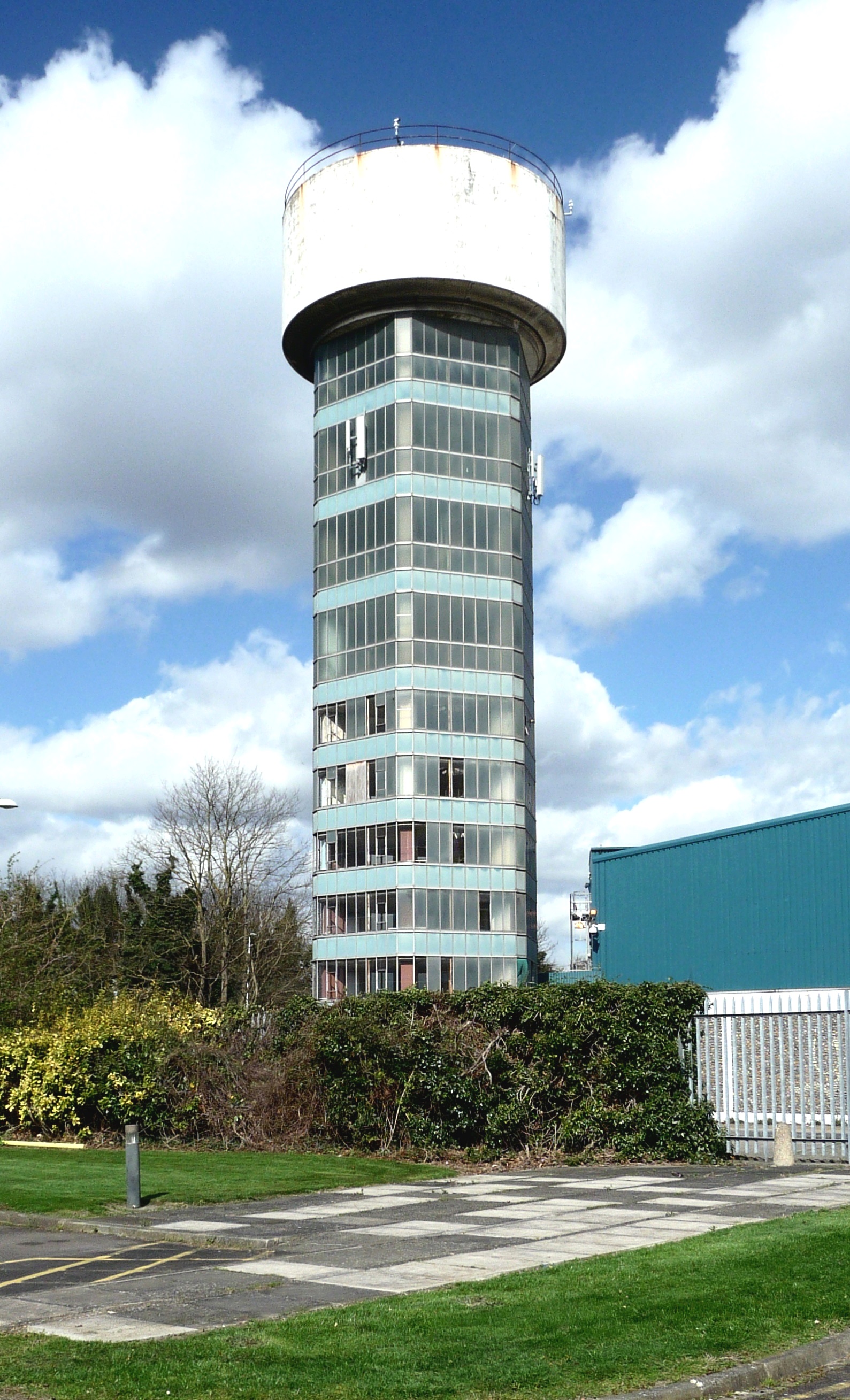
St Ann's Hospital, South Tottenham N15 3TH, opposite Chestnuts Park, started life in about 1892 as a fever hospital. Most of the buildings date from the Vicwardian period and there are a number of interesting examples. One of the most striking features is the hospital water tower at TQ 323 885 (see photograph, below).
Much of this hospital site is now being developed for housing by Architects Karakusevic-Carson in association with the Peabody Trust. The water tower is to be retained as part of the redevelopment together with six other original hospital buildings. The 1920s Peace Garden is also to remain. Bob Carr

As well as modernism there was, as might be expected, paternalism pre World War II. There seems to have been a subliminal attitude among many reformers that we must clean dirty miners. There was a kind of inbuilt prejudice amongst well-to-do reformers, many of whom would probably have had a classical education, regarding bathing and cleanliness. The working class could be viewed as dirty and had to be cleaned.
In London, when people were moved from their old houses to new accommodation, all their possessions were put into a vehicle and taken to a gas chamber where they were left overnight in a poisonous atmosphere to make sure that all the bedbugs and other noxious creatures had been exterminated. Local authorities had gas chambers, Hackney Council had a gas chamber and it might possibly be still there. Bob Carr
From the 1930s coalminers began to be provided with pithead baths where they could get really clean after a day's shift. The architecture was modernist and the 20th Century Society is carrying out a survey to find out how many of these interesting buildings are still in existence.
The architectural style of the baths was regarded as a way of introducing modernism to working people — a rather paternalist attitude. The architecture of the pithead baths was modern in the Dutch sense, in a style similar to that of Greenwich and Hornsey Town Halls*.
Miners were given bars of carbolic soap to wash with. Later there is a story of miners using Fairy Liquid to wash their hair.
On the Continent coal mines usually had baths from the late 19th century.
In France and Belgium they were common but not all mines had pithead baths while in Germany it was absolutely compulsory to have them.
Following the end of coal mining The National Coal Board was obliged to remove all signs of mining and restore the land to its original appearance. This suggests that few pithead baths are likely to have survived.
However, if mining finished before Nationalisation at these pits examples are more likely to be still there, having been adapted to other uses. It will be interesting to see what survives.
Will there be anything left in Kent? Surprisingly about 65 surviving pithead bath buildings have already been identified in Britain in various states of repair and re-use. Bob Carr
-
* see GLIAS Newsletter August 2018. The baths were not international modern (Bauhaus or Stockholm 1930)
The New Greater London Historic Environment Record website
On 25 September 2024 three GLIAS members attended the launch of the new Greater London Historic Environment Record system, which has been based on a platform called 'Arches'. This was an evening reception held at the Royal Geographical Society in Kensington, with speeches from Tim Wheelan of the Getty Conservation Institute, two representatives from Historic England who own the data and maintain the system, and two from the City of Lincoln because they implemented their own HER as a pilot project. Arches is not just confined to the USA and UK, we were told that it has already been taken up by over 100 organisations worldwide for their management of historical data.
The launch had no presentations on the technical side of the new system. According to the website (www.archesproject.org/arches-for-hers/) 'Arches is a fully featured data management and publishing platform, initially developed by the Getty Conservation Institute and the World Monuments Fund for cultural heritage inventories'. It is Open Source and hence free of license costs with the main implementation language being Python. There is a community of developers as is usual with Open Source projects, so anyone can get involved if they have the appropriate skills to make a contribution.
The new Greater London HER can be found at https://glher.historicengland.org.uk/, where you will see the welcome page. The original historic environment database was created 40 years ago in the time of the Greater London Council and the data has had to be migrated to the new system, surely a major task. A keyword search facility is provided as the primary way into the data, which also allows a choice of what is called a 'Resource Type', chosen from a fixed list to restrict the search to say an area or monument. As a trial, 'Beam Engines' was entered with Resource type 'Monument', which returned 11 entries; as one would expect, Kew, Crossness, West Ham etc. Upon clicking on each entry, there are data from historical assessments, links to listing details and links to a map showing the location, but as far as one can see no images in the HER itself.
It will be useful if members have a look and check the quality of the data for industrial monuments in London, because we are the best qualified people to do that. You may also ask what about the parallel GLIAS database now hosted by Yorkshire IA Society? The GLIAS committee would like to hear from members on which way we should go in the future. The new HER is designed to be friendly to community; in that respect it is not the only such initiative. See also www.layersoflondon.org, where historic maps have been brought together in a remarkable way.
As a personal comment from someone who worked in the IT business and is now retired, an Open Source based HER is a very positive development. There are limitations caused when data storage systems have been built using proprietary commercial software, this usually involves the payment of license fees annually, with the fees often dependent on the number of users of the system. This came out in conversations that evening with people from other organisations that maintain historical databases in such systems. Colin Jenkins
Sixty years ago when I was young and silly I was working for a laundry trade magazine. One firm whose name has stuck with me over the years was 'Lister's' and only because it was one of the few firms in the south of England — in Woolwich — and it was doing really interesting work in developing new laundry equipment. I remember talking to Jack Vaughan, the first Chair of Greenwich Industrial History Society — did he know anything about them? 'Oh yes,' he said. 'I used to go out with a girl that worked there' .... 'OK — but what did they do? 'Laundry,' he said.
Lister's were in Nightingale Vale which is now a road on the Woolwich Common Council estate. There's a very definite bend in the road on the corner of Fennell Street where Lister's were based in a big old house — called Belmont Place, 59 Nightingale Vale. The Survey of Woolwich points out that Nightingale Vale follows the line of a stream and also the parish boundary and was developed for housing in the mid 19th century.
Maria Lister opened the Belmont Laundry in 1881 in sheds behind Belmont Place. She was recently widowed — her husband, Samuel Lister, had been an assistant foreman in the Royal Gun Foundry, Woolwich and had died age only 41 leaving Maria with seven children. Nightingale Vale was seen as a good area in which to found a laundry — it was near the barracks and other military buildings all full of men all needing to 'look smart' and authorities with contracts to let out. In subsequent years the children, once old enough all worked in the laundry — the eldest daughters on 'washing', from the start. Subsequently her sons became apprenticed in the Arsenal as engineers to return and to be managers in the laundry. Victor Lister served his apprenticeship in the Royal Gun Foundry where his father had worked.
Maria Lister, however, was remarkably successful. The laundry flourished and she was to live into the 1930s by which time the business was in the hands of her grandchildren. As the laundry grew it extended into more and more larger buildings at the back of the house where the land fell away steeply. A shop was established on Nightingale Place itself at the front. They were employing more than 40 people and jobs there were frequently advertised in the local press ... 'a good shirt Ironer; constant employment' in 1888.
The success of the business led Victor Lister to establish the Standard Laundry, further north on Nightingale Vale in 1899. I suspect that this was a takeover of an established business — it was described as 'premises substantially built three years ago — splendidly lighted, fitted with gas engine and shafting and with six good dwelling rooms, fitted with every convenience for occupation'. Later Victor and Samuel Lister became proprietors of the Criterion Laundry in Brockley.
Back at the Belmont Laundry more rear workshops were added, commissioned by Maria. It was enlarged again in 1912 and again later. In 1902, Victor Lister, by then the manager, was applying for an electricity supply for a '10 horse-power motor'. They also used motorised vehicles — there are newspaper reports of drivers. Job advertisements reflect this — 'Charge Hand Wanted, to take control of callender room; must have thorough experience and knowledge all work and types of machines'.
Note that the laundries have engines using gas and electricity. This was no longer an industry of hard working washerwomen. Soon the Lister Bros diversified into light engineering and additional premises were taken on and built to the rear of Belmont Place.
By the late 1920s Listers were producing a great deal of equipment for 'powered laundries'. A 'rotary washer' was patented internationally by Victor and Samuel Lister — and they held several other patents. They were fitting out laundries for local authorities and others — in 1929 for a Poplar Council Laundry, in 1936 for 'Chelsea Institution'. In 1948 their equipment for clothes drying was adapted for Royal Mail to dry letters accidentally soaked for whatever reason. In 1949 it was again adapted as a leather drying conveyor machine. They also specialised in decontamination equipment.
In 1949 they introduced the 'Prosperity Cabinet Shirt Unit' with which a team of three workers, could 'on a balanced work cycle' restore 120 shirts an hour to a state of perfection. This included a sleeve press. I remember from my 1960s reading that shirt presentation was one of the most difficult areas for laundries to mechanise. It is perhaps worth noting here that another local firm, Stones, introduced a continuous sheet washing and ironing process in the 1960s.
In the 1950s they developed the 'Little Plumstead Mechanical Sluice' specifically for hospital use and in co-operation with a Norfolk-based specialist unit. Hospital laundries were very much a growth area in this period. In 1960 Gladiron machines were promoted with great success and in 1961 'Hot Air Cabinet',having a capacity of 35 gallons per minute. In 1962 it was the 'twin imperial roly poly packager' and the 'Atlantic washer'.
So what happened to this successful and busy local manufacturing business? Well — what happened was the Woolwich Common Estate. Clearly this isn't the place for me to go into the long saga, of the Public Enquiries and the demolitions necessary to get that housing built. I mean, if you are demolishing a load of listed buildings including General Gordon's birthplace what chance does a laundry machinery firm stand?
The company was eventually wound up in 1973.
Does any Lister equipment still remain out there? I have a report of a 'Great Spur Wheel' fitted by them in the windmill at Shirley, outside Croydon in 1935. Is it still there? Mary Mills
If you have been thinking of paying a visit to Aberfeldy Street to see the colourful buildings and the mural of Tommy Flowers (1905-1998) 1 who was born locally, now is the time to go. The area is to be redeveloped soon. The street was named Aberfeldy by the Scottish civil engineering contractor Hugh Mclntosh (1768-1840) 2. Bob Carr
-
1. Flowers designed and built the world's first programmable electronic computer, Colossus. He was educated at Shooters Hill in south-east London.
2. Mclntosh was one of the most important people in the development of the British civil engineering industry.
On 2 November 2024 it was noted that the wall in Finsbury Park Road which had been demolished in October (GLIAS Newsletter December 2024) is now rebuilt in more appropriate recycled London stock bricks. It carries New River plates again.
Thames Water have announced that they will not reline the third and last of the 36-inch diameter water mains for the time being as essential offsite work has to be done first. Work along the Pipe Track is unlikely to be completed for another six months or so.
Dr Essex Lopresti took an interest in the course of the New River through North London. He led walks and published guides. His book Exploring the New River* will be of interest to readers wanting more information about the New River in London and beyond. It is handy enough to use in the field. Bob Carr
-
* Michael Essex Lopresti, Exploring the New River, ISBN 9780947731496. This book first appeared in 1986. There was more than one edition and it was also reprinted. The above ISBN refers to a 1988 edition, reprinted in 1990. Second hand copies are common
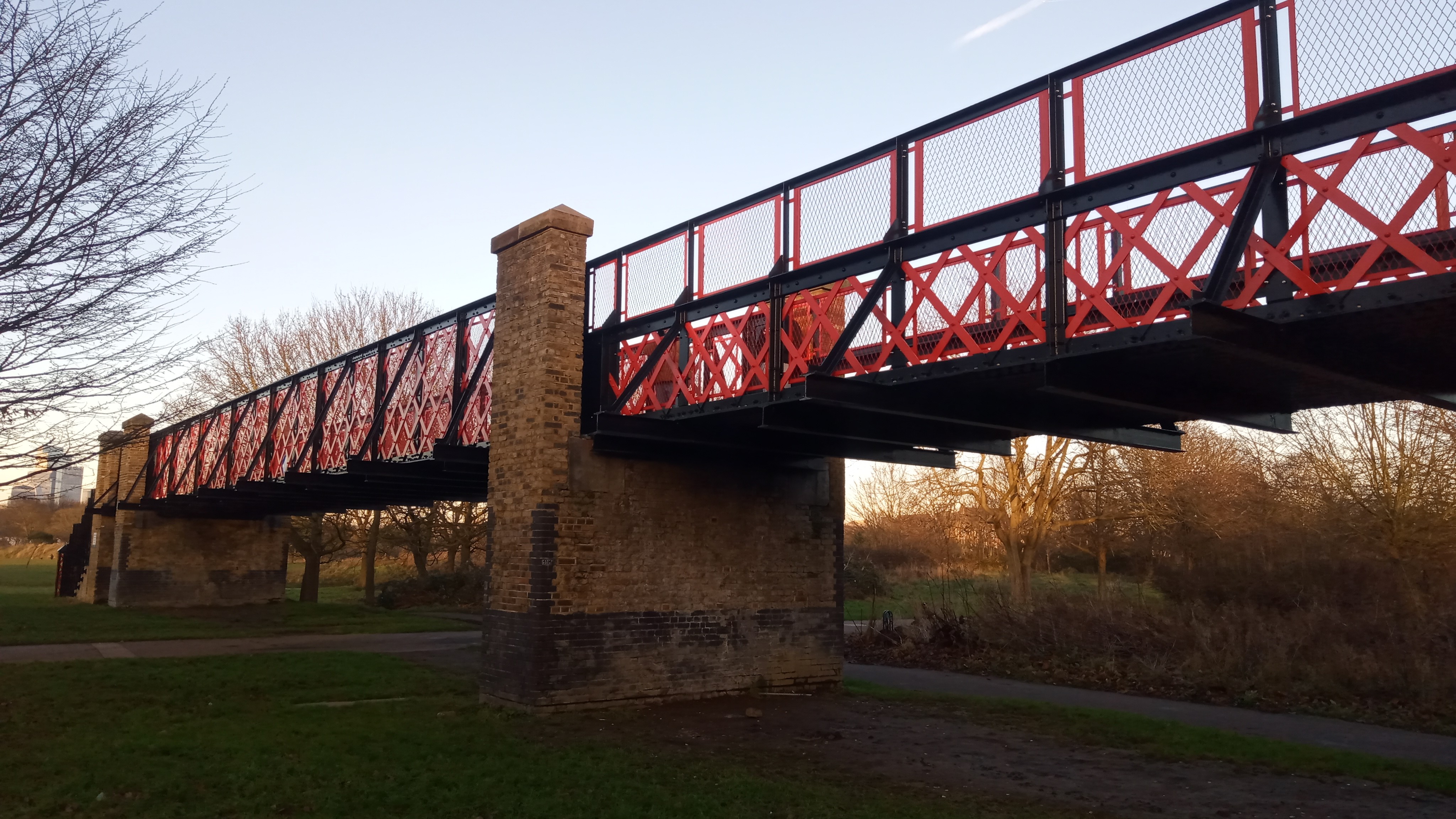
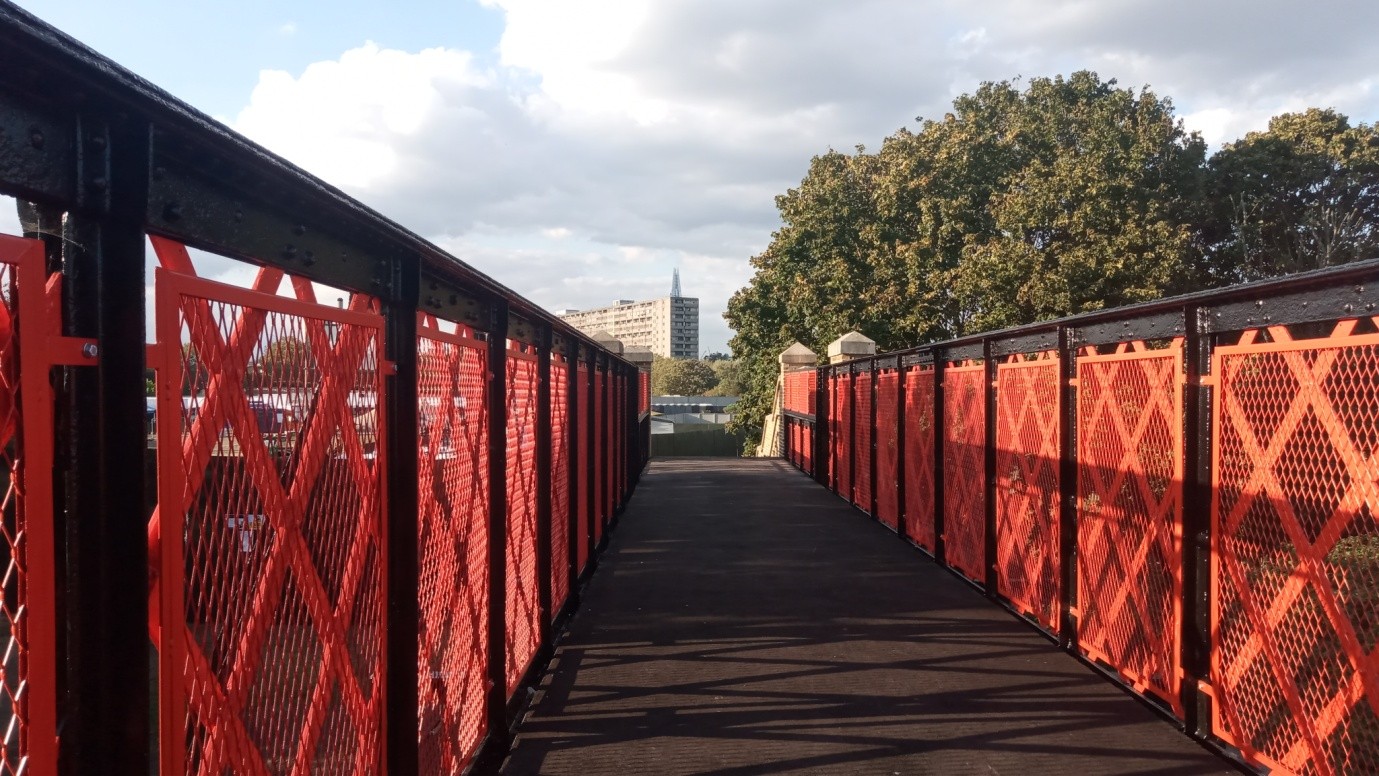
Anyone familiar with South London may well have visited Burgess Park, just south of the Elephant and Castle. The park is based on the route of the former Grand Surrey Canal, sadly filled in during the '60s and '70s. The footbridge (pictured in 2025, below) over what was once the canal is among the few remains. It has come to symbolise Burgess Park, reflecting both the industrial heritage.
When the canal opened in 1811, the park area was mainly agricultural, with meadows and market gardens on either side, and few roads. There were only two canal crossings, initially provided by small wooden swing bridges, which were later enlarged.
As London became more built up in the 19th century, the banks of the canal and land either side became crowded with houses and industry, inconveniently divided by the canal. Judging by the number of drownings in the canal, some people were trying to wade or swim across, and one timber yard near St George's Church had taken to rafting their goods across.
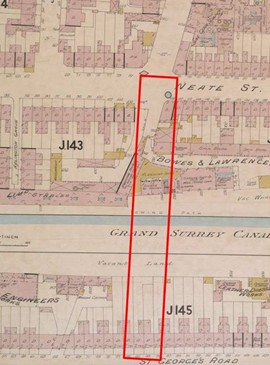
By 1894, public meetings were being held, and Camberwell St Giles Vestry (the local council) agreed take on building an additional bridge. (Not the canal company, interestingly, who might be thought of as causing the problem!) However, things moved slowly, and it was not until 1902 that the Board of Works of the new Camberwell Borough Council put forward a scheme for a footbridge.
Agreement was reached with the LCC for a loan for some of the estimated £7,000 costs. The bridge was designed by the Borough Engineer and plans approved in November 1904, together with a recommendation to use local unemployed labour where possible.
In early 1905 properties on either side of the canal were compulsory purchased (costing £2,848) and the construction work tendered out. The council went with a quote of £3,969, from Henry Woodham and Sons of Catford. This was a local road builder, still going in the 1950s when their steamrollers were a familiar sight in the area (see https://runner500.wordpress.com/2017/01/05/henry-woodham-sons-and-the-catford-steamrollers/).
Work commenced in July 1905 and the bridge opened in January 1906. A grand gathering of aldermen and dignitaries took place, and thanks were especially given to the Borough Engineer, William Oxtoby.

-
(left) Proposed location of the bridge — 1895 Goad Insurance plan Sheet J21 (Wikimedia Commons); (right) 1915 Ordnance Survey map showing final location (NLS/Old Maps Online)
The bridge, little changed today, was described when built as:
-
A steel lattice girder bridge of three spans, total length including approaches — 410 feet [125m]. The central span over the canal and towpaths each side is 80 feet [24m]. [The canal here was said to be the widest in Camberwell at 70 feet.] The bridge is floored with oak planks [7ft, 2.2m above the water] and the approaches with asphalt and stone cobbles. The bridge was tested with 75 tonnes and found to flex in the centre by 3/8 inch [about 1cm]. It was completed two months ahead of contract, and under budget.
https://bridgetonowhere.friendsofburgesspark.org.uk/
An Ebbsfleet Garden City has been set up; its present location is somewhat obscure. People are moving to this part of North Kent and Swanscombe is popular with people that want to move out of London and live in Kent. A scheme that might be popular with some developers is the reopening of Northfleet Harbour. This has been blocked off by a substantial river wall which prevents the tide gaining access (photograph, below left). Local supporters of this harbour scheme would like the river wall to be breached with an entrance lock which would be closed around high tide to prevent flooding (photograph, below middle). Houses built round a harbour containing boats would have a higher market value than those inland.

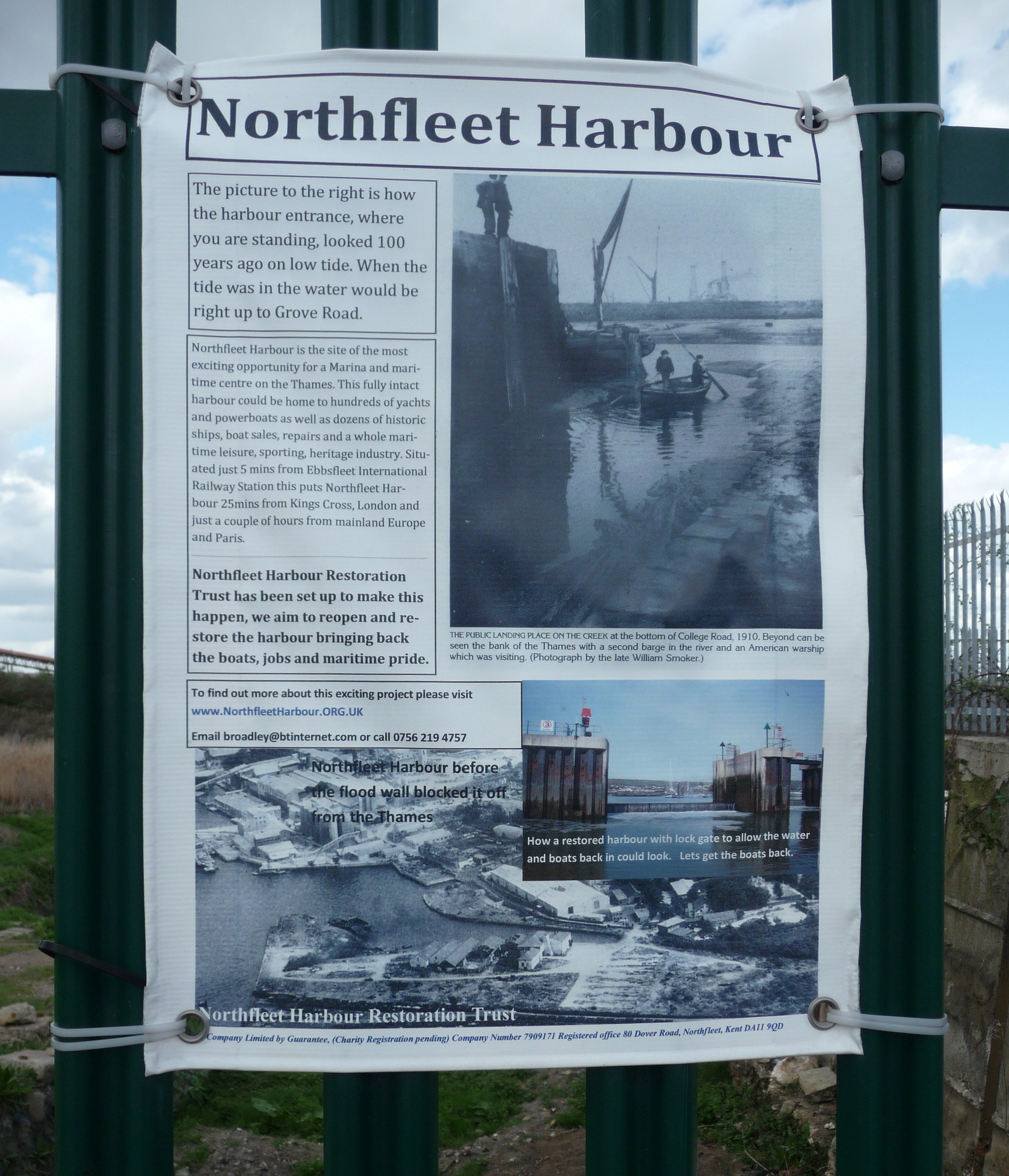
Further to the east at TQ 626 744 Bowater's tower survives, see photograph 3 (above right). Bowater's started at the riverside here in the 1920s and built an enlarged paper mill in the 1960s. This mill seems to be referred to by older local residents as a 'tissue mill'. Was this something to do with paper handkerchiefs?
The photographs were taken in March 2017. Bob Carr
Signs and society — nourishment and entertainment
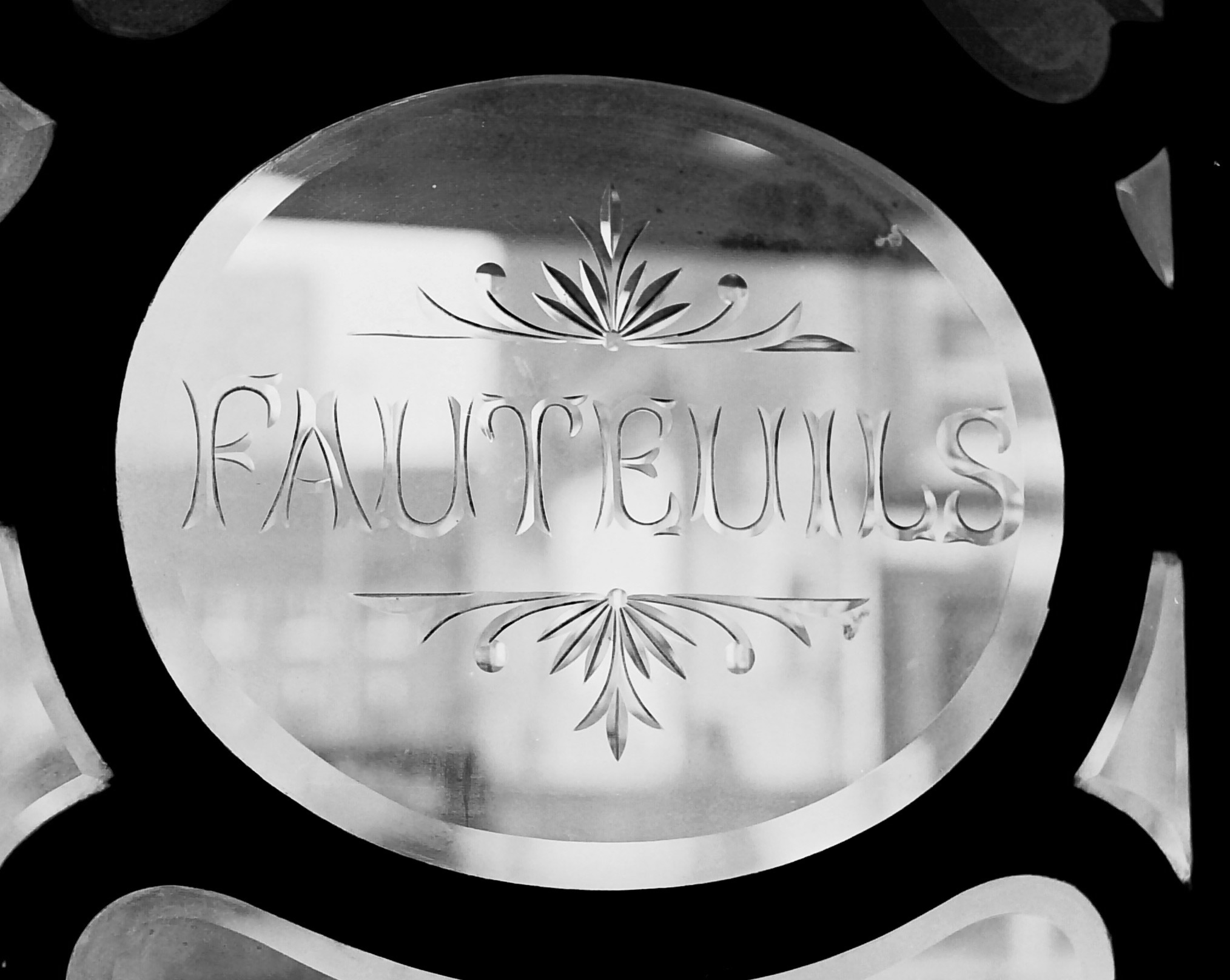
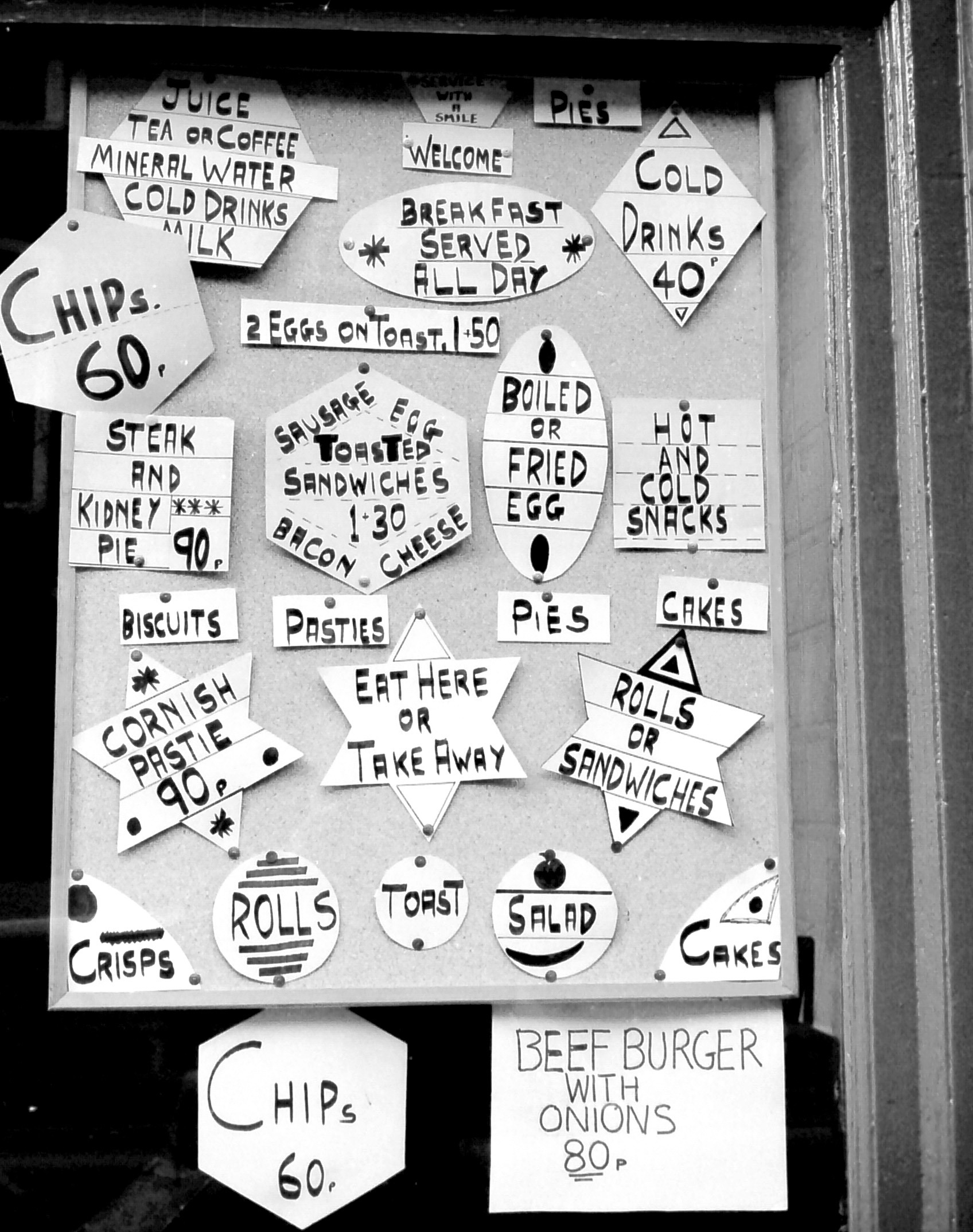
Victorian society was notable for conspicuous consumption of food and the number of meals eaten per day. Not so for the lower classes and industrial workers who subsisted on more basic food and drank beer as drinking water was suspect. A pressure gauge of the era shows a list of aerated drinks on offer.
Post prandial entertainment was popular given the lack of media other than newspapers. The theatre was rigidly controlled by class, but the music hall was enjoyed by all. Billiards rooms were also popular. But above all, public houses flourished and could be found on almost every street corner, most featuring elaborate furnishing and entertainment.
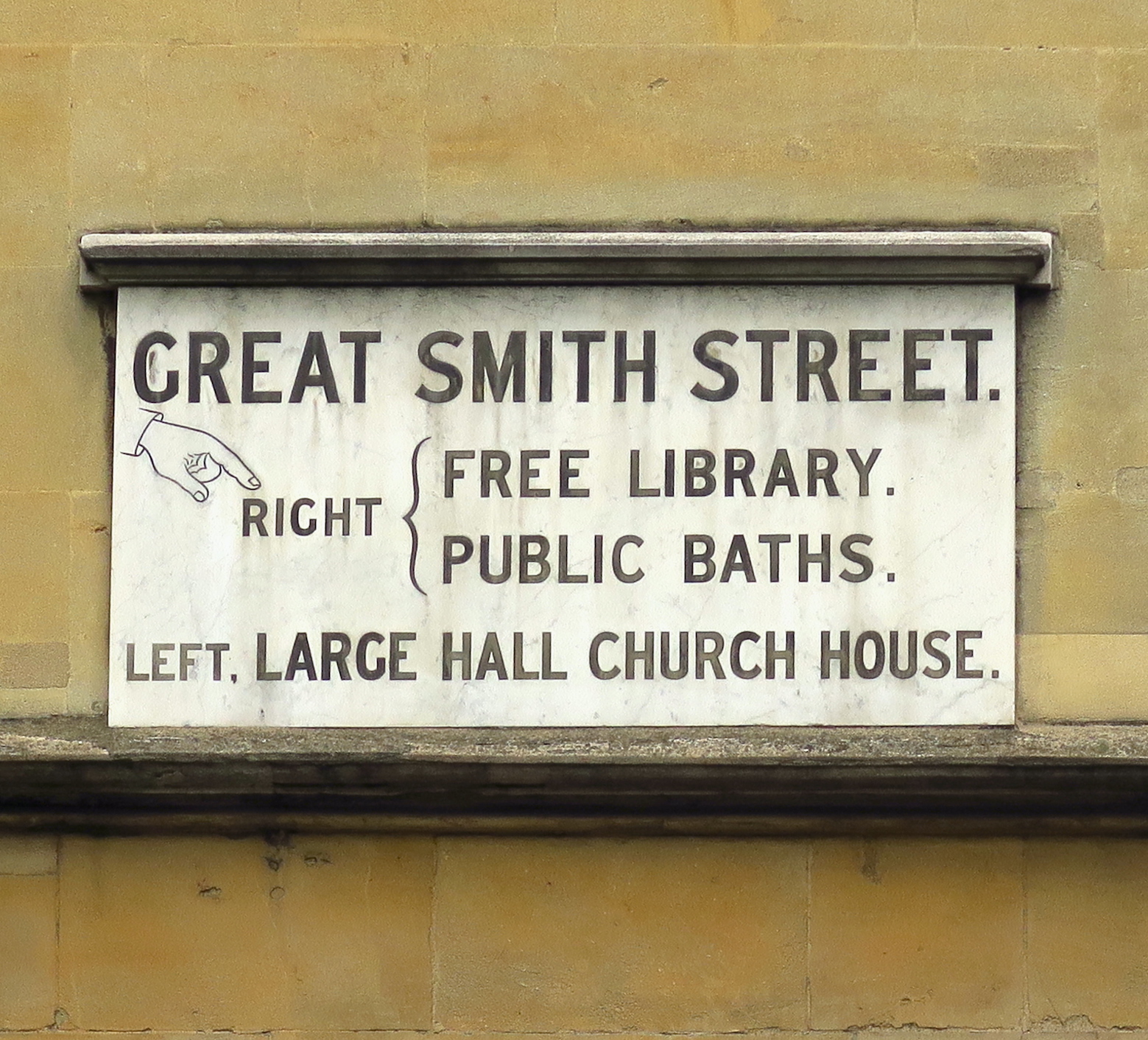
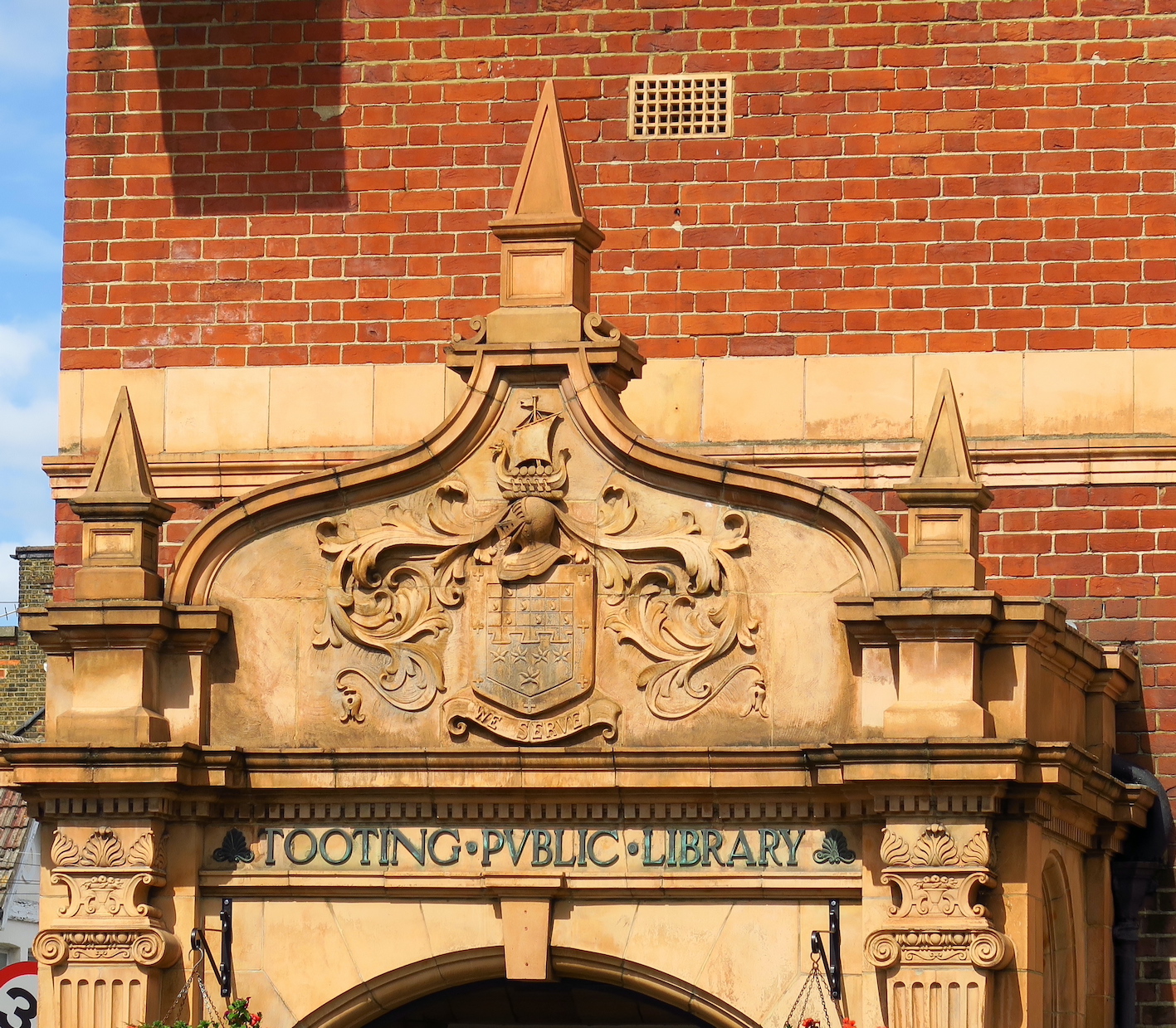
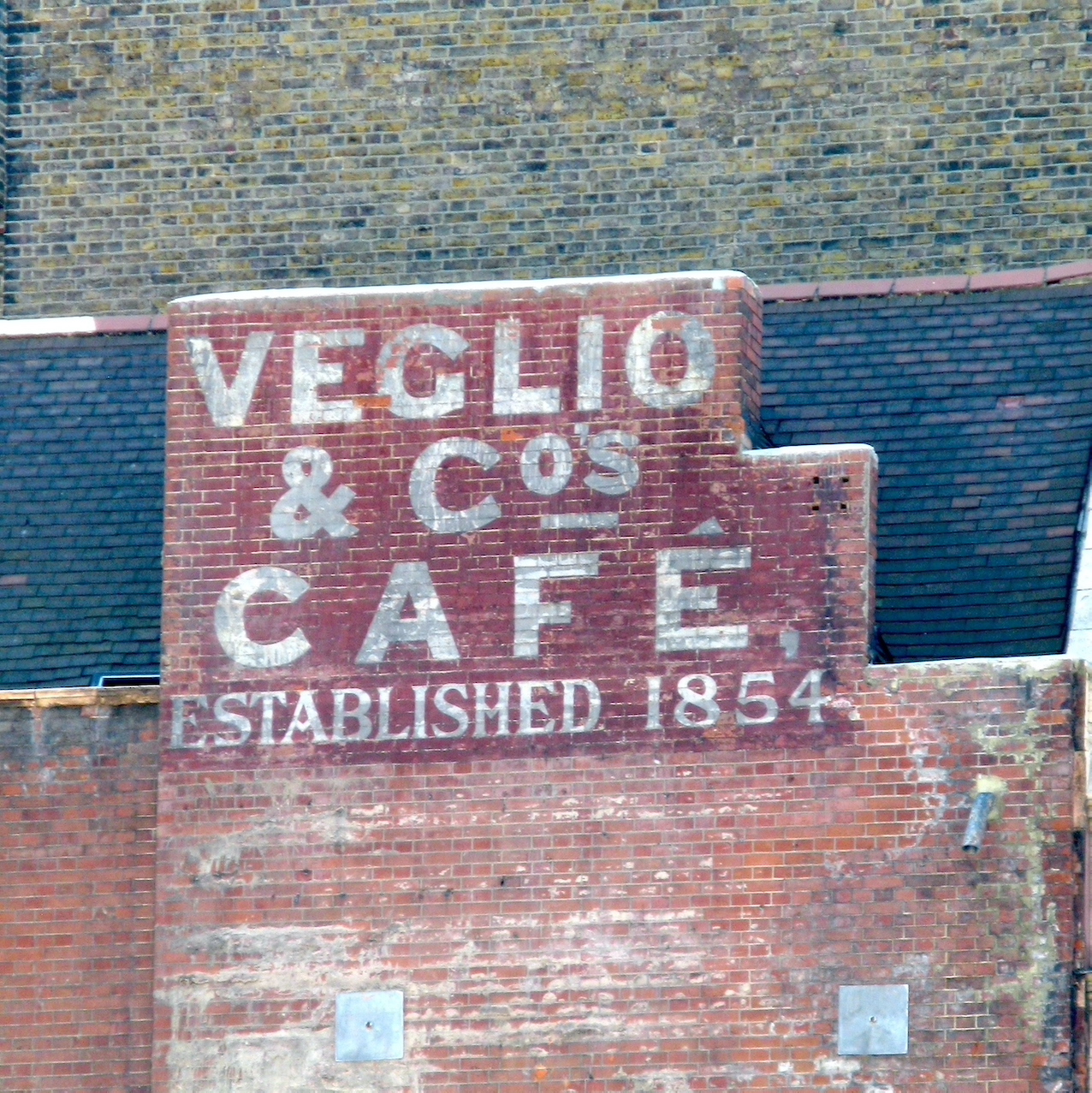
However, temperance societies offered alternatives for rare leisure time. Free public libraries offered opportunities for self advancement and a warm place to sit — little changes! Cafes abounded as did cheap dining rooms offering British fare. Eel and pie shops were early forms of take away.
A few signs remind us of this colourful era, now largely replaced by food chains, coffee shops, TV and social media. Sidney Ray
All photographs in Central London taken by the author over the past 50 years




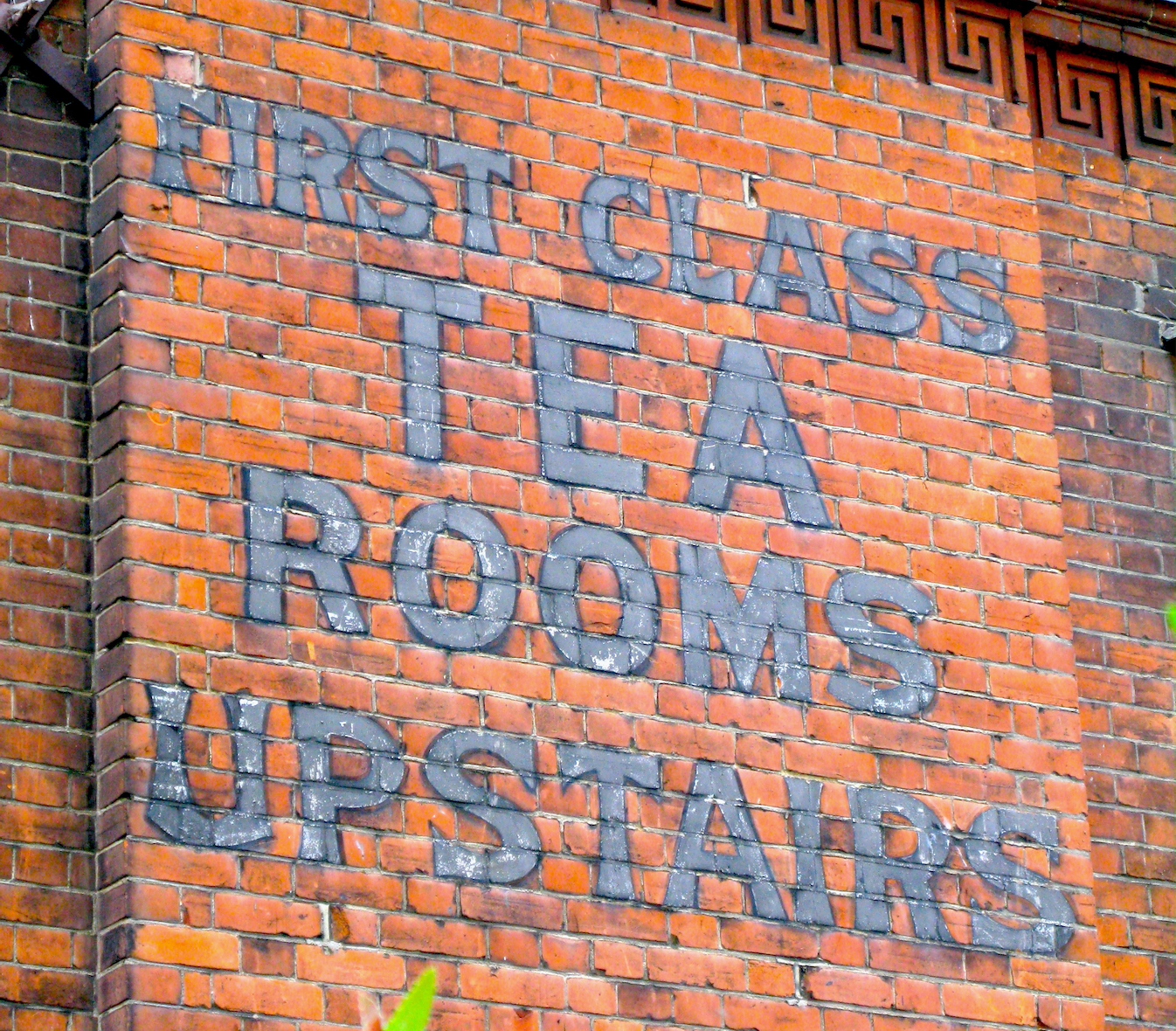
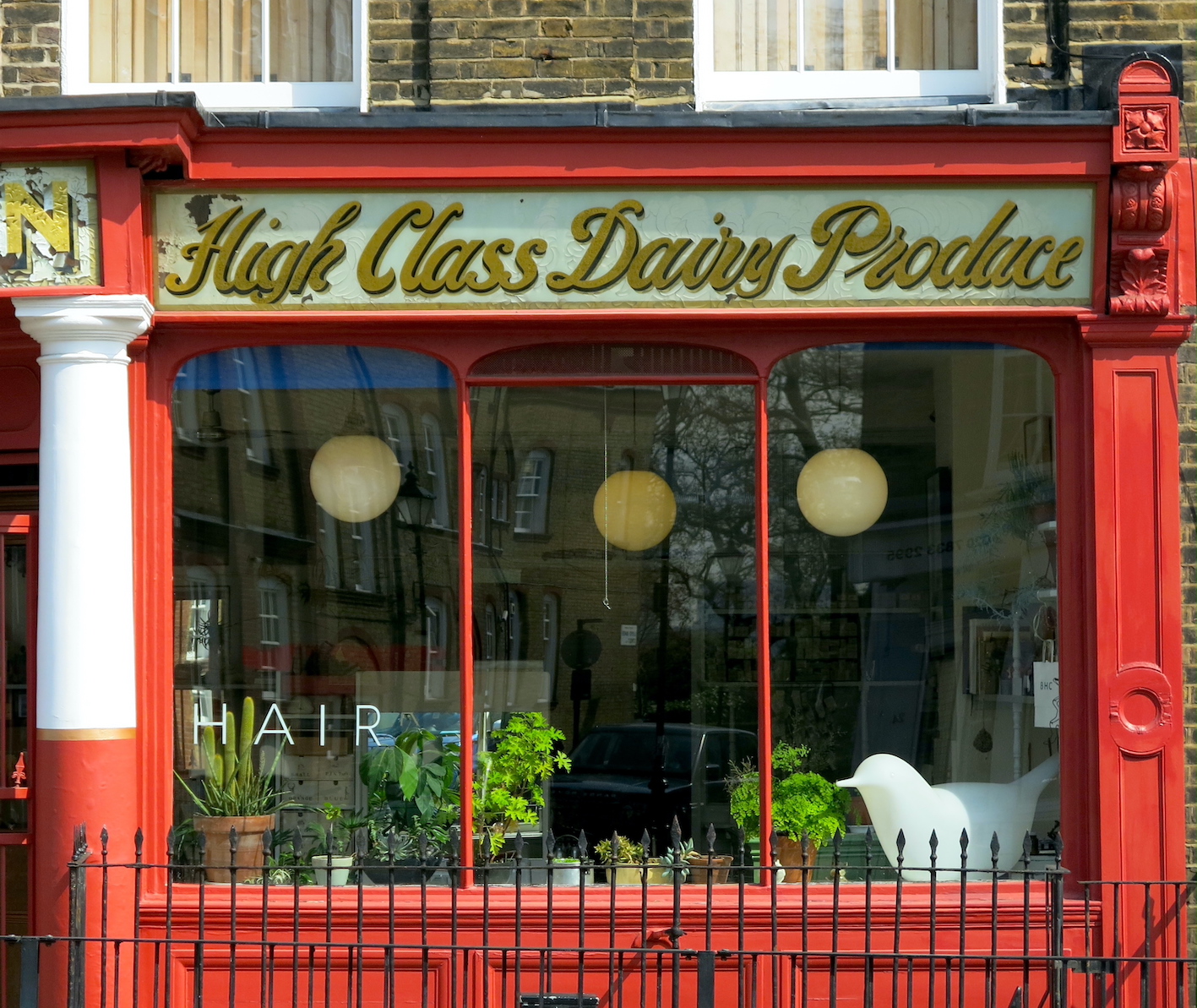
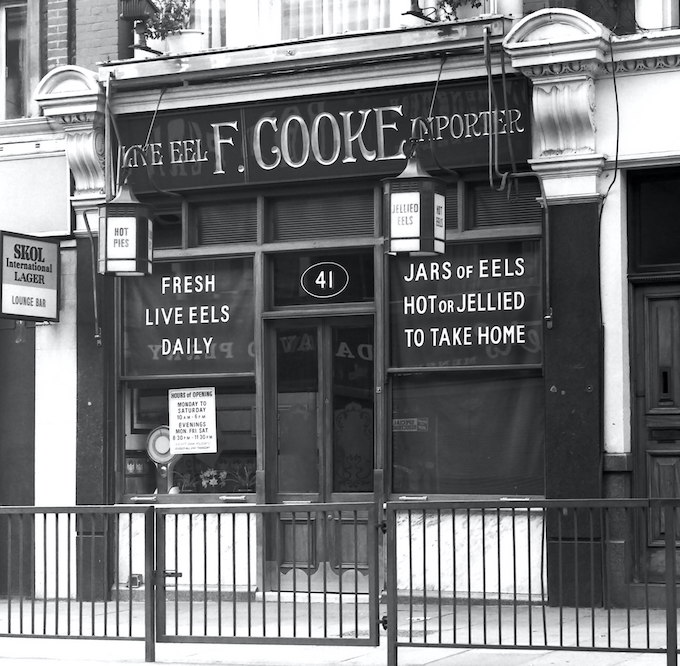
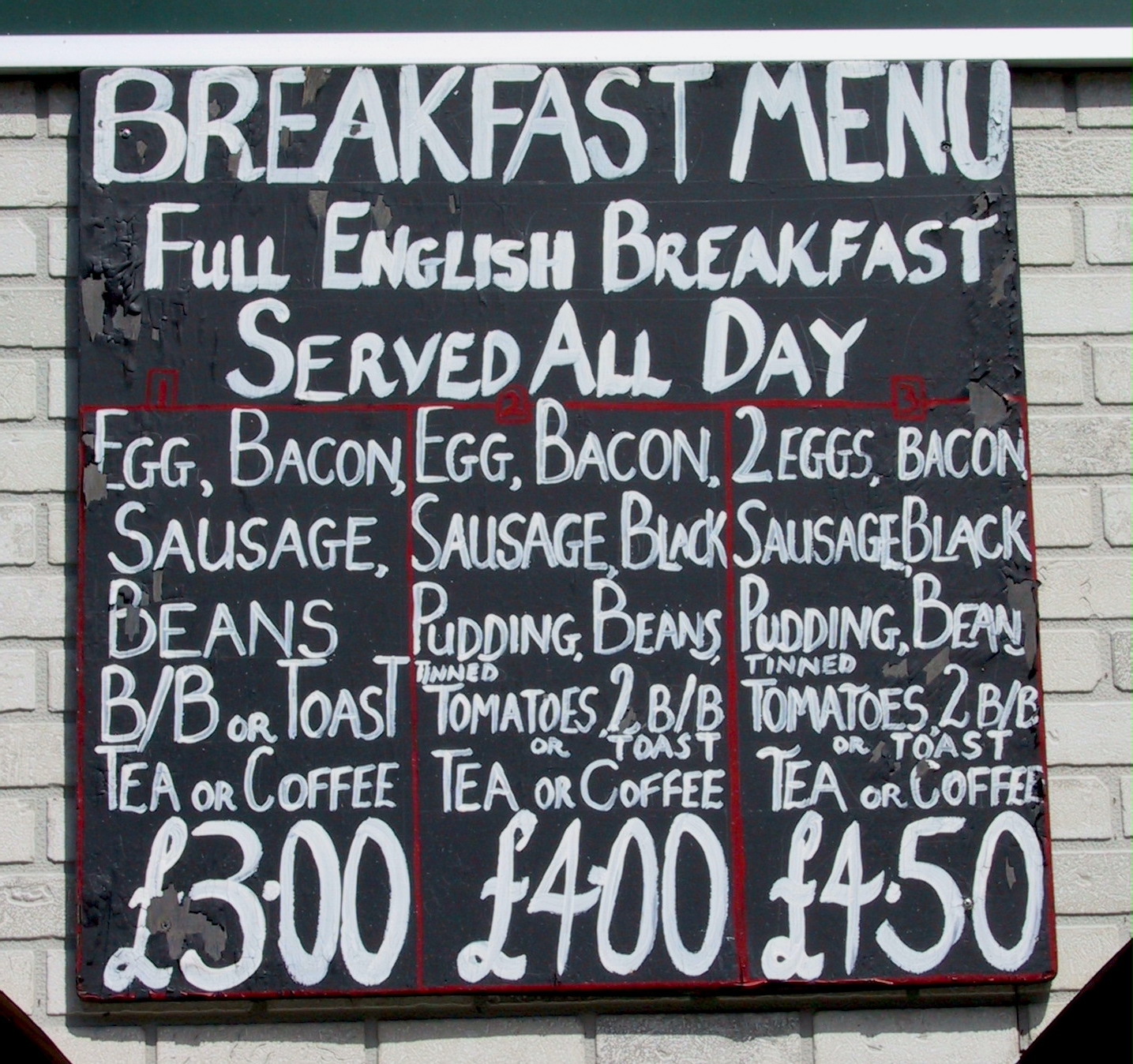






The Pump House Museum is in South Access Road, Walthamstow E17 8AX at TQ 362 882. About ten years or so ago people intent on redeveloping this site had quite an elaborate museum scheme. What became of this ambitious endeavour?
The problem was there was insufficient money. There was then the idea that flats could be built over and above the historic buildings and that these flats would serve to protect the historic buildings beneath by acting as a roof. Building flats above the museum was to generate the extra funding required. However, this dramatic development never went ahead.
In any case the museum was required to relinquish half the area which they had formerly occupied and which they had been using mainly for parking a wide variety of historic vehicles. Flats have since been built on the relinquished part of the site to the south-west.
One of the people involved in the Pump House project has been Lindsay Collier who was awarded a well-deserved BEM. Lindsay is now less involved with the Pump House.
At one time the former Museum of London photographer Mike Seaborne was employed as museum manager here, but is now retired and currently lives in the Irish Republic. A new full-time manager is currently employed at the Pump House Museum which is flourishing and a visit here can be recommended.
In recent years there has also been the idea of having an industrial museum at the Lea Bridge Road, using the former horizontal engine houses immediately to the east of the Engineer's House at TQ 356 866. See photograph 1 (below left). Is there any news of this project? Immediately to the east of here there is a proposal for wild water swimming (GLIAS Newsletter October 2022). There might be a conflict between these two schemes?
Much further to the east has been the question of West Ham pumping station at TQ 389 832 (GLIAS Newsletter August 2024) and it can be reported that there is now a happy outcome here. A Heritage Engineering Learning Trust has been set up with five Trustees, one of whom is a prominent GLIAS member.
Tall towers are being built on either side of the Lea Valley. To the east at Walthamstow there is now a 34-storey building and one of 26 stories which are part of '17&Central'. This was previously known as Selborne Walk Shopping Centre (1988-2011) and The Mall Walthamstow (2011-2021). When the 34-storey building was first being built it was satirised locally as 'the lift shaft to nowhere' and this prominent dramatic spike received considerable social media attention, it had the air of 'Jack and the Beanstalk' about it.
On the west side of the valley at Tottenham Hale further redevelopment continues. Photograph 2 (below right), taken immediately before Christmas 2024, shows a view looking west. Bob Carr

Mary's Write — Mary's right — Mary Wright (which is my real name)
I've decided to use it to document my IA travels. Have a look and see what you think at https://bsky.app/profile/ia-adventures.bsky.social
And if you have an account please feel free to follow me! Robert Mason
In searching for GLIAS reports we've found one — M. Bolson & Co. Ltd. Embossing Press Makers — listed but, within the Committee, we can't raise a copy. If any member has a copy we might borrow for scanning do get in touch with chairman@glias.org.uk
The London Canal Museum has a temporary exhibition on 'Thames Lighters', ending 9 March. Lighters are the unpowered barges that were formerly the workhorses of London's waterways, used originally to 'lighten' ocean-going ships and operated by lightermen.
The museum is open Tuesday to Sunday, 10am to 4.30pm, at 12-13 New Wharf Road, London N1 9RT, 5 minutes' walk from King's Cross. Admission charge: Adult £7.50 Concession £6.00 Child £3.75. Web: www.canalmuseum.org.uk
Next month the GLIAS lecture will be Dan Hayton's question 'Where have all the gas holders gone?' If you search the GLIAS database with the word 'gasholder', you will get an idea where some of them were — or still are.
As with many of the entries in the GLIAS database we need help expanding the text and supplying photos. Do you have any photos of these gasholders, especially those that have been demolished?
Each database entry comes with a 'Satellite view' of the site (or you can switch to 'Map view' if you prefer). The satellite imagery is generated from Google which seems to be updated fairly regularly — so this is quite useful for seeing the current status of the gasholder sites. For example, the gasholders at Bromley-by-Bow are quite visible (see below, left).
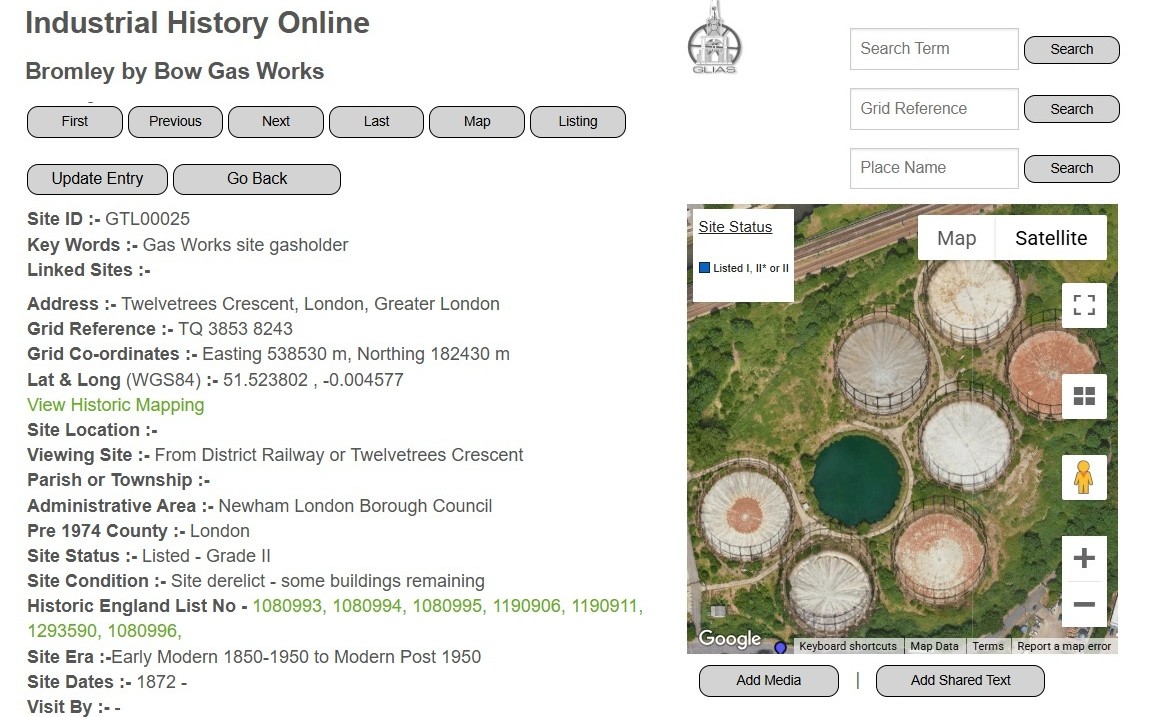

By contrast the now cleared site between the railways at Battersea shows how much housing redevelopment has taken place since their demolition in 2017, much featured in the newsletter (GLIAS Newsletter 264; 272; 276). If you look carefully on the satellite image (above right) you can just make out the upper parts of three early box-lattice standards with associated girders from Battersea gasholder No.6 that have been re-erected by the roadside (GLIAS Newsletter December 2023). The functionality allows you to zoom in on the satellite view. Crests bearing the name of engineer-designer Robert Morton and the cross of St George were saved — does anyone know if these are on display anywhere?
To get involved, or to get logon details, please contact us at database@glias.org.uk
There is a website for developers St William's plans for the 30-acre Beckton Gasworks site, once the largest such site in Europe. It contains a lot of historical information, plus a link to the planning application.
https://becktongasworks.com/