In this issue:
- From the chair
- Church Street, West Ham
- Paul Wenning Sowan BSC FRGS FGS FLS 1940-2021
- The Albion Dry Dock
- Carless, Capel & Leonard — Hackney Wick
- Aviation fuel
- PS Waverley announces autumn sailings
- Remembering King's Cross
- Visit to East Ham Maintenance Depot
- The Museum of London
- Bicycle-making in Greenwich
- London locos in Tamworth
- Database spotlight 3
- Signs of authority
- Books
- 332news.pdf
Having taken over the role of Membership Secretary, on a temporary basis, I've had to get used to the 'new' software, using spreadsheets instead of last century's database, software, and listing the cheque payments received for our bank's arrangement with the Post Office. I've had one envelope with an old-fashioned stamp and, so far, the computer system (is it still Horizon?) has delivered the GLIAS cheques to the bank. Those who pay by electronic transfer have their records updated accordingly.
The initial rush of renewals has slowed and 'final demands' will be going out with this Newsletter.
As the Lecture Season closes with the AGM so the Walking Season starts; keep an eye on the diary for details and thanks to Andrew for organising the programme.
The Committee is looking for new ideas and help with initiating and administering one-off or regular events; members should get in touch via email (or even old-fashioned post!).
Wishing you all a pleasant summer. Dan Hayton (chairman@glias.org.uk)
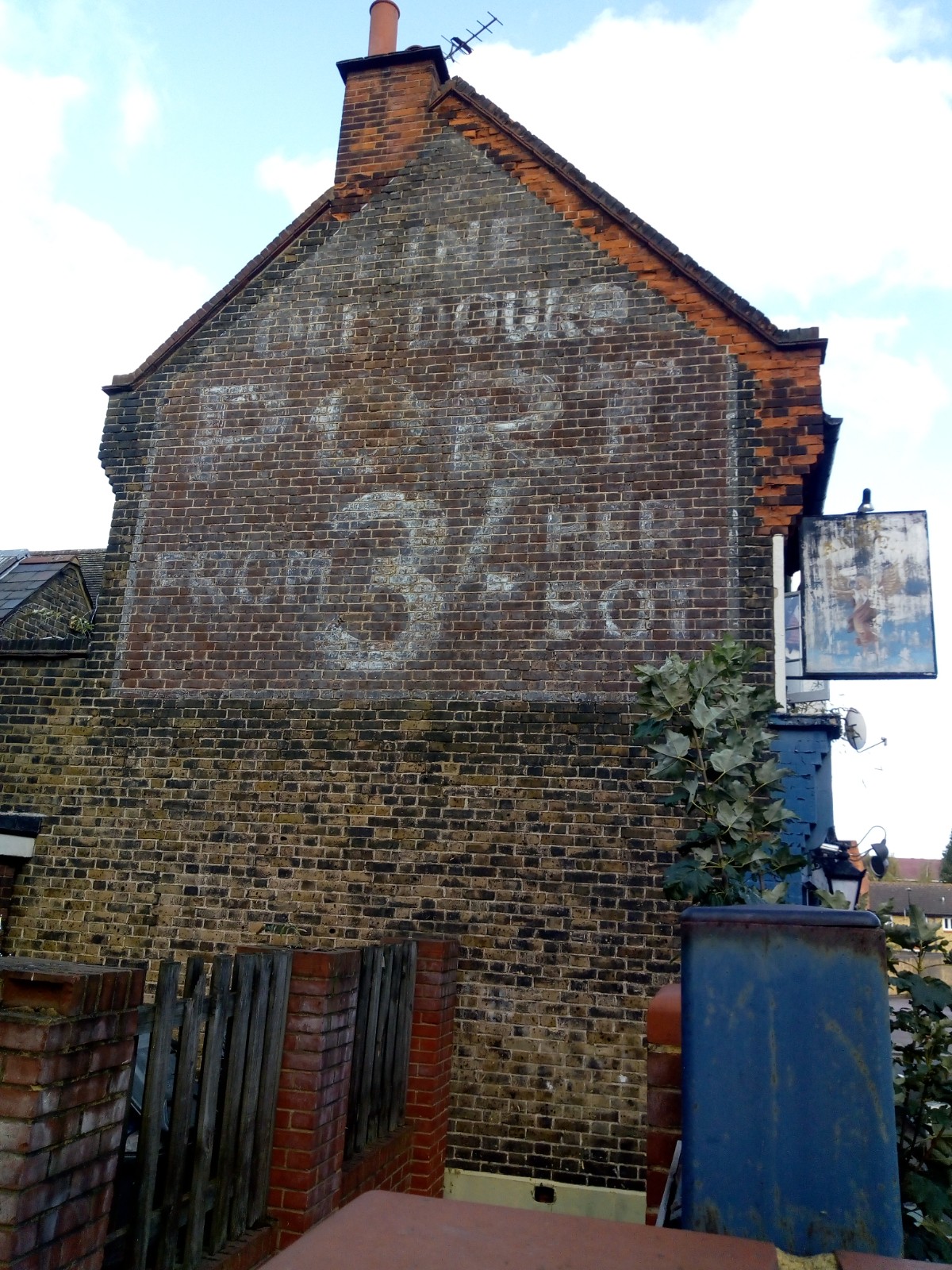
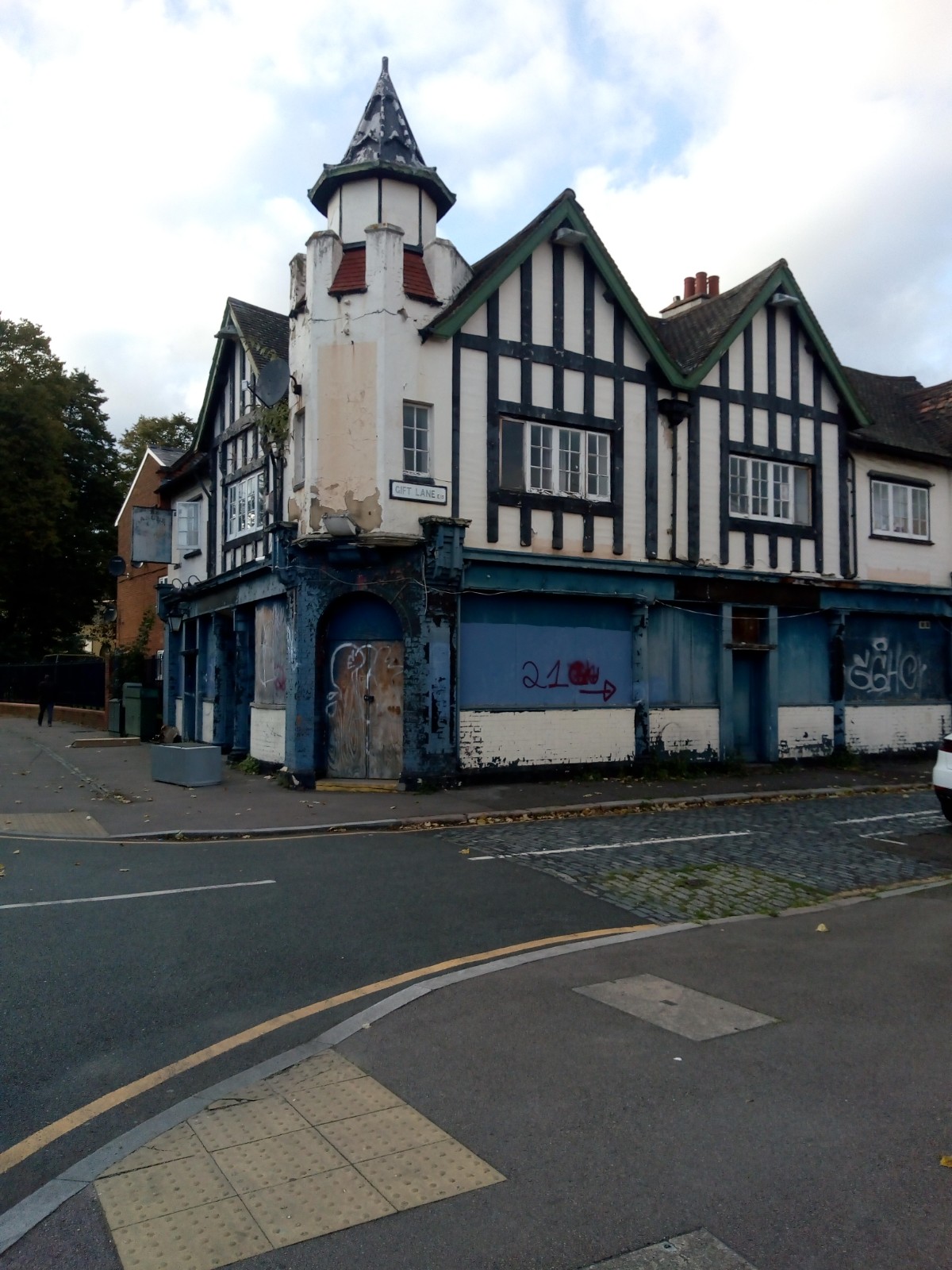
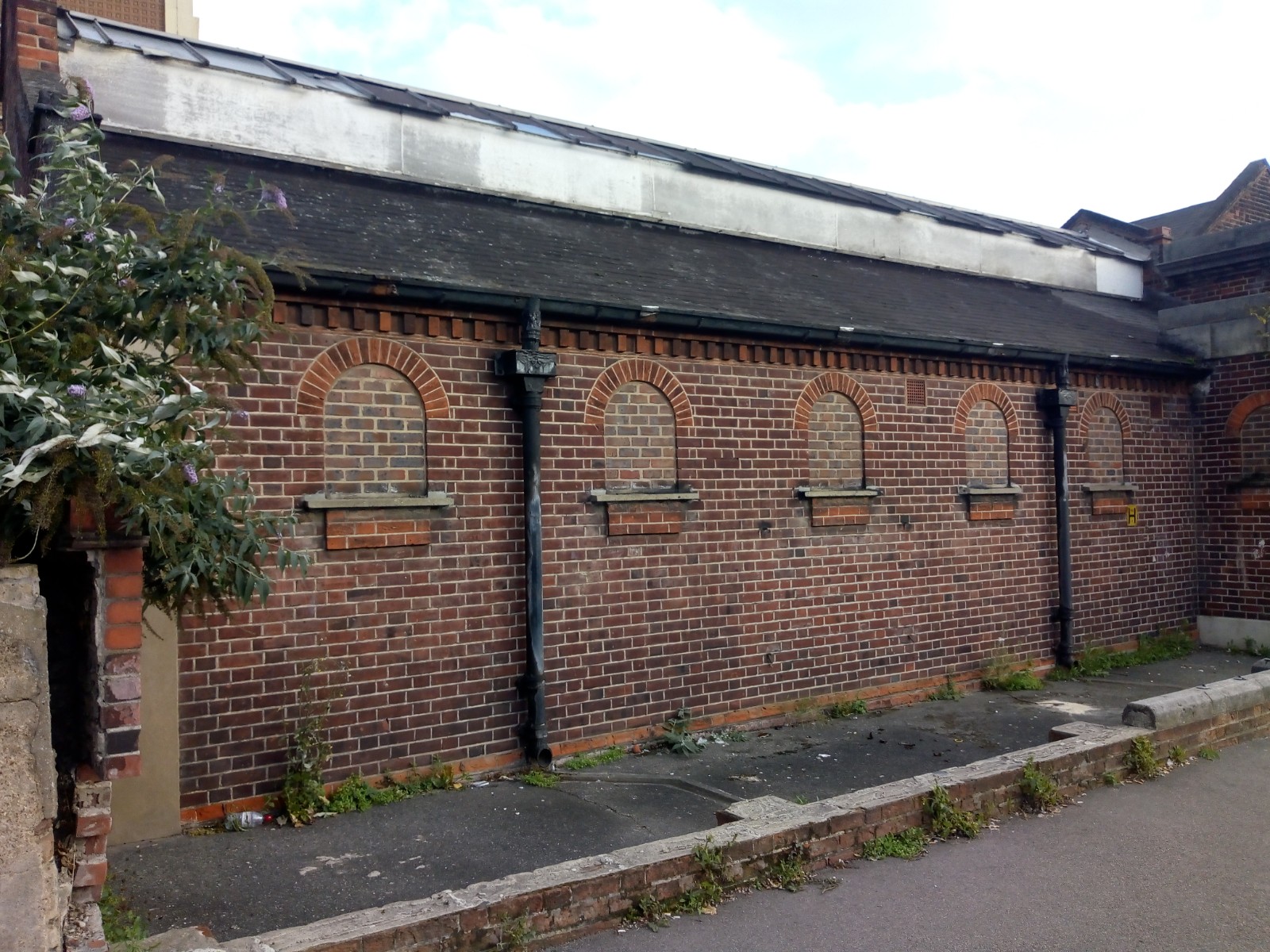
As there have been several items and pictures of ghost signs in recent issues of the newsletter, I wonder if the attached images of two buildings in Church Street, West Ham E15 (Newham) would be of interest?
The first two are of the former Angel pub, now derelict. The original pub, selling Charrington's ales at 21 Church Street, was rebuilt in 1910. It closed in 2003, reopened for a while and finally closed in 2010, when the licence was revoked. The sign reads 'Fine Old Douro Port from 3/- per bottle', so from before decimalisation. I have no idea when port was only 3/- a bottle!
The second is of what I think might have been a bathhouse. The foundation stone reads 'County Borough of West Ham. This stone was laid by Councillor H.I. Rumsey, chairman of the Public Health Committee'. It's dated 27th July 1931. The image shows the essential structure of the building. There was a similar building running parallel attached to it behind. When it closed, it was taken over by the Newham Boys Boxing Club. It has now been demolished to make way for flats. Paul Saulter
Paul Wenning Sowan BSC FRGS FGS FLS 1940-2021
Most of the archives of the late GLIAS member Paul Sowan (GLIAS Newsletter August 2021) have been or are being transferred to the Historic England Archive and Library, and the Library and Archive of the North of England Institute of Mining and Mechanical Engineers in Newcastle. Bob Carr
Forty five years ago it was still possible for GLIAS to do real industrial archaeological recording work and in June 1979 there was a joint effort recording the Albion dry dock in the Surrey Commercial Docks. The result of the work was published in London's Industrial Archaeology number 3, pp32-40.
This small dry dock, well known to the Thames barge fraternity, was used for the maintenance of barges and lighters. When this part of the Surrey docks was rebuilt in the mid 1870s what had been the entrance to a timber pond was retained and rebuilt to form this dry dock, a fine example of adaptive reuse.
The LDDC in the early 1980s had an enlightened policy and their intention was to preserve remains of the Surreys Docks to retain the character of the locality. When recorded by GLIAS the dry dock had an overall roof and understandably this was not kept; however, it did prove possible to preserve quite substantial remains of this small dry dock for many years and it probably only finally disappeared about 25 years ago. Perhaps there is someone who could inform us of a more precise date?
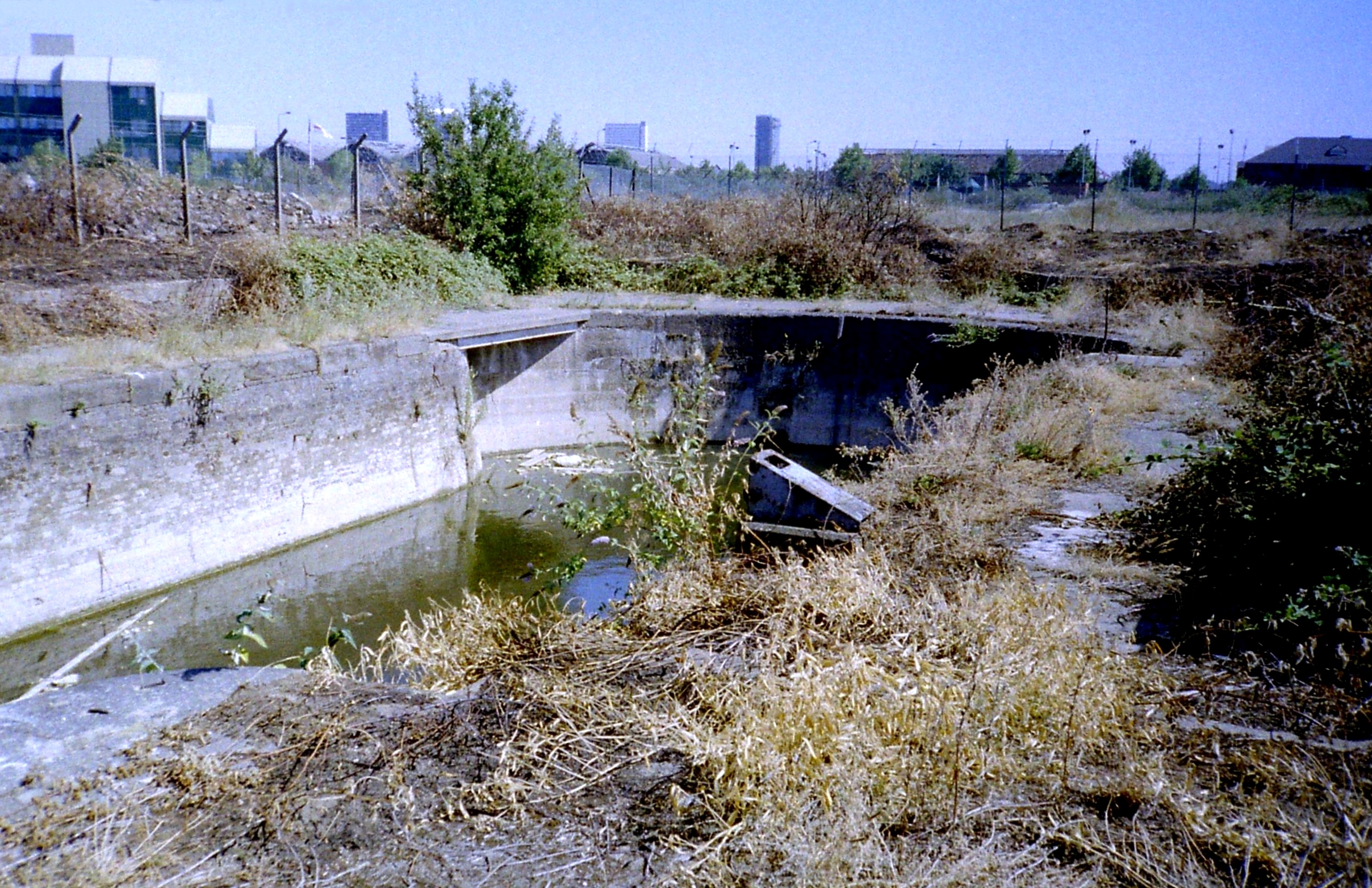
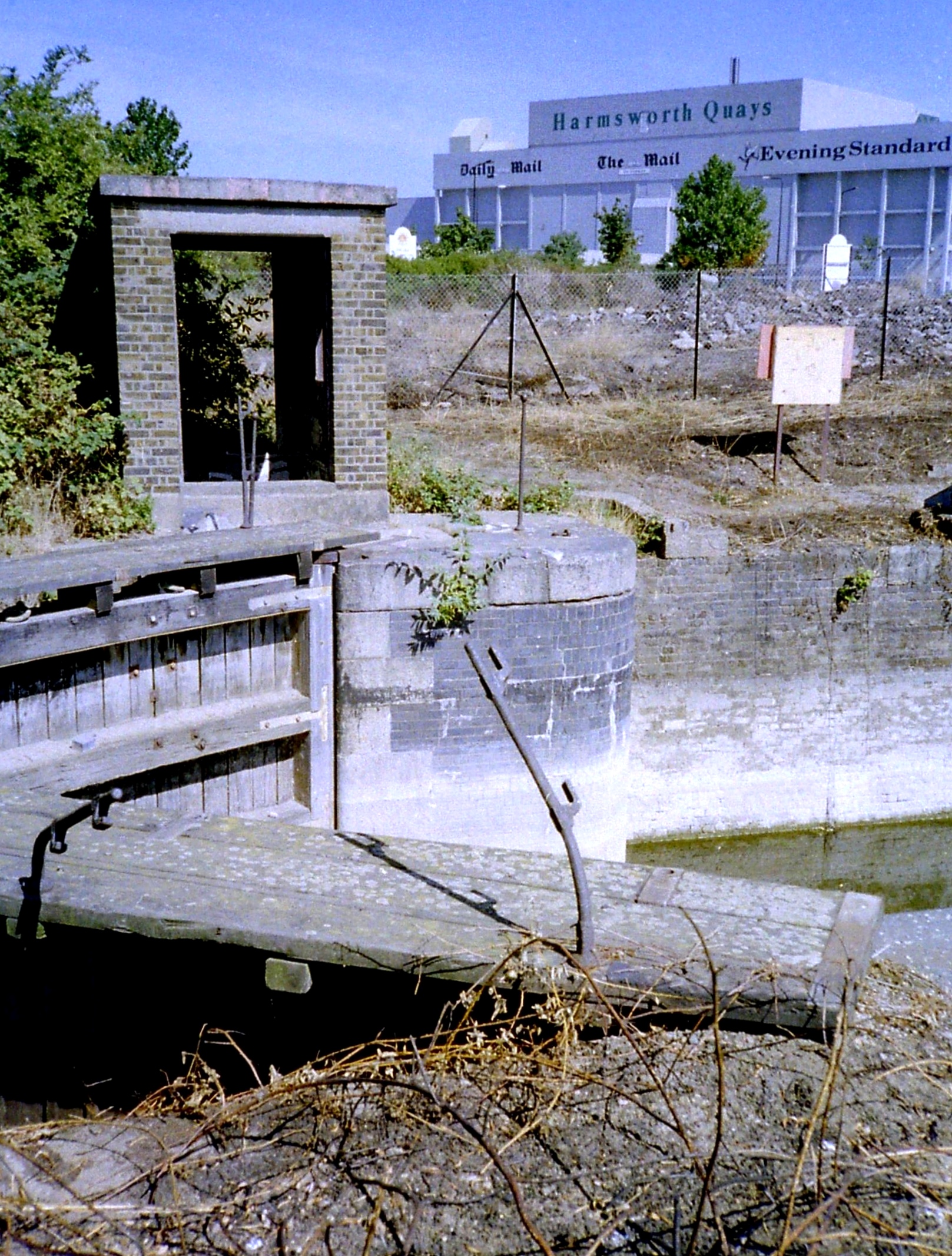
Photograph (below left) looking northwest, and photograph (below right) looking northeast show the remains of the dry dock as they existed in 1995. By this date a large printing works for the Daily Mail, Evening Standard and so on had been built nearby in 1989, and you can see these printing works in the background of photograph 2 which shows the pump house at the north-east corner of the dry dock on the left. The dry dock was at TQ 3564 7950 — what is there now? Bob Carr
Carless, Capel & Leonard — Hackney Wick
In 1893 Carless, Capel & Leonard at Hackney Wick marketed a motor spirit which they called Petrol, a world first. In 1896 they supplied their new fuel to the Emancipation London to Brighton Run and by 1906 you could buy petrol from 1,500 outlets.
They also sold Movril. What is Movril? An enamel Movril advertising sign recently sold at auction for more than ₤1,000.
Wary of Carless, Capel's attempt to patent the name Petrol, competitors first sold their fuel as 'motor spirit' but by the 1930s almost everyone had started to use the word petrol.
Carless also produced aviation fuel and in the early 1930s were supplying large quantities made from coal to the Royal Air Force. This high octane fuel crucial for fighter planes was actually superior to that which could then be obtained from oil.
Carless-Coalene, a motor spirit made from coal was also on sale to the general public.
Following the Second World War production was expanded at Harwich with the use of North Sea Oil in mind and production in Hackney came to an end in the early 1970s. Carless, Capel was familiar in GLIAS circles in the 1980s and there was a visit to the site at Hackney Wick. At this date the firm had specialised in the supply of lubricating oils.
The Company was taken over in 1989 and broken up; fortunately the firm's records were rescued from a skip. Some are now in Hackney Archives and there is a considerable amount of material at the Public Record Office in Kew.
In the mid-1970s Carless, Capel and Leonard had a site at roughly TM 232 323, to the south-west of Parkeston Quay, Harwich. There is now quite a large refinery here with the name Haltermann Carless which appears to be a successor to Carless, Capel. Plus ça change, plus c'est la même chose?
See also the book
Carless, Capel and Leonard plc: the growth of a family firm into an international oil company. By Peter Pugh. 128 pp, illustrated in colour and black-and-white, with maps. London: Published by Carless, Capel & Leonard 1986.
The history of the business goes back to 1859 when Eugene Carless founded a distilling and refining business at Hackney Wick. Bob Carr
Firefly Green Fuels at Harwich in Essex is now processing human faeces to produce aviation fuel. The new fuel will be used first by Wizz Air, in about four years' time. Wizz, a budget airline which operates from Luton Airport, has been offering some very cheap flights to Albania. Petrol was first produced by Carless, Capel & Leonard at Hackney Wick, almost in Essex, and it is appropriate that this new development should take place in the 'same county'. The new bio fuel offers the possibility of 'guilt-free flying'. Bob Carr
PS Waverley announces autumn sailings

The Paddle Steamer Waverley will be back again in the London and the Thames Estuary area this autumn from Friday 27 September to Sunday 13 October.
The Thames sailings start from Ipswich and Clacton for a cruise under Tower Bridge on Friday 27 September. On Sunday 29 September there is a special sailing with Paddle Steamer Medway Queen all the way up the River Medway to Rochester.
For the first time since 2002 there will be a sailing from Folkestone all the way to London — on Thursday 3 October.
On Friday 4 October Waverley will mark the 60th Anniversary of Radio Caroline with a special sailing round MV Ross Revenge. And on Sunday 6 October there is the chance to see the Thames Forts. Two days later there will be a special cruise around the Principality of Sealand with Prince Michael of Sealand joining the trip!
In the late 1980s the area just to the north of King's Cross and St Pancras railway stations was a delight to the industrial archaeologist and even now the area still holds considerable interest. About 37 years ago it was announced that a major redevelopment was to sweep away almost everything there and much to the south, with only a few listed buildings being retained. The King's Cross Hotel was likely to be demolished and a large number of lesser items would certainly go. The photograph below shows the hotel looking north in October 1986, in the distance on the left you can see some of the St Pancras gasholders dating from 1861 and it was thought that three of these might be preserved. The two mainline stations themselves were listed grade I and the German gymnasium of 1865 could have survived but the King's Cross Hotel appeared doomed.
To the north of King's Cross railway station the once numerous coal drops were already partly demolished. To the north-east of the area was the Potato Market, dating from 1865 and like much else hereabouts then still a relatively intact survival. That was until the summer of 1988 when British Rail started to knock the Market down. This was contrary to the developers' intention and horrified conservationists. The demolition was stopped and the general public took some interest. A photograph of the Potato Market was published in the Independent of 20th July 1988, on page 5. Time Out had an article entitled 'Hot Potato', see page 10 of the issue for 10-17 August 1988. The Time Out article described British Rail's partial demolition of the Market and there was a photograph showing the Market's interior. The archives of a potato merchant going back to the 1860s and subsequently believed to be of great interest were discovered in a loft, being rained upon as the roof had already been removed. These were saved by local historian Themis Michaelidou and were to go to a suitable archive. Does anyone know where they are now? Some interesting artefacts used in the potato trade were also discovered. Photograph (below left) shoes the potato market looking south-west in August 1988 and photograph (below right) shows the Market in November the same year.
Claimed to be the biggest redevelopment project in Europe, several proposals for the King's Cross area were unveiled. There was a scheme which would involve the removal of the German gymnasium and according to at least two proposals the Great Northern Hotel of 1854, listed grade II, would also disappear. Interesting examples of industrial housing were unlisted and had no chance of survival. Norman Foster suggested the construction of a large cone-shaped steel and glass blister hanger to roof over the gap between the St Pancras and King's Cross train sheds and enclose a substantial passenger interchange. It was even suggested (Guardian 7 March 1988, p17) that the St Pancras hotel and Cubitt's brick arches in front of King's Cross be cleared away so as to give a better view of the train sheds from the Euston Road. Fortunately this did not happen.
The German Gymnasium still exists and is in use as a restaurant. However, many of the small streets and passages just to the east of the Gymnasium have disappeared. This was an area much beloved by cinema enthusiasts; it was used as a location for making the British film The Ladykillers of 1955.
The photograph (below) shows the German gymnasium looking south in April 1988. In front of the Gymnasium, Clarence Passage leads off to the right, sadly this passage no longer exists — a victim of the redevelopment.
This article was prepared from material written in the late 1980s and submitted to AIA Bulletin in December 1988. Bob Carr
Visit to East Ham Maintenance Depot
On Saturday, 18 May, fourteen GLIAS members visited the rail maintenance depot run by c2c in East Ham. We thank GLIAS members Brian Lees and his colleague Peter for their time and enthusiasm in explaining the organisation and technical detail of the operation.
They explained the history of the line and depot, particularly since major development in the late 50s, and the labyrinthine organisation brought about by de-nationalisation. We rode a train through the carriage wash and the state of the art facility to remotely check maintenance items. Of course, the maintenance and cleaning is carried out by a team of engineers using cranes, hydraulic lifts and hand tools as it has always been done. However, the most recent train sets introduced less than a year ago are heavily reliant on software systems and controls.
A highlight was going below the trains to see and touch the bogies, to understand how they have developed over the last ten years, and to hear the explanation of the braking and power systems.
My favourite personal take-away was the revelation that passenger loading is monitored in real time by the variable air pressure in the suspension which presumably automatically informs Google on how crowded a particular train is. Tim Sidaway
Many of us were familiar with the old Museum of London at the Barbican which closed in 2022 after 46 years at London Wall. Already half the artefacts which were there are ready for the move to Spitalfields Market where the new Museum is due to open in 2026.
The question remains as to what is to happen to the old buildings which consist of the Museum, by postwar modernists Powell and Moya, opened by H M Queen Elizabeth II in December 1976, and Bastion House a 17-storey office tower. Powell and Moya worked on the 1951 Festival of Britain and are credited with designing the Skylon.
Invoking the Government's levelling-up policy, the London Wall West Project, the intended redevelopment of the Museum and Tower for offices recently granted planning permission by the City of London, has been put on hold by Mr Michael Gove, Secretary of State for Levelling-Up.
The London Wall West project would involve knocking down the 1970s Museum and the adjoining Bastion House which are on the edge of the Barbican Estate. Local residents are keen to have some kind of community development and to protect the Estate, listed grade II. Environmentalists would prefer the old Museum building and the Tower to be adapted and reused, a new office development would involve a considerably greater expenditure of energy. The 20th Century Society is campaigning to have the Museum of London building retained and reused as a fine piece of 1970s architecture. Bob Carr
In the first half of the 20th century almost everyone had a bicycle — it was the way you got around. Only rich people had cars or used the train. This meant that every town and village had a bicycle dealer. Of course, there were the big bicycle manufacturers who sold in specialist chain shops which came from large factories, mostly based in the Midlands, but there were many small workshops at the back of shops where enthusiasts would gather to discuss the latest trends and from which custom-built machines would emerge — and Greenwich and Woolwich had their share of those.
Some years ago an elderly friend gave me a list of small workshops where he remembered bicycles being made in the 1930s.
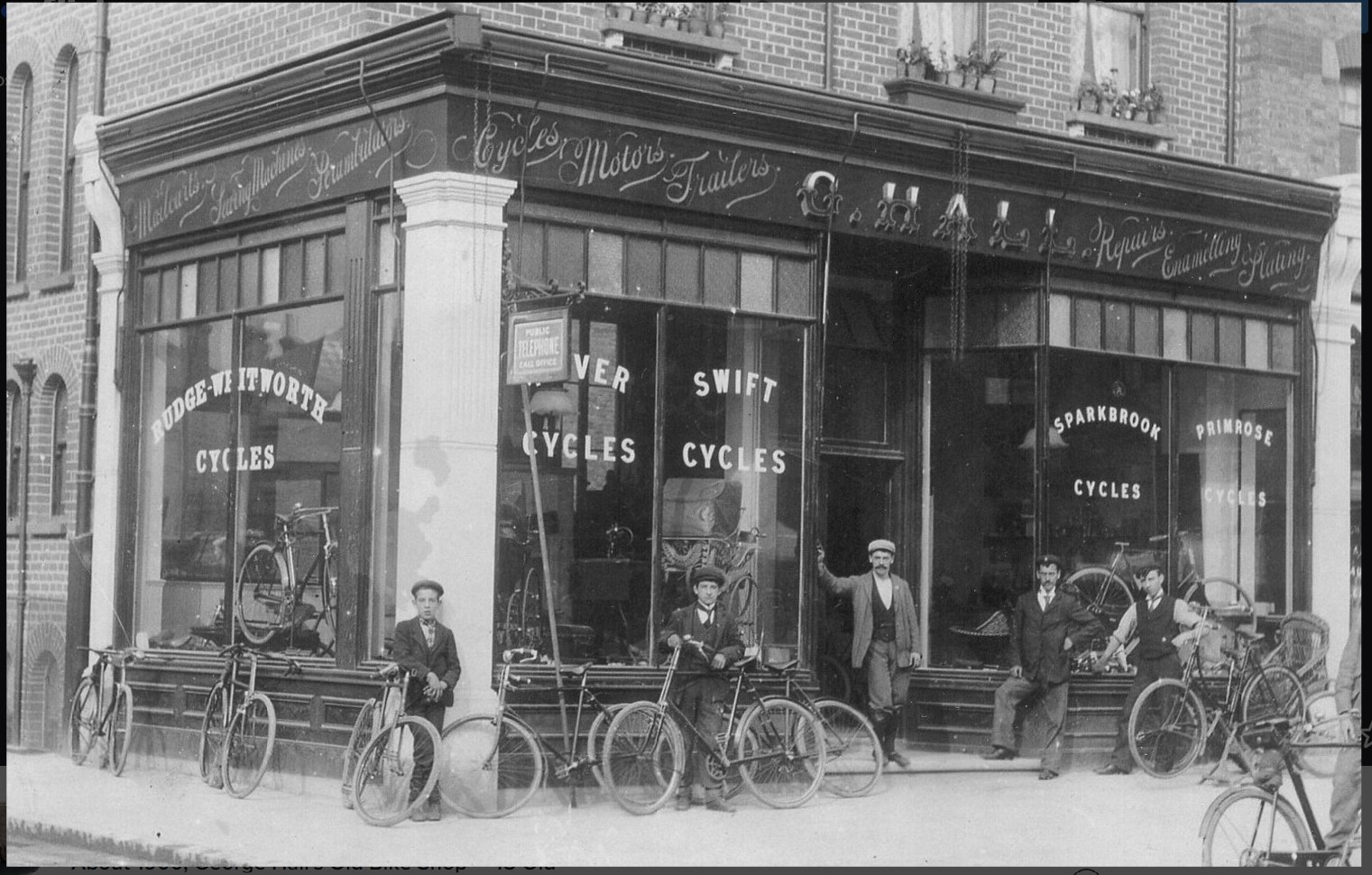
Trying to track these down I found a reference to Hall's bicycle shop in Old Dover Road at Blackheath Standard in 1900. It was a surprisingly posh double-fronted shop with curly lettering on the frontage advertising 'cycles, motors ... trailers' and signs announced well-known brands 'Budge ... Whitworth'. Hall described himself as an engineer 'of Dornberg Road' which suggests a workshop somewhere round the back. Hall's shop must have been roughly where the Sunfields Methodist Church now stands up past the motorway bridge in Old Dover Road. Dornberg Road then ran between Banchory and Old Dover Roads. On the opposite side of Old Dover Road was another business 'Romboy's Gordon cycle works' where the 'Gordon' cycle was made.
In his 'Blackheath Village and its Environs' sadly missed Neil Rhind mentions a small works at 33 Tranquil Vale where in 1885 William Arthur Lloyd developed the Landseer Bicycle and opened the Cycle Trade Supply Co. This was taken over by William Butcher, a homeopathic chemist, who took on the bicycle business and also hired the Blackheath rolling skating rink for a cycling school. He also made and showed films. In 1897 he took over Albion House next door, number 22, calling it the Landseer Cycle Works. In 1902 this was taken over by Haycraft and Son, Deptford ironmongers who traded here until 1953.
A bicycle which was designed in Greenwich and famous in its day was The Facile; which was what we would describe as a 'penny farthing' but its proper name was 'Ordinary'. It has been described as an important step in the development of bicycles between the penny farthing and the safety bicycle. It had been patented by John Taylor Beale in 1878. He was not someone with a small back street workshop. He was a wealthy man who had inherited a substantial foundry in east Greenwich from his father, the engineer Joshua Taylor Beale. When he died John Beale closed the foundry and went into partnership with a Mr Straw to make the original Facile at 32 Greenwich High Road. This is a small shop premises and manufacturing was taken up in 1881 by Ellis & Co. in Fleet Street and later in Farringdon Road.
The machine's sales were supported by sponsorship of races and demonstrations of the bicycle. These races took place annually starting from Fleet Street after a large supper for riders and officials. In 1882 a Mr Snook from Worcester won a 24-hour race covering 214.5 miles and in 1884 Joseph Adams of the Lewisham Bicycle Club beat the Land's End to John O'Groats record on a Facile in less than seven days. John Beale was president of the Facile Bicycle club which had its headquarters at the Green Man Pub on Blackheath and members wore a 'tight fitting uniform'. In the garden of his big house in Westcombe Park Road, Blackheath, John Beale is said to have had a large circular lawn around which was a path where bicycles could be tried and tested.
There are many websites which describe the Facile and examples in museums. However, I cannot find one which says that John Beale was the son of an innovative 19th-century engineer.
An article re-published in the current Lewisham History Journal (No. 30, 2024), Local Pioneers of the Cycle Industry by Gordon Dennington, is about young men who worked in Greenwich but who founded businesses elsewhere. James Starley and William Hillman were neighbours in Lewisham. Starley worked as a gardener for John Penn — the famous owner of the Blackheath Road engineering factory — the place where Hillman worked. In the 1860s Starley moved to Coventry to start a sewing machine company and where he also designed bicycles in conjunction with Hillman. It is suggested on bicycle history websites that Hillman's Rover model was the eventual successful rival to Beale's Facile. In 1875 Hillman set up the Hillman and Herbert Cycle Company — which was the first beginnings of Hillman Motors.
There were many others who made bicycles in Greenwich and Woolwich. For instance, the Matchless factory in Plumstead had started in 1878 as a small bicycle works in Herbert Road. They too were to publicise their motor cycles by success at events — this time at the TT races on the Isle of Man. Another local manufacturer — which closed only in 2009 — was Witcombe Cycles, who also began in Woolwich producing lightweight machines. They moved to Tanners Hill in Deptford and for twenty years had a factory in Wales.
Most towns will have had small workshops like these where enthusiasts developed and built their designs of bicycles and that some of them will have grown and diversified. Mary Mills
This 18-inch gauge steam locomotive once worked in Woolwich Arsenal. It has been cosmetically restored (and might be restored to steam one day). It is at present on display at the Statfold Barn Railway near Tamworth in Staffordshire.
It is an 0-4-0T, built by Avonside in 1916.
Also stored at Statfold is this train that formerly worked on the GPO underground railway in London.
Built by English Electric, it dates from 1930 and is 2ft gauge.
The railway is a fantastic place to visit for the railway enthusiast. For more information see its website www.statfold.com/railway
The GLIAS Database is part of a wider database that covers the whole of England, Scotland, Wales and the Isle of Man.
This makes it a useful tool when searching, for example, for the distribution of products made by a certain manufacturer.
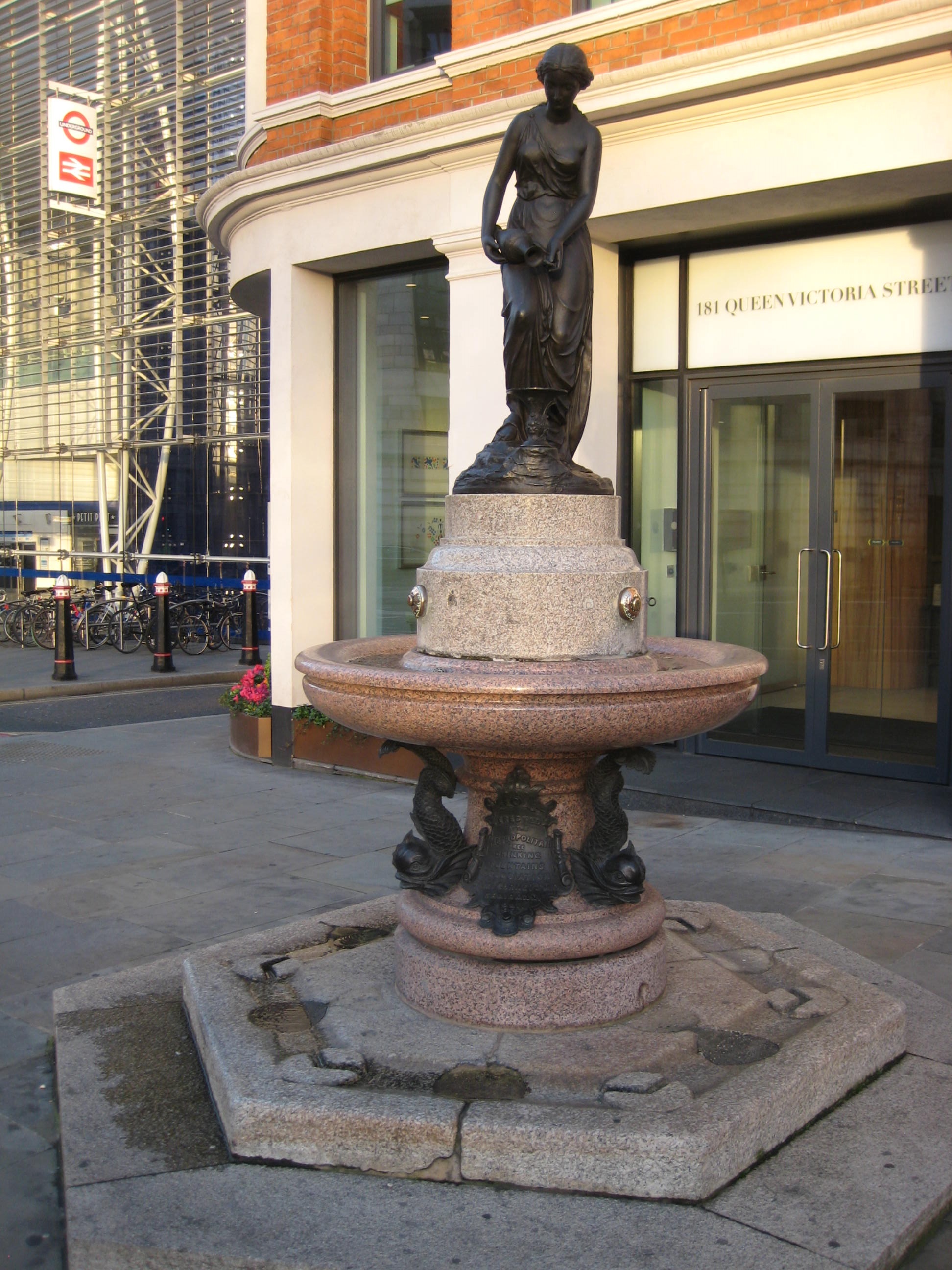
David Perrett produced a gazetteer of decorative ironwork made by the famous Coalbrookdale Company of Shropshire which can still be found in London (see GLIAS Journal No16, 2018). For example, the water-carrier fountain at Blackfriars (pictured below). These all feature in the Database along with other products of the Coalbrookdale Company which can be found elsewhere in the UK — the map function of the database shows the distribution.
The Database is fully searchable and you can choose to have the results displayed on a map, or as a listing of sites.
The Database is steadily growing but we need help in adding new sites and improving the existing entries. Also we would like to see more entries augmented by photos.
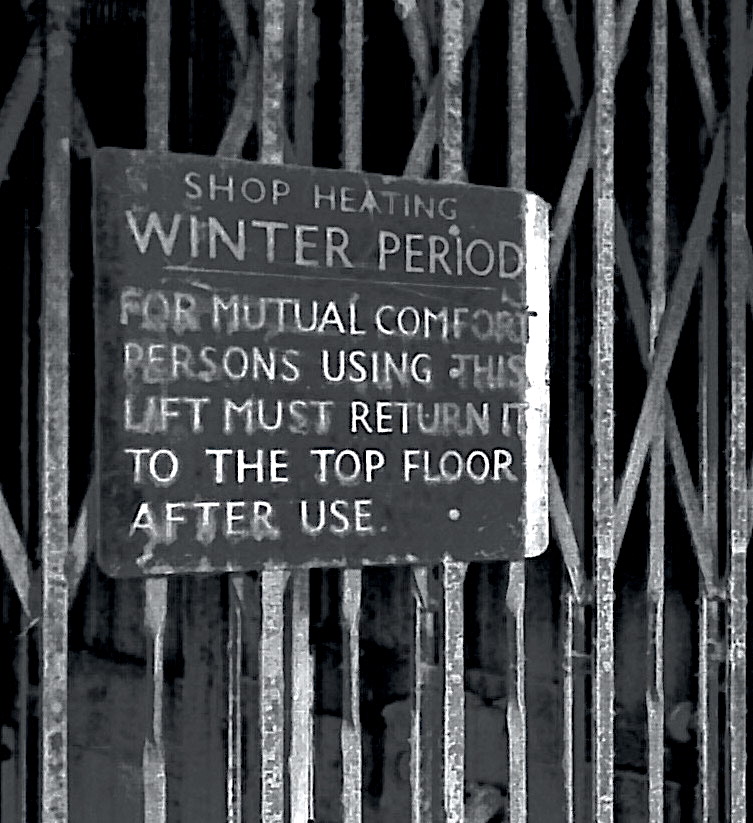
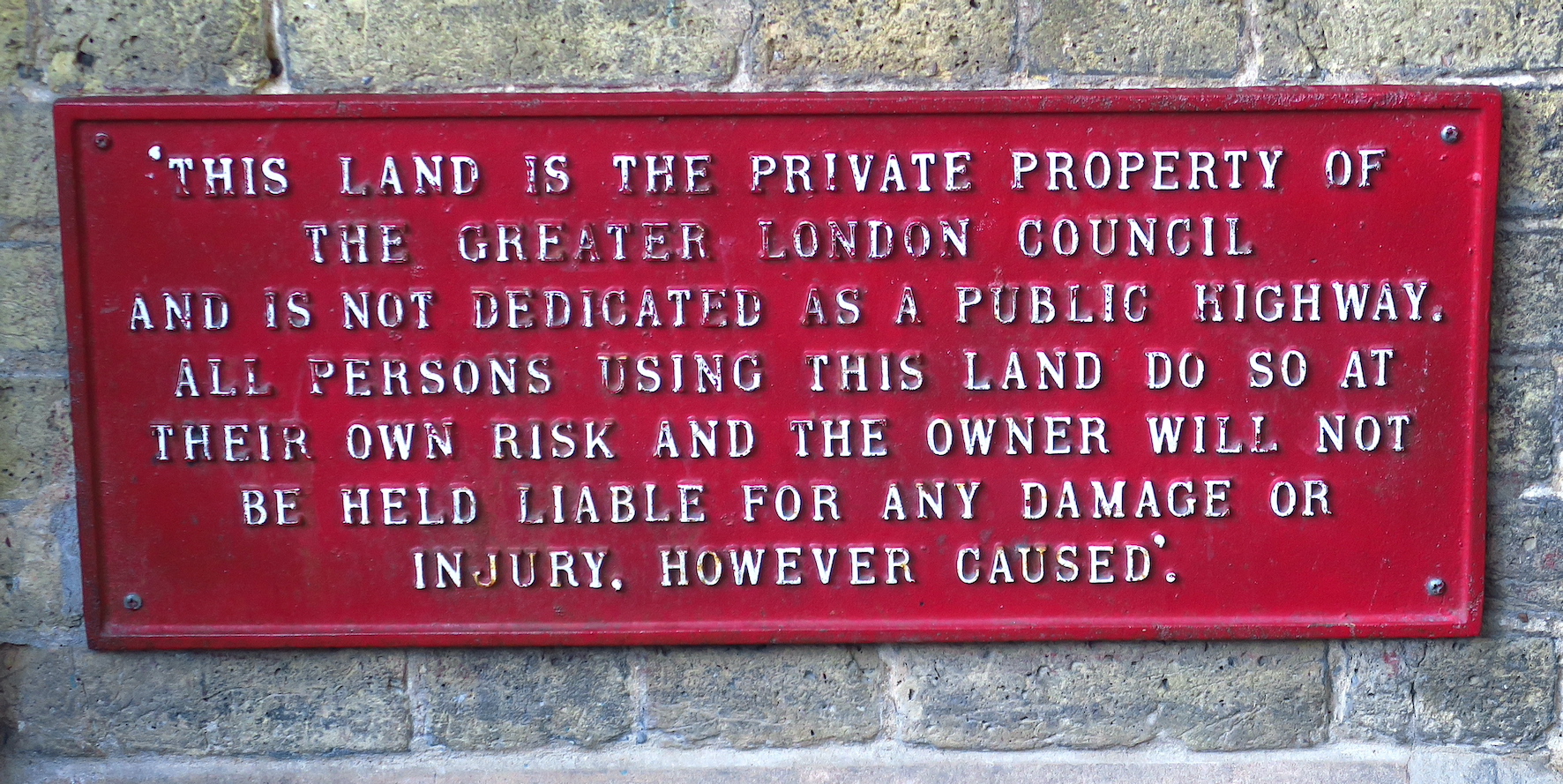
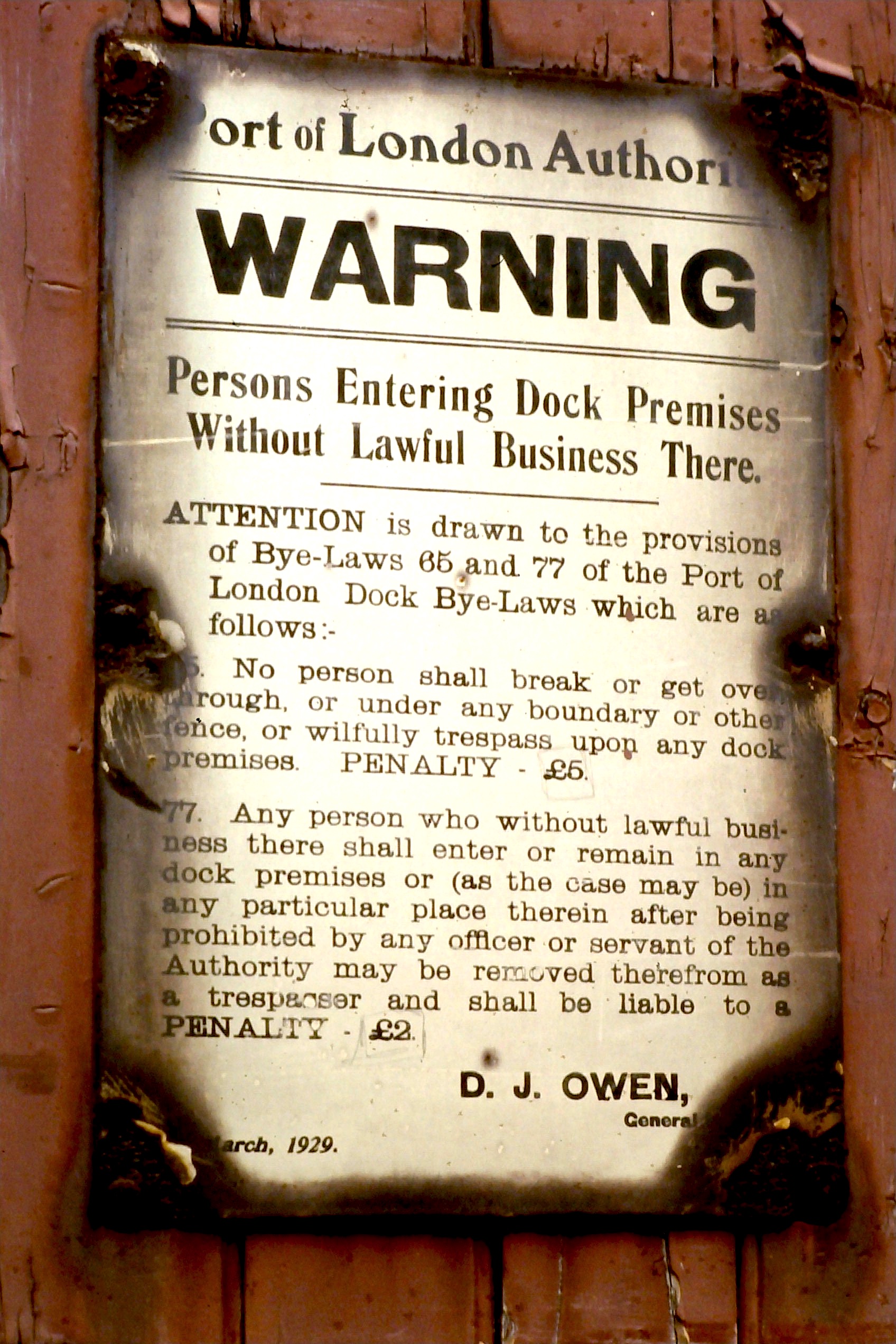
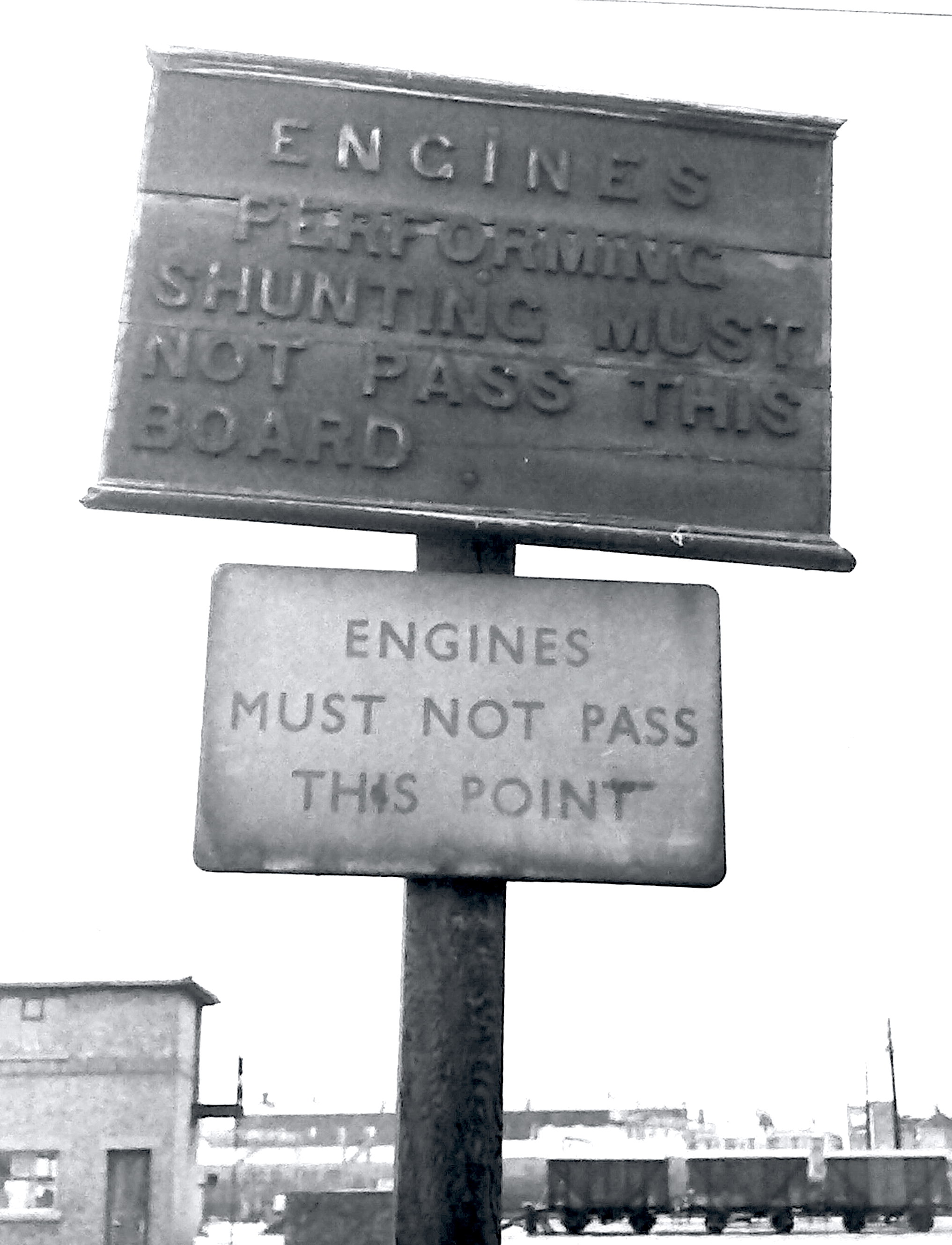
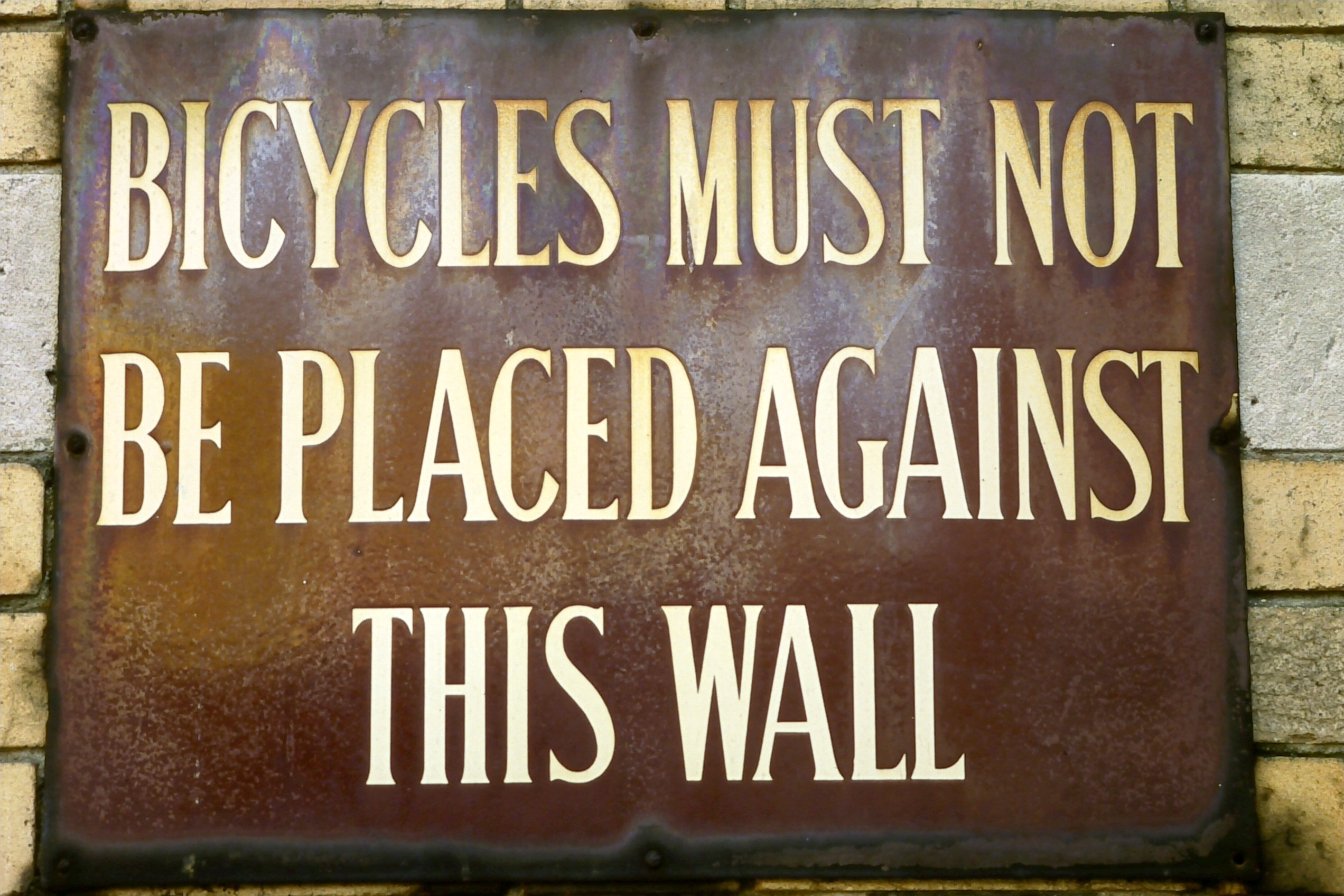
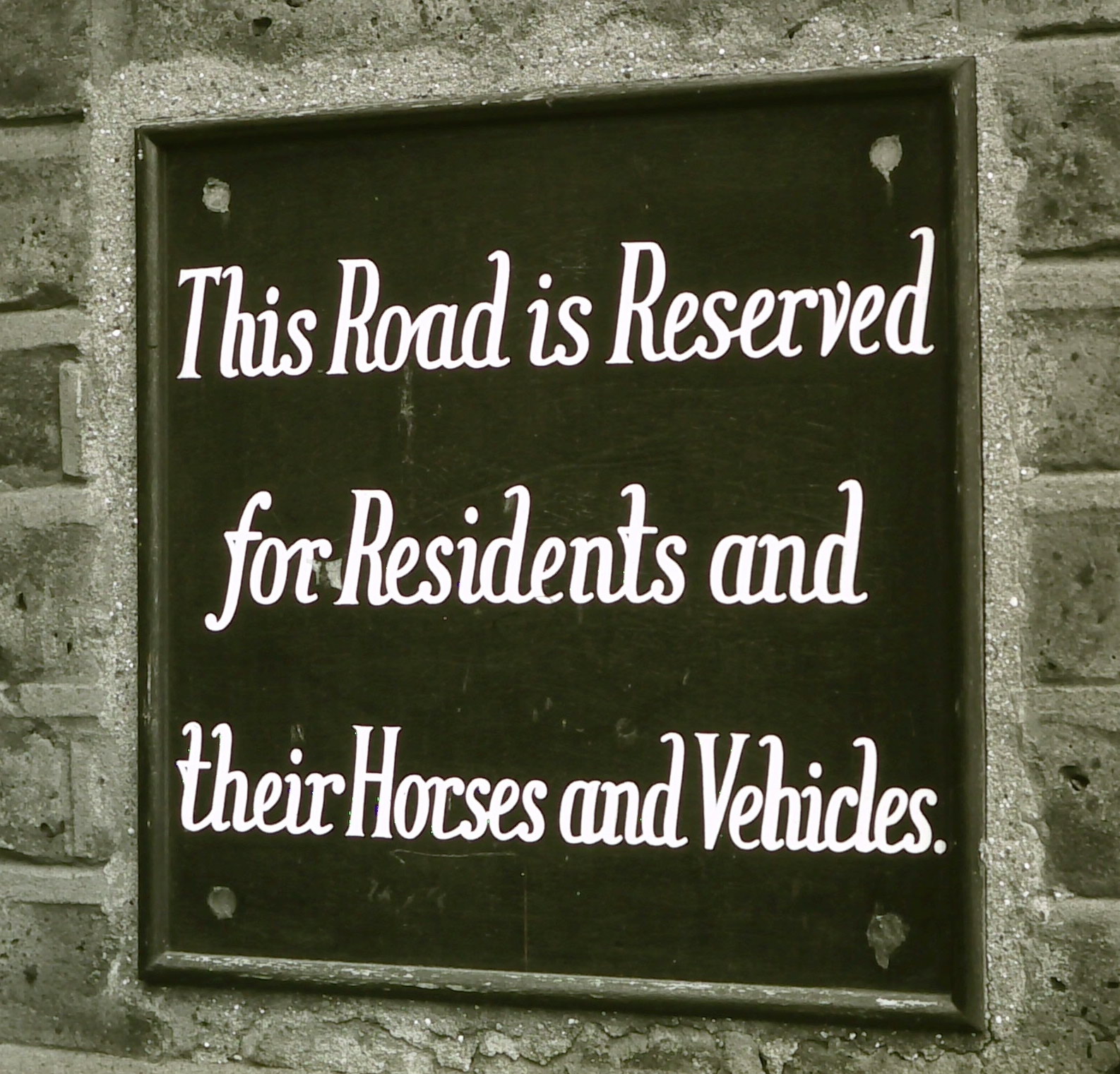
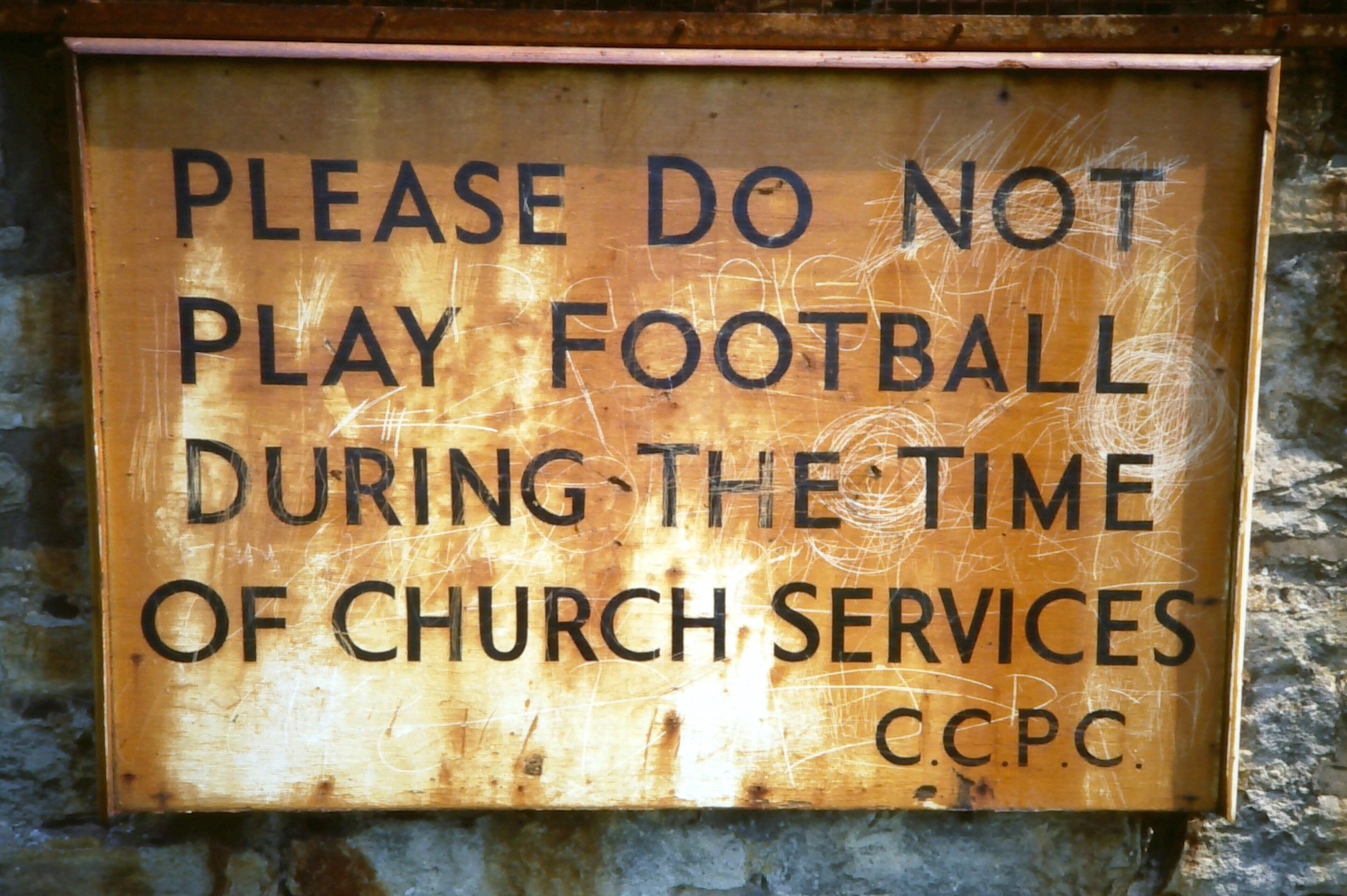
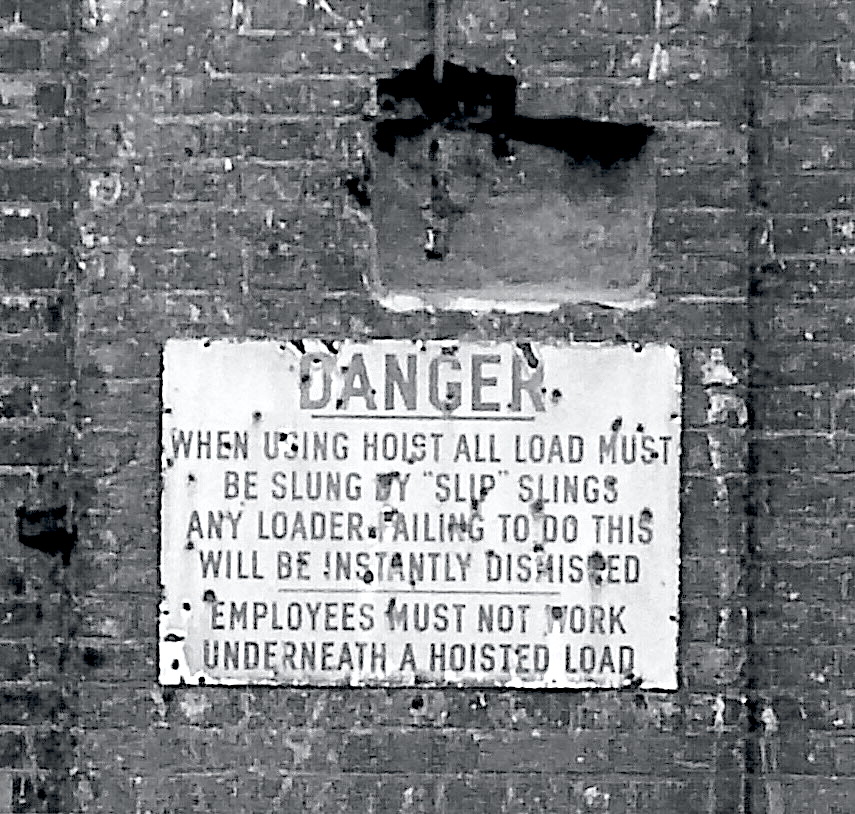
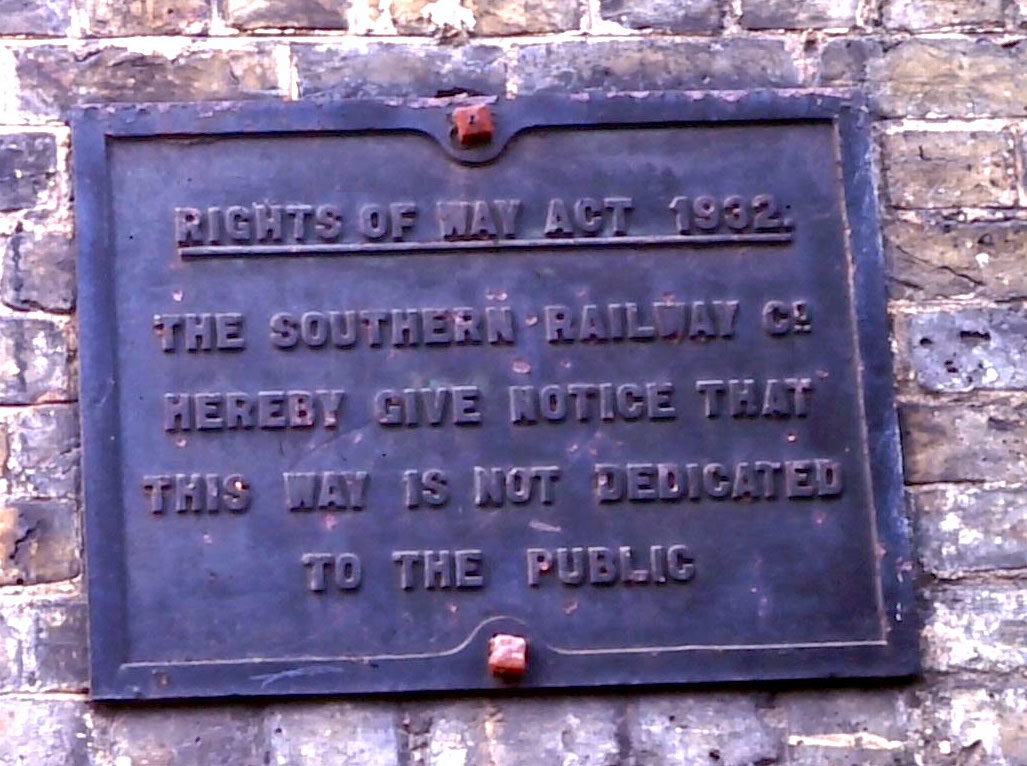
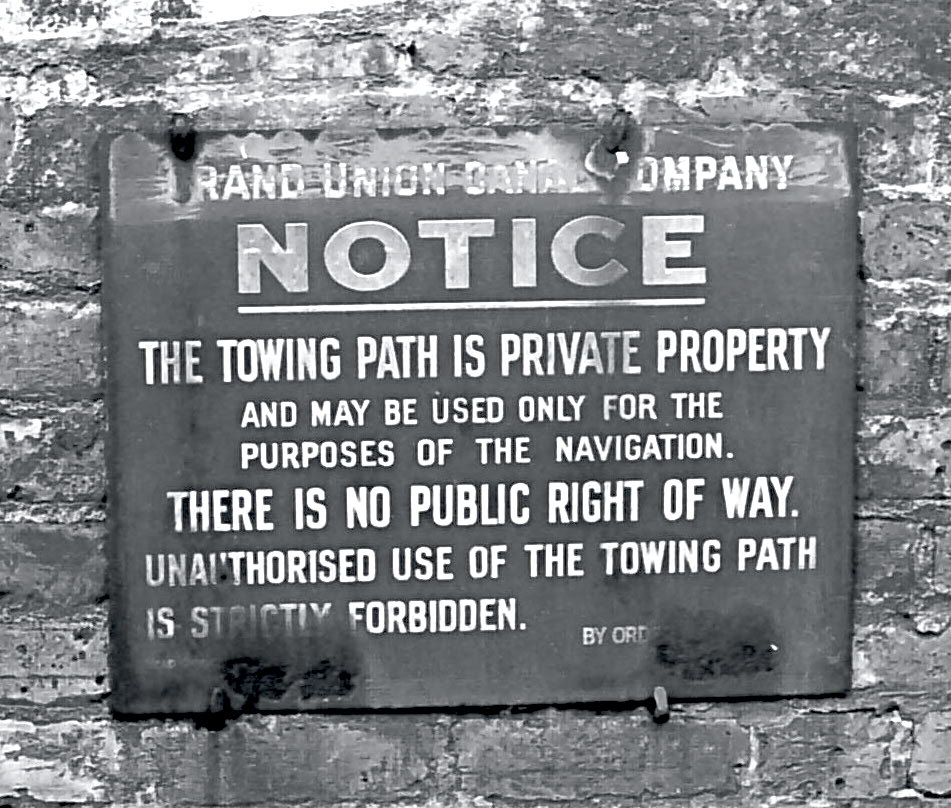
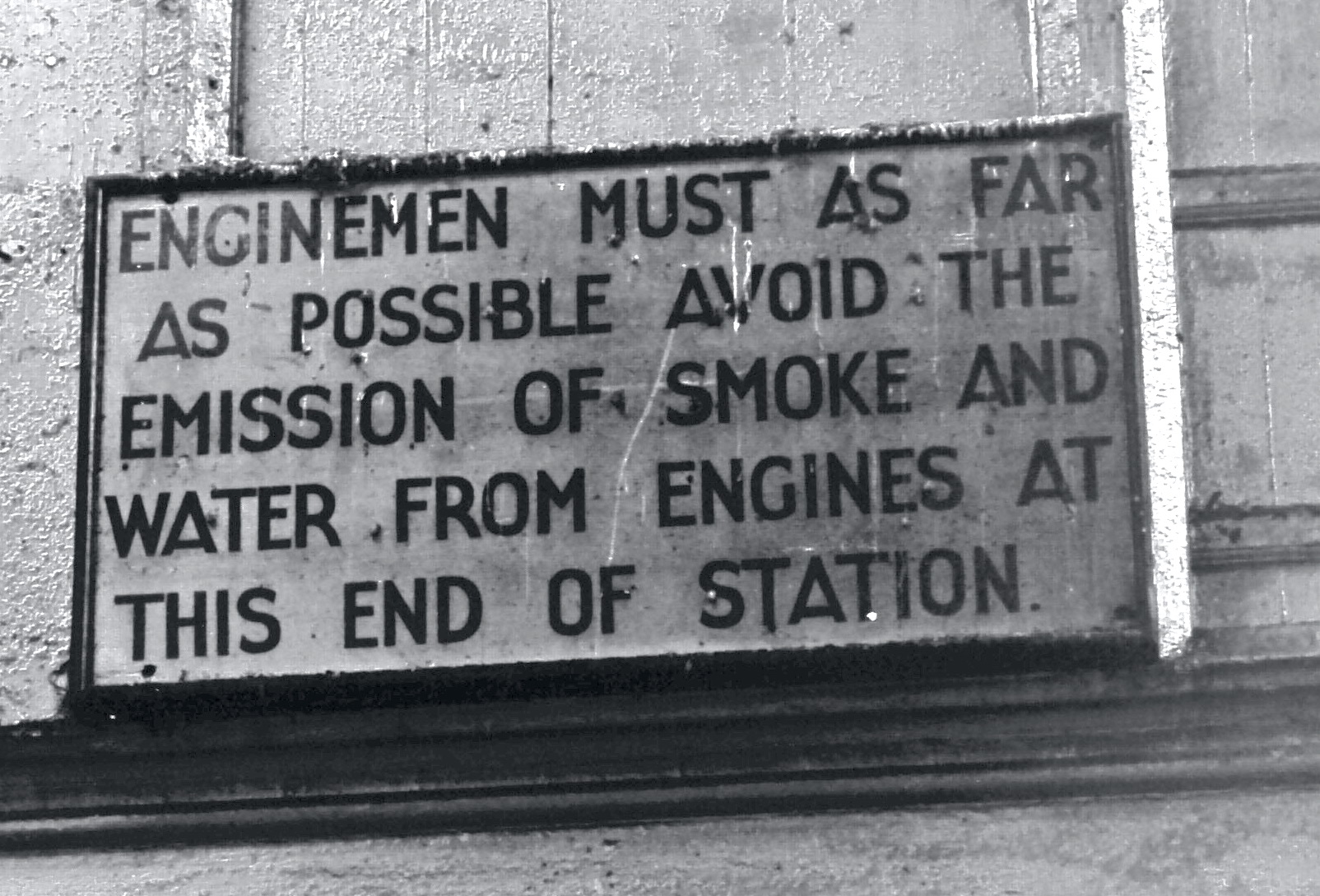
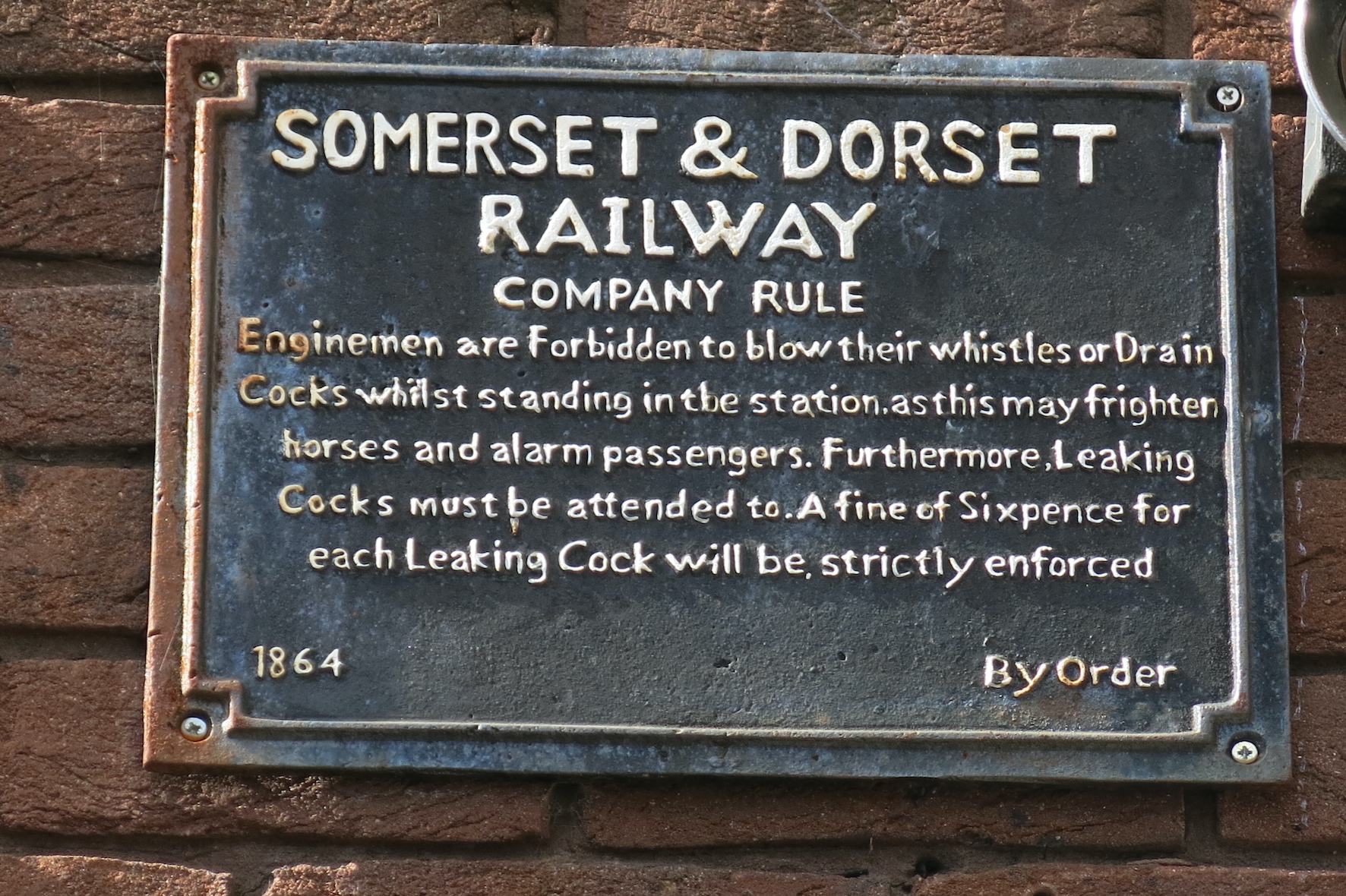
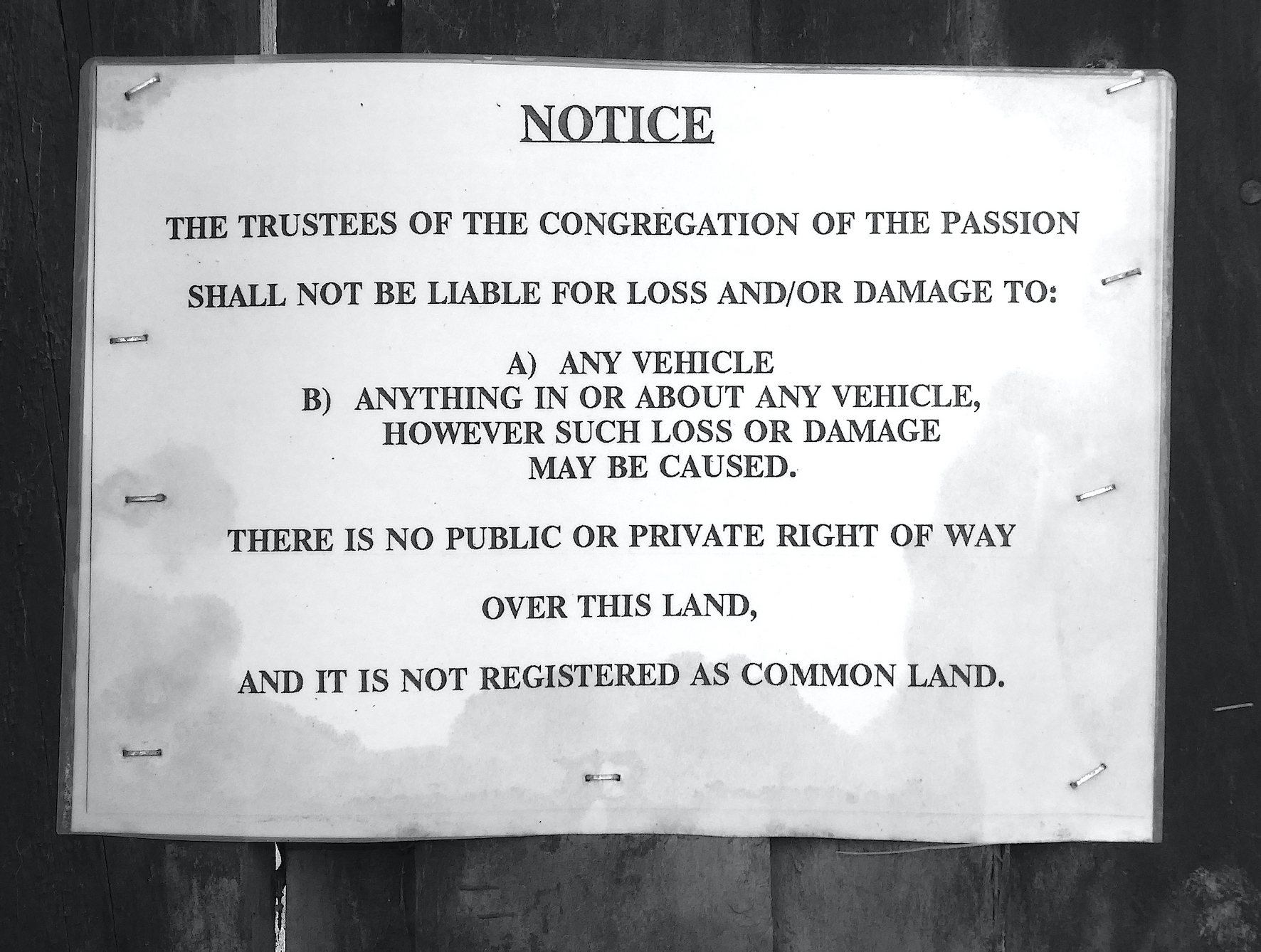
Many public signs are used for the usual helpful purposes of information, guidance and identity. Other signs bear the stamp of authority with strict instructions as to procedures, ownership and expected conduct. Others also carried notice of dire penalties, including dismissal, fines and, in older times, even transportation for life. In earlier industrial times, such notices to employees were a nascent form of health and safety at work and for the protection of the public, although in many instances they were the greatest nuisance and danger. Many such notices are still to be found in place, their construction often preventing them becoming ghost signs. Otherwise, many are preserved in industrial museums. The examples shown here are almost all from the Greater London area and recorded in the last 50 years plus a few relevant ones from elsewhere. Sidney Ray






Pete Oakley
To get involved please contact us at database@glias.org.uk
All photographs taken by the author in London over the last 50 years. More photos will appear on the website version of this article