 'George Livesey: A Biography', by Dr Mary Mills
225 pages, illustrated. London: 2024. Distributed by Amazon. ₤15 (Paperback). ISBN 979-8346446422
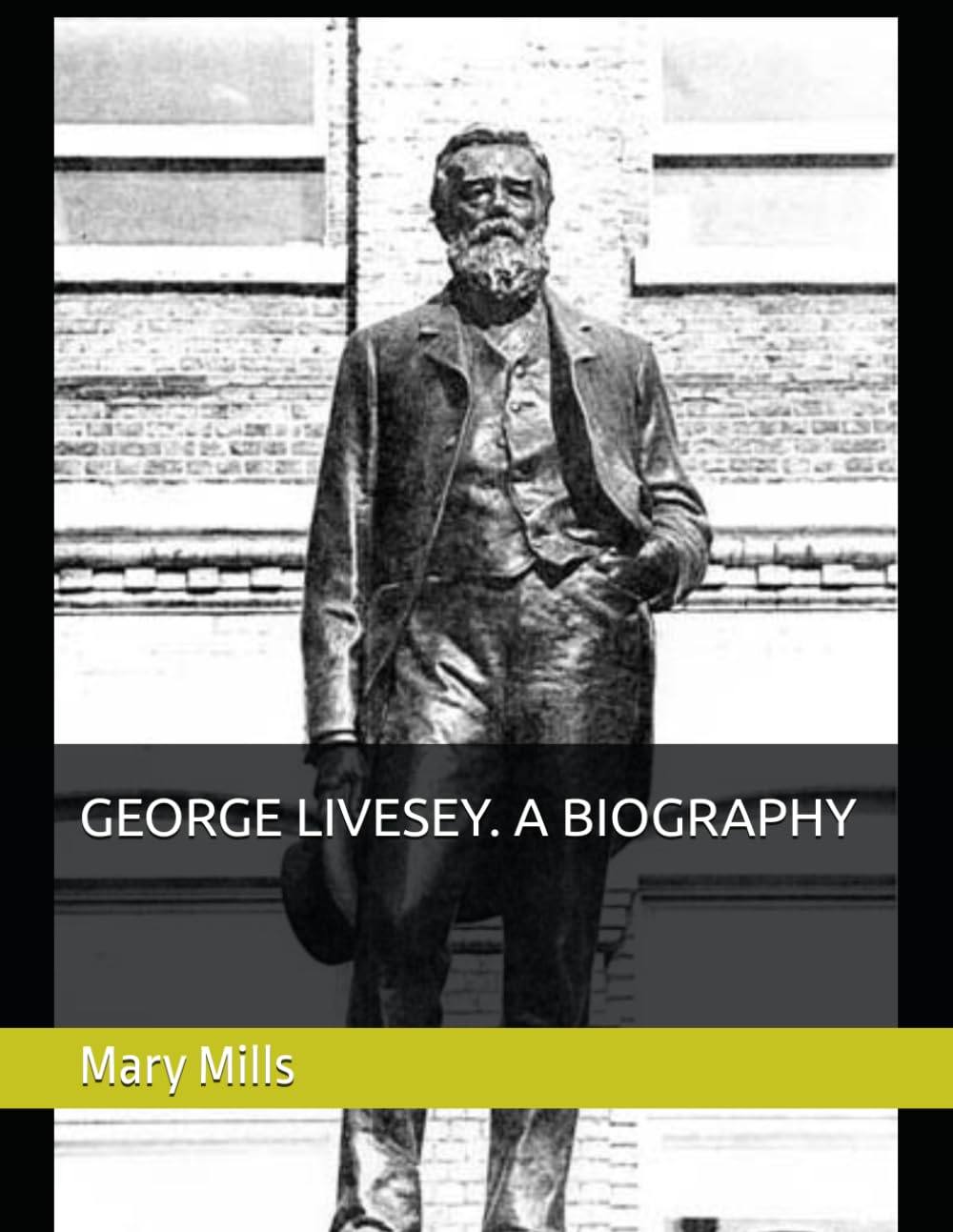
This book is a biography of a rather interesting but perplexing man who is still regarded as a considerable hero in South East London, Sir George Thomas Livesey (1834-1908). Socialists revile him as a strike breaker, but he was also apparently a pious Christian keen to promote temperance, and a very considerable philanthropist.
He is such an enigma. Some critics called him a hypocrite. Maybe he was both saint and sinner simultaneously; he certainly seems to have been very complex, there is no denying that.
In 1889 he played a prominent part in the so-called 'gas strike' of 1889 which was not in fact a strike at all. Gas workers were not allowed to strike; it was illegal, men had been sent to prison with hard labour for striking.
To get over this difficulty workers at the South Metropolitan gasworks simply gave in their notice, something which of course that they were perfectly free to do. However, this meant that they lost their jobs.
George Livesey could then quite legitimately bring in workers from elsewhere to fill the gaps in his workforce. The sections of this book which cover the 'gas strike' can be recommended as Dr Mills is quite an authority on this aspect of George's life.
The author of this book has been writing about Livesey over the last 40 years, but in recent years the availability of British Newspapers Online has revealed a good deal more. Other interesting things are now emerging. It seems there was hardly an evening when George was not at some public meeting and speaking there promoting temperance. He must have had the most tremendous energy.
Throughout the 1870s he gave a number of papers on technical subjects and also took out patents — two for purifying gas in 1875 and 1877, and in 1879 one for making gas. In 1881 a medal for original research was inaugurated by the British Association of Gas Managers which was funded by donations from the Birmingham area and in 1882 the first Birmingham Medal was awarded to George Livesey.
His method of doing business could be outrageous. Later in life he was a great takeover man, extending his South Met gas empire which supplied gas to a considerable area of London. He made numerous enemies throughout the gas industry and accumulated great wealth.
This book is not about technology. It is more about personalities and business management and society in general. Livesey really changed the gas industry and his co-partnership ideas became applied and commonplace in most gas works. We still see examples of co-partnership with John Lewis department stores.
He made the privately-owned gas industry work in partnership with the public and the gas workforce. He changed a great deal else. This is about a man who wanted to change society — and indeed did so.
Livesey was a Liberal. He disliked Tories as well as Socialists.
George Livesey later in life had real national status. He became a national figure, but Mary' s book does not really cover this adequately. It's really a weakness of the book and it will probably be up to someone else at a later date to cover his national activities for which he was knighted in 1902.
What is unclear is how much of the actual engineering was done by George and how much by his younger brother Frank (1844-1899) who was sent to Dulwich College, and studied engineering at King's College London. George Livesey may well have been in a position similar to that of George Stephenson who was often credited with work done by his son Robert. Bob Carr